Introduction
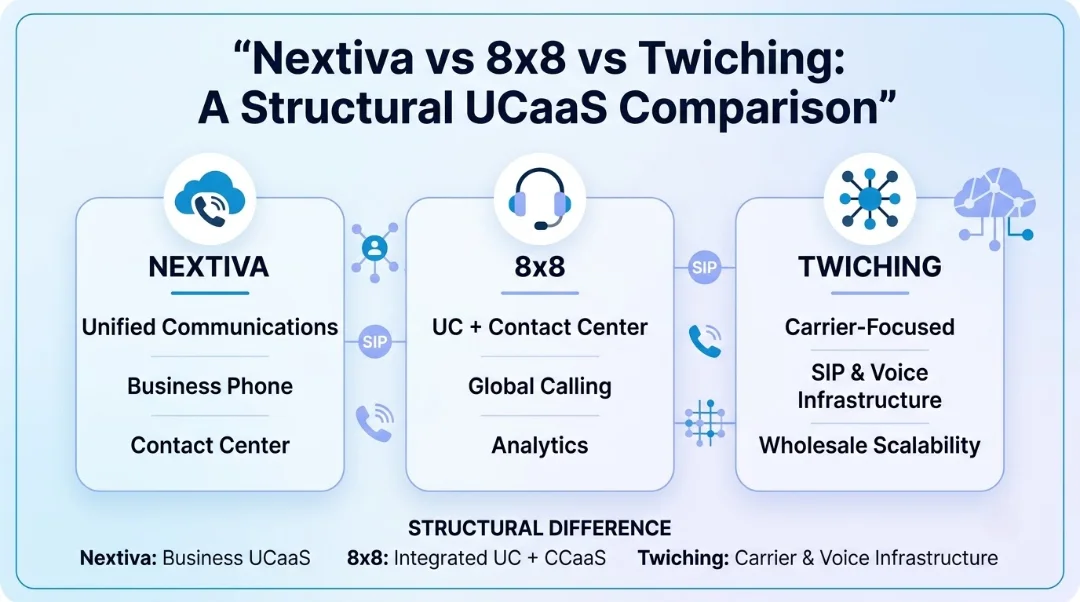
Nextiva, 8x8, and Twiching all sell the same category of product — cloud voice, messaging, video, and increasingly AI — but they're structured differently enough underneath that a feature-checklist comparison misses what actually matters. 8x8 leans enterprise-first, with unlimited international calling as a headline feature and pricing that has moved toward custom sales quotes rather than a public rate card.
Twiching is built around a single unified plan structure where AI and contact-center capability ship at the base tier instead of as a bolt-on. This comparison focuses on those structural differences — pricing model, what's bundled versus sold separately, international reach, and compliance posture — since those are what actually determine total cost and fit, more than any individual feature checkbox.
Why a Feature Checklist Comparison Misses the Point
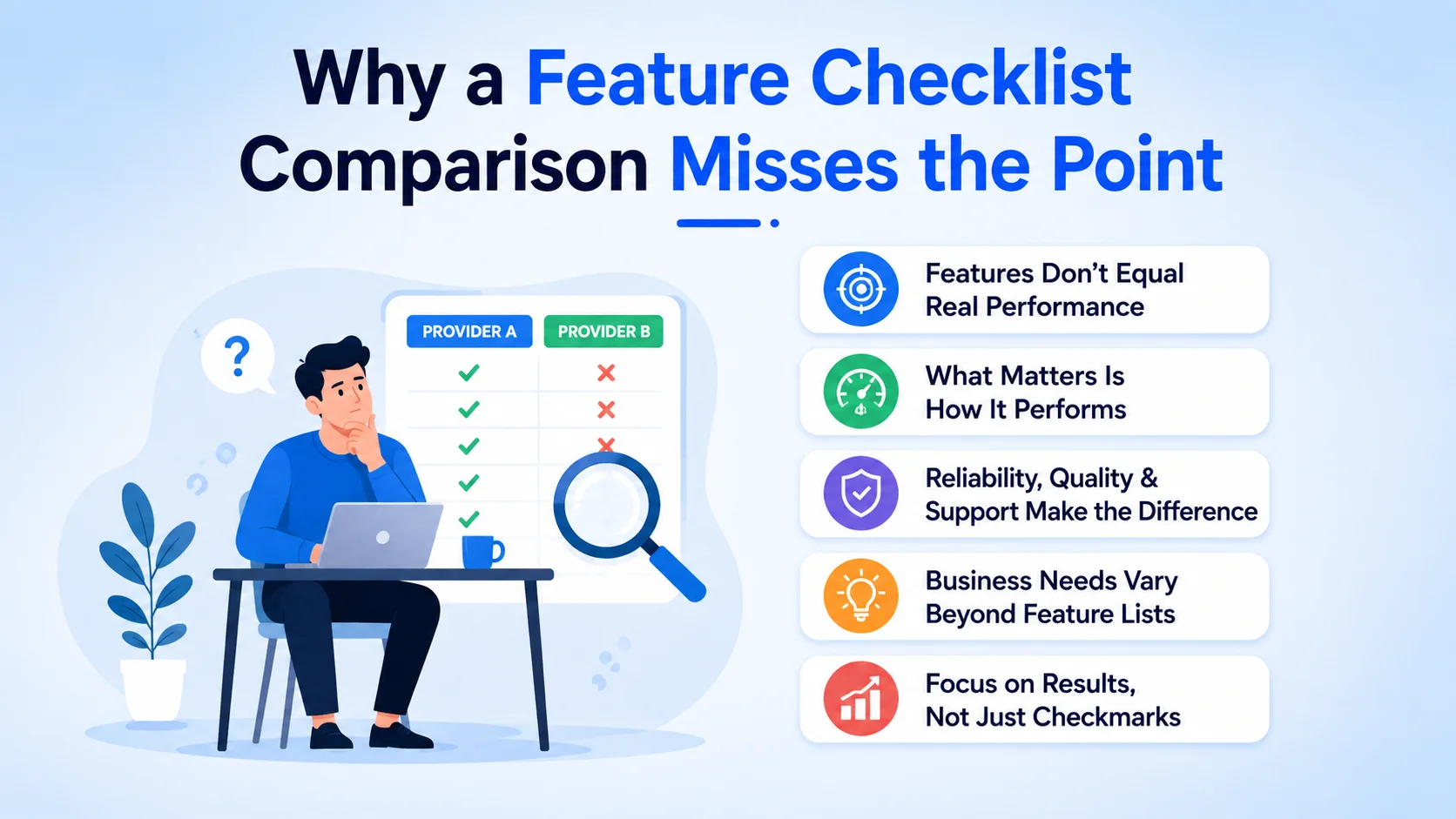
Nextiva, 8x8, and Twiching all check nearly identical boxes on a feature list — voice, video, messaging, some form of AI, some form of contact center. Feature-by-feature comparisons make all three look interchangeable, which is exactly why they're not a useful way to choose between them.
The differences that actually determine cost and fit live one level below the feature list: how each vendor structures pricing, whether advanced features ship standard or get sold separately, and how each platform is architected for scale and geography. Those are the questions this comparison answers.
Pricing Structure: Published Tiers vs. Custom Quotes
The three vendors take genuinely different approaches to pricing transparency, and that difference itself is worth knowing before a sales call.
- Nextiva — publishes tiered per-user pricing for its small-business line (commonly cited in the $15–$75 per user per month range across tiers, billed annually), with enterprise contact-center plans shifting to per-agent pricing starting noticeably higher
- 8x8 — historically published list pricing starting around $24 per user per month for its entry unified-communications tier, but has moved toward requiring a sales conversation for current quotes rather than maintaining fully public rate cards
- Twiching — publishes flat per-user tiers across the board: Starter, Professional, and Enterprise, with a custom tier for 50+ seat deployments; every published tier includes a 14-day free trial with no credit card required
Published, self-service pricing versus a required sales quote isn't inherently better or worse — a custom quote can reflect genuine enterprise-scale negotiation — but it does mean the buying process itself differs meaningfully, and it's worth knowing which model you're walking into before requesting a demo.
Pricing on all three platforms is subject to change and varies by region, contract length, and current promotions — always confirm current numbers directly with each vendor rather than relying on any published comparison, including this one, as final.
Further reading: how UCaaS pricing actually breaks down
AI and Contact Center: Included, or Sold Separately?
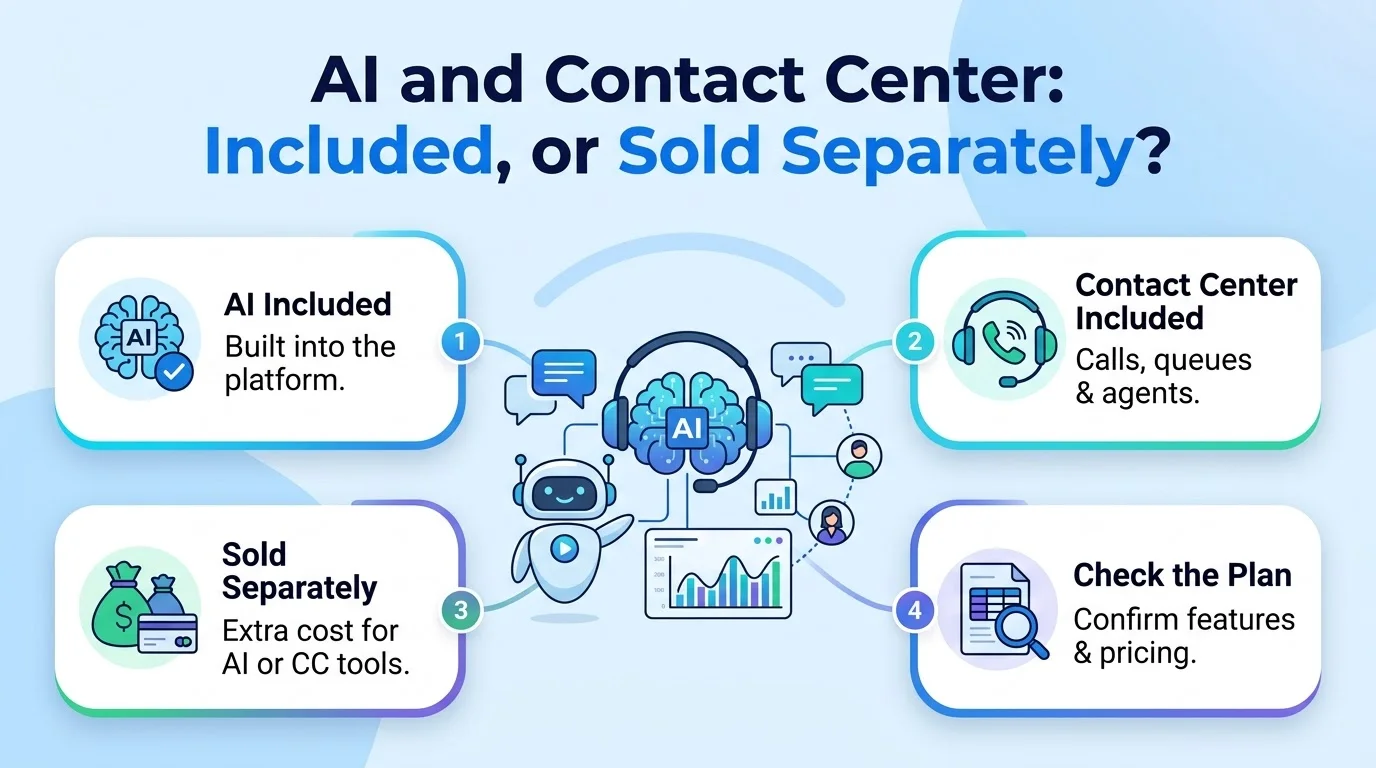
This is where the three platforms diverge most in practice, and it's the single factor most likely to change the real cost of a deployment beyond the headline per-user number.
Nextiva includes AI transcription and basic call analytics starting at its mid-tier Engage plan, with more advanced AI bots and workforce management reserved for the separate, higher-priced enterprise contact-center line — meaning a small team wanting AI features is on Nextiva's mid tier, while a team wanting full contact-center AI is effectively buying a second product. 8x8 bundles unified communications and contact-center capability into one product architecture, positioned as native rather than bolted-on, which is a genuine structural strength of the platform — though the deeper CX and workforce-management features again sit at higher-priced tiers. Twiching includes AI Receptionist, AI Agent Assist, sentiment analysis, and conversation intelligence starting at its base Starter tier, rather than gating AI behind a separate enterprise product line.
International Calling and Global Reach
For any business operating or hiring outside a single home market, international reach is often a harder constraint than any feature comparison. 8x8's headline strength here is unlimited calling bundled into set country groups (commonly cited around 14 to 48 countries depending on plan), which suits businesses whose international calling concentrates in a defined region. Nextiva's core plans are built primarily around US and Canada calling, with international calling available but less central to the product's core positioning. Twiching operates direct-to-carrier interconnects across 191 countries, positioning it toward businesses whose calling footprint is broad or unpredictable rather than concentrated in a fixed regional set.
The right fit here depends entirely on your actual calling geography — a business calling three countries doesn't need 191-country reach, and a business calling forty needs to check whether a bundled-country plan actually covers all of them before assuming "unlimited international" means every destination.
Compliance and Security Posture
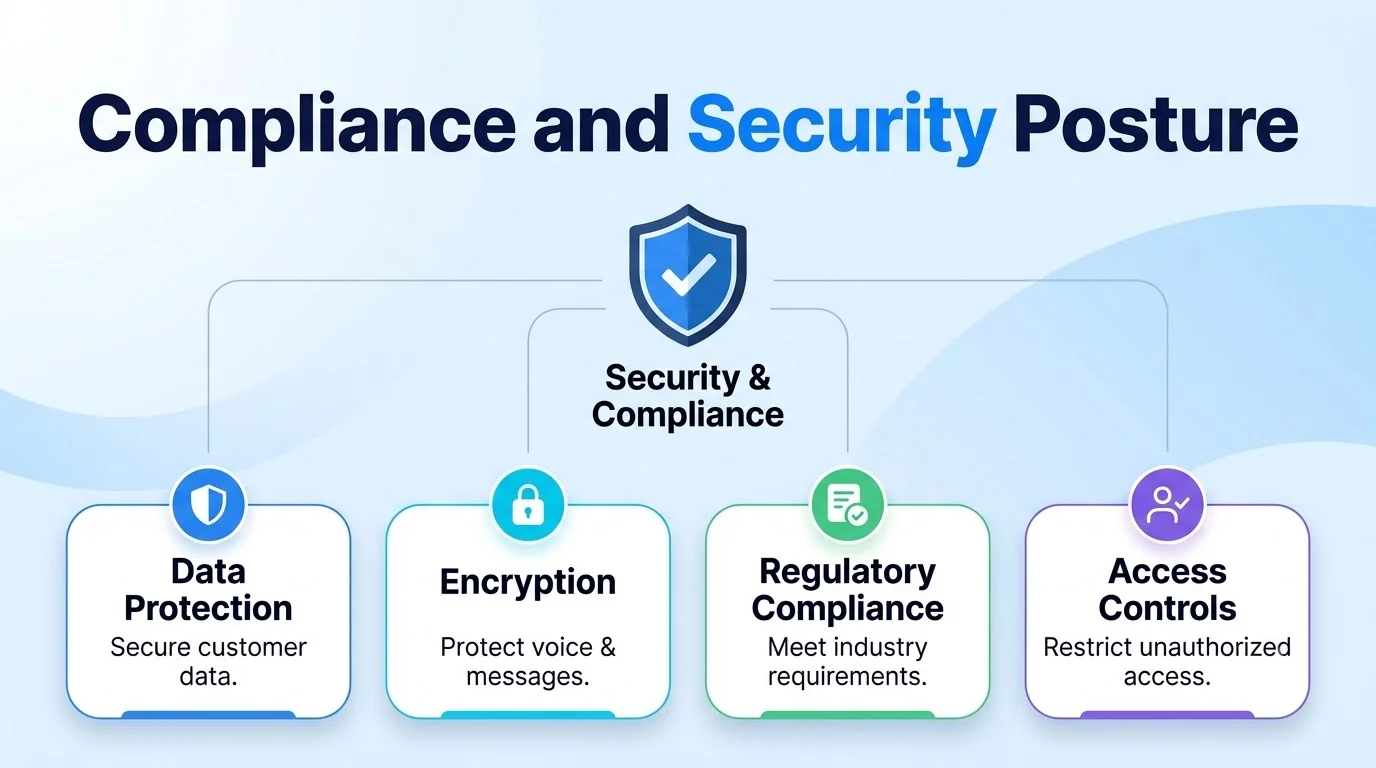
All three platforms take compliance seriously, but the specific frameworks each leads with differ slightly. 8x8 markets HIPAA and FINRA compliance out of the box, which matters directly for healthcare and financial-services buyers. Nextiva supports standard business compliance needs including call recording retention controls relevant to regulated industries. Twiching leads with STIR/SHAKEN A-level attestation on outbound US calling, TCPA-aware compliant dialing modes, 10DLC/A2P registration handling for US messaging, and GDPR-aligned data handling for EU operations.
For a buyer in a specific regulated vertical, the practical step is confirming the exact certification or framework your industry requires against each vendor's current compliance documentation directly, rather than assuming general "enterprise-grade security" language covers your specific regulatory obligation.
Further reading: HHS: Health Information Privacy (HIPAA)
Which Platform Fits Which Business
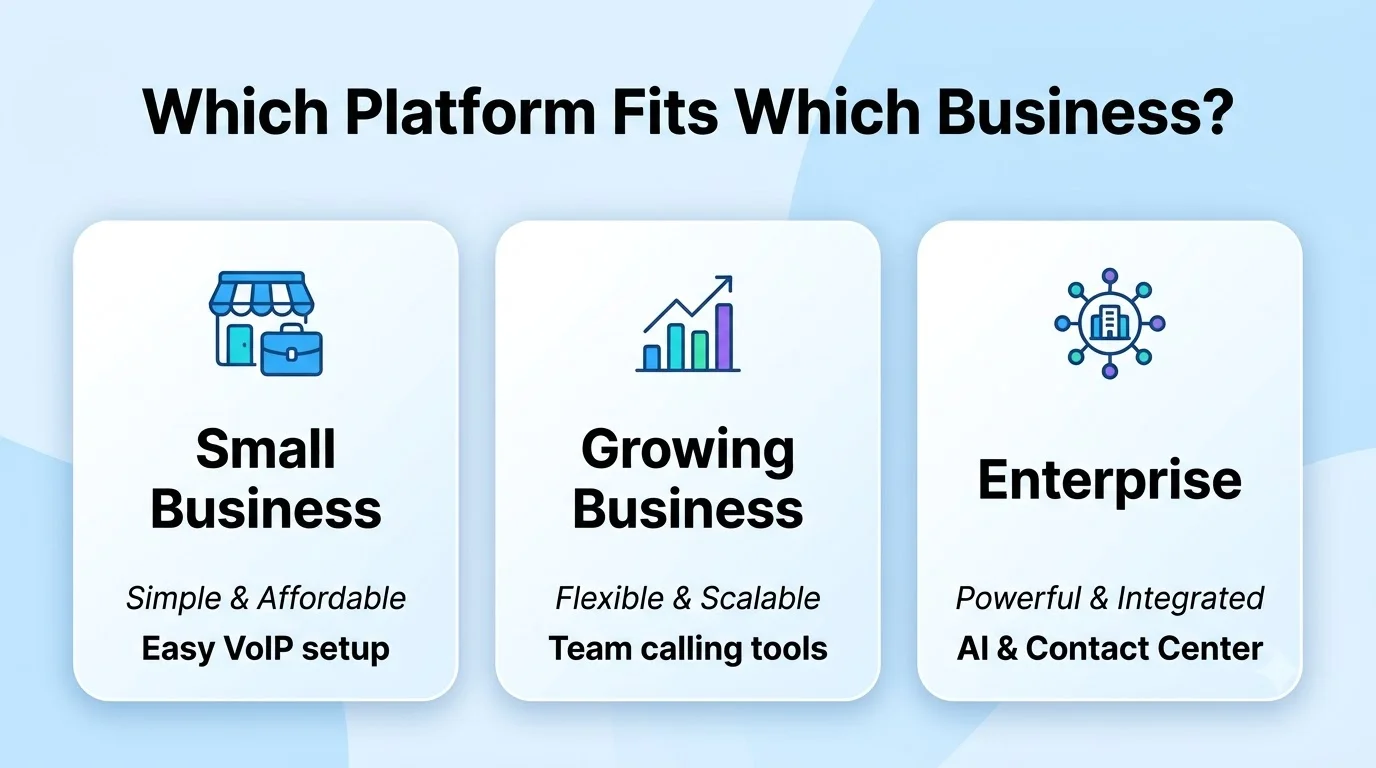
Structural differences point toward different natural fits rather than one platform being universally better.
- A small US-based team wanting predictable, publicly-listed pricing with AI available once they grow into it — Nextiva's tiered small-business line fits that buying pattern well
- An enterprise-scale operation with contact-center needs already built into its planning, comfortable with a sales-led buying process and concentrated international calling to a defined country set — 8x8's native UCaaS-plus-CCaaS architecture is built for exactly that
- A business that wants AI, contact-center capability, and broad or unpredictable international reach included at every tier rather than gated behind an enterprise upsell, with transparent published pricing from the first plan up — that's the gap Twiching is built to fill
Further reading: what an international wholesale VoIP provider does
Conclusion
Nextiva, 8x8, and Twiching solve the same basic problem — unified business communications — through genuinely different structural choices: how pricing is disclosed, whether AI and contact-center capability ship standard or get sold as a separate product, how broadly each platform reaches internationally, and which compliance frameworks each leads with. None of those choices makes one platform objectively best; they make each platform a better fit for a different kind of buyer.
The useful next step isn't picking a winner from a comparison article — it's matching your team's actual size, calling geography, and AI/compliance requirements against the structural profile that fits, then confirming current pricing and features directly with whichever vendor that points to.