Introduction
Picking an international wholesale VoIP provider is one of the highest-leverage decisions an ITSP, reseller, or contact-centre platform makes. Rates differ by 40x across the global footprint, quality varies route by route, and grey routing fraud quietly destroys margin and reputation.
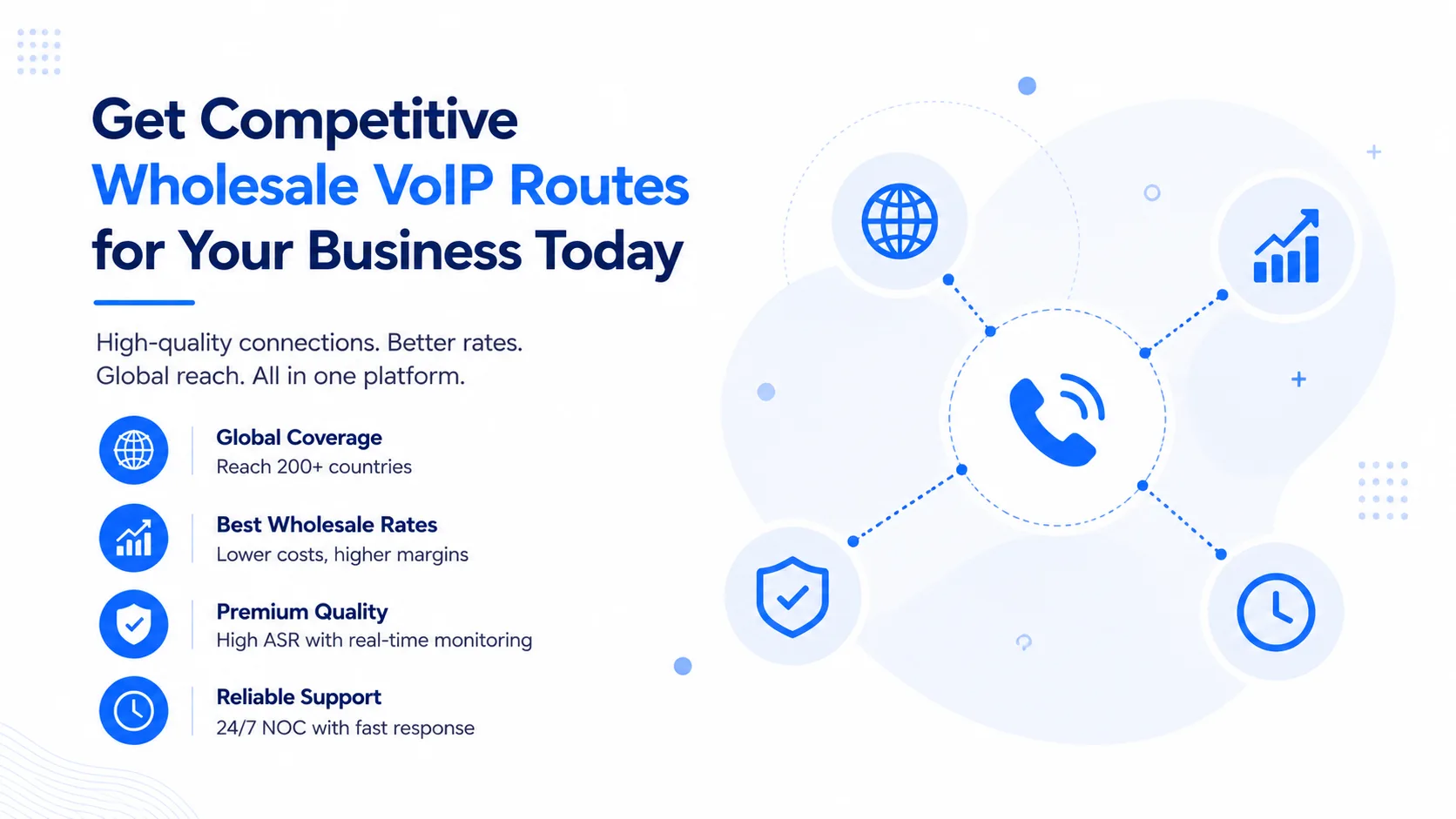
This guide explains what a credible provider looks like in 2026, and how Twiching delivers carrier-grade VoIP across 200+ countries on direct interconnects.
What an International Wholesale VoIP Provider Actually Does
An international wholesale VoIP provider operates the carrier layer that sits between retail operators and the destination networks worldwide.
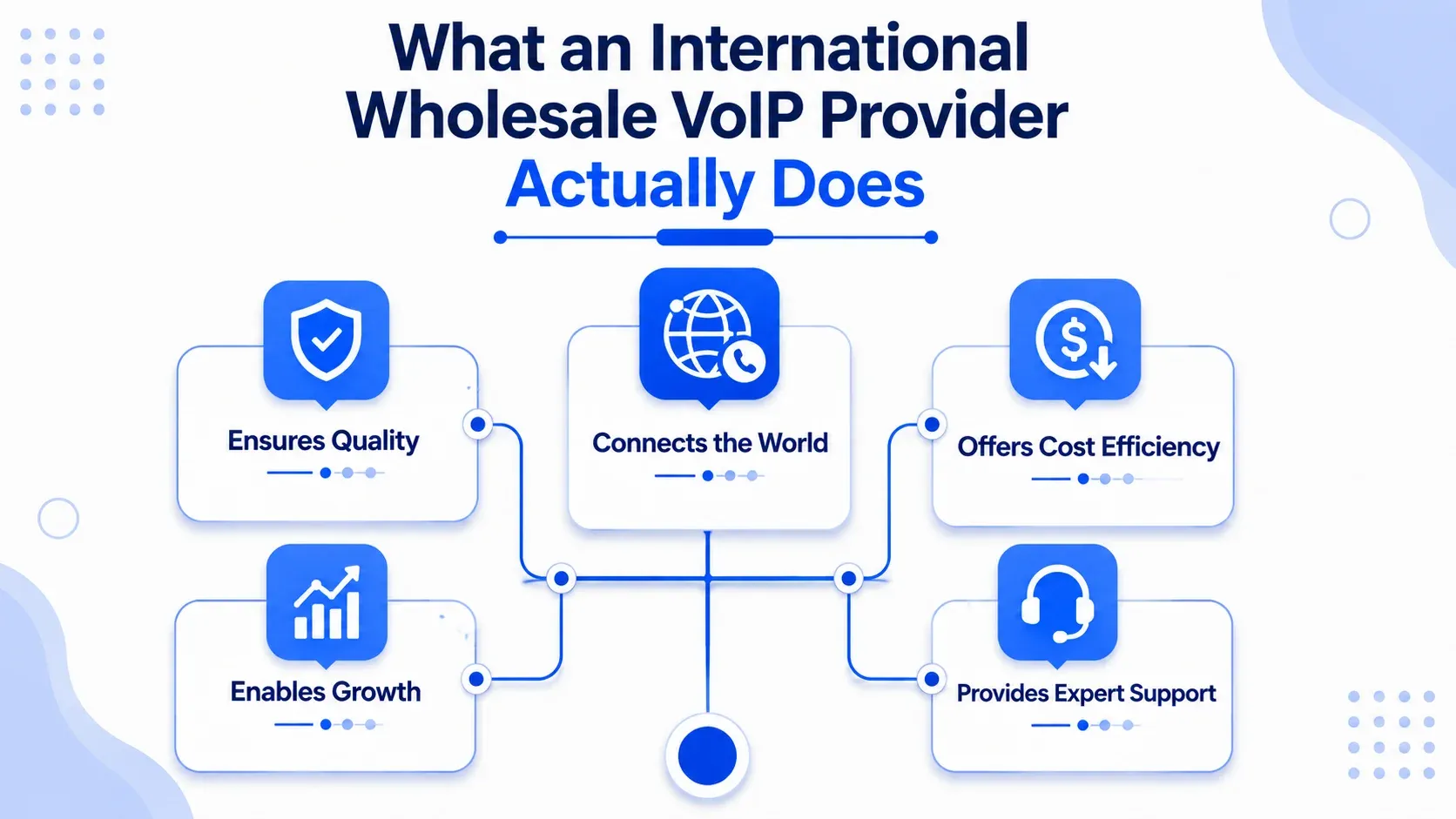
It aggregates capacity from Tier 1 partners. It also maintains direct interconnects in major financial and contact-centre hubs.
It delivers wholesale VoIP services as A-Z international termination — meaning a single SIP endpoint that reaches every country code, not a different vendor per region.
For ITSPs, resellers, and contact-centre platforms, the alternative is operationally impossible. Negotiating individual interconnect agreements in every market takes too much time and money.
A credible international wholesale VoIP provider does that work centrally. It charges per-minute on a published rate deck, and the billing engine handles currency normalisation automatically.
Country-Specific Termination Rates and Rate Deck Mechanics
Further reading: Wholesale pricing & rate deck
Wholesale VoIP rates for international termination vary enormously by destination. Competitive markets like the US or Germany may price under USD 0.005 per minute.
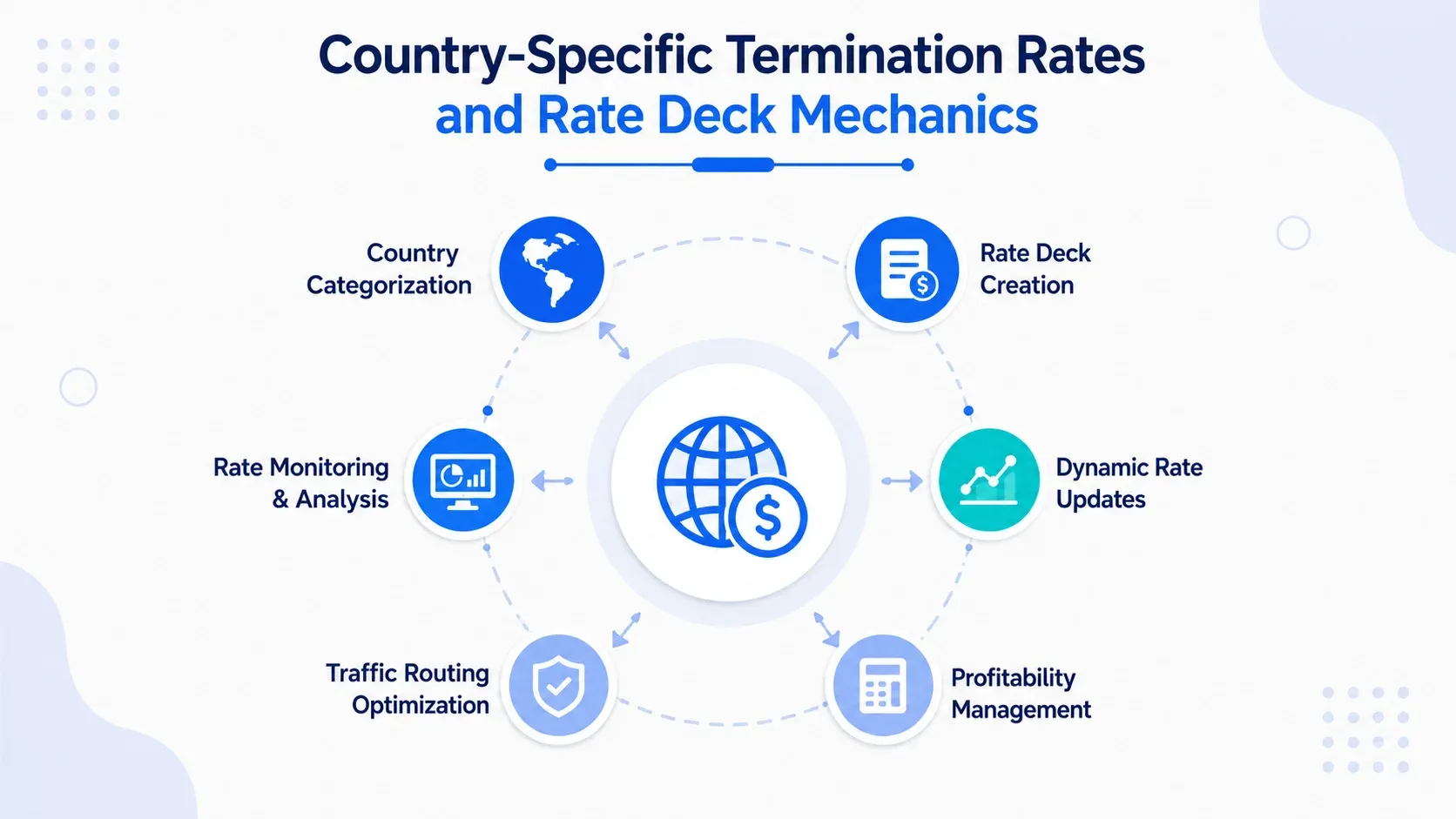
Regulated or monopoly markets in remote parts of Africa or the Pacific, by contrast, can exceed USD 0.40 per minute.
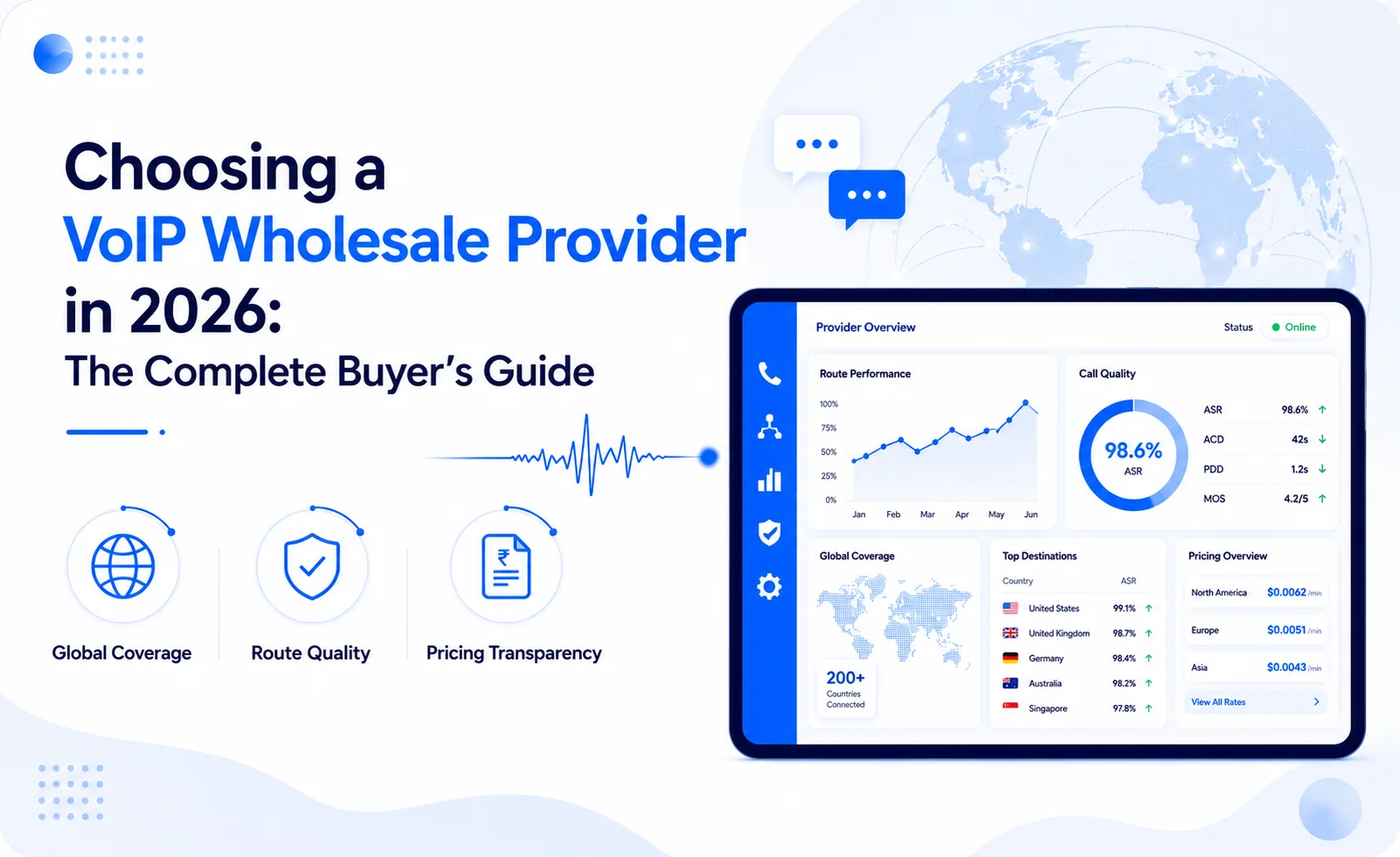
The international wholesale VoIP provider you pick must publish country-specific termination rates transparently — daily or near-real-time updates as upstream rates change.
Rate deck mechanics matter as much as the headline rate. Billing increments (1/1, 6/6, 30/6), connection charges, and minimum durations can swing real cost by 20 to 30 percent on short-duration traffic.
Twiching publishes the full deck — increments, currency, effective date — alongside every destination row.
Direct A-Z International Termination Routes
The single biggest quality differentiator for an international wholesale VoIP provider is whether it owns the routes or buys them. Direct A-Z international termination on Tier 1 interconnects delivers tighter ASR, lower PDD, and better STIR/SHAKEN attestation for US-bound traffic.
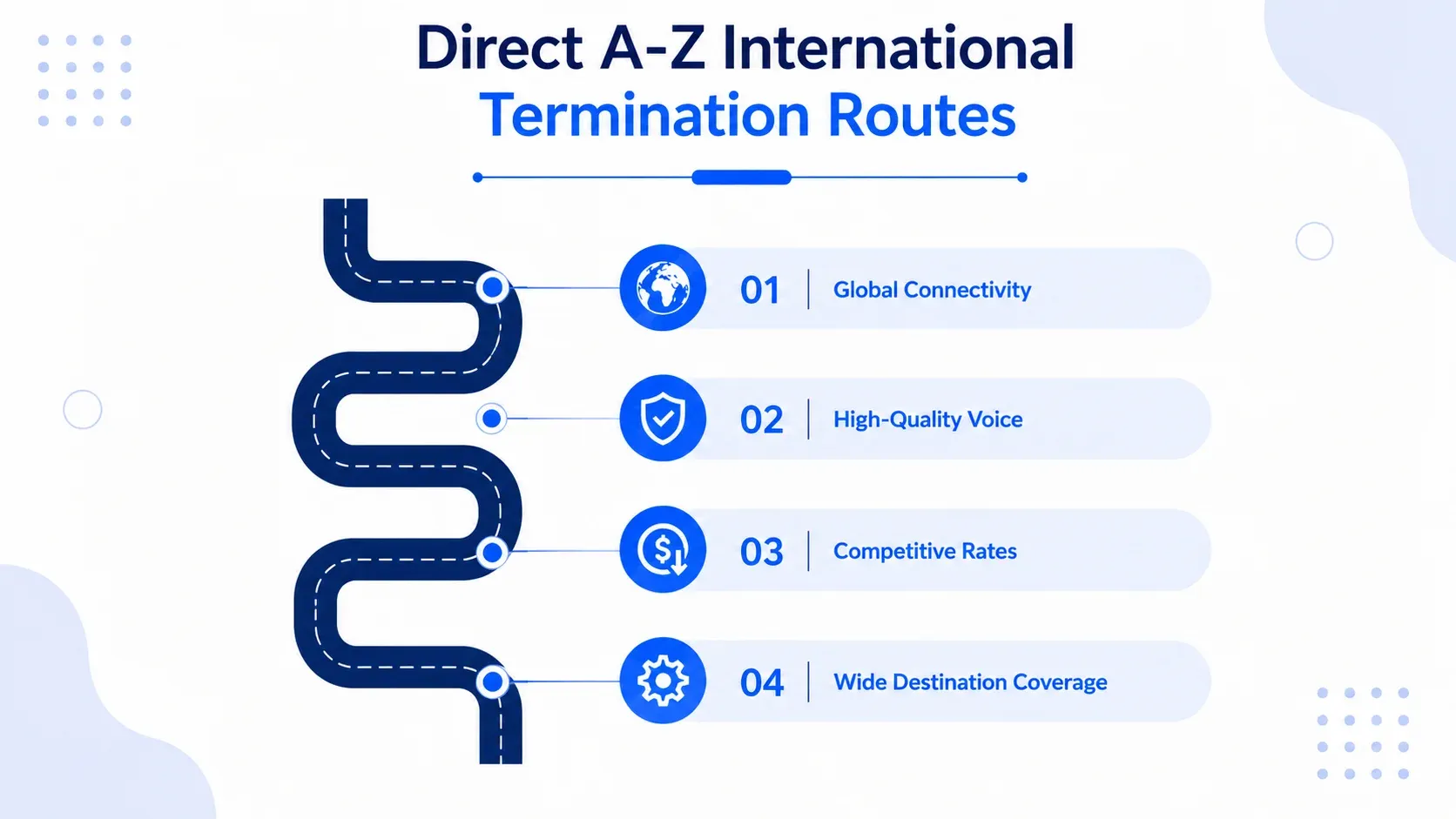
Reseller routes — minutes purchased from another wholesaler and re-marked — add latency, hops, and a margin layer you pay for without seeing.
A credible international wholesale VoIP provider exposes the route map per destination, lets customers force-route through preferred carriers, and shares live ASR data through the API. Anything less, and you are effectively flying blind on the most important global VoIP termination quality metric.
Grey Routing Prevention
Further reading: Wholesale VoIP platform
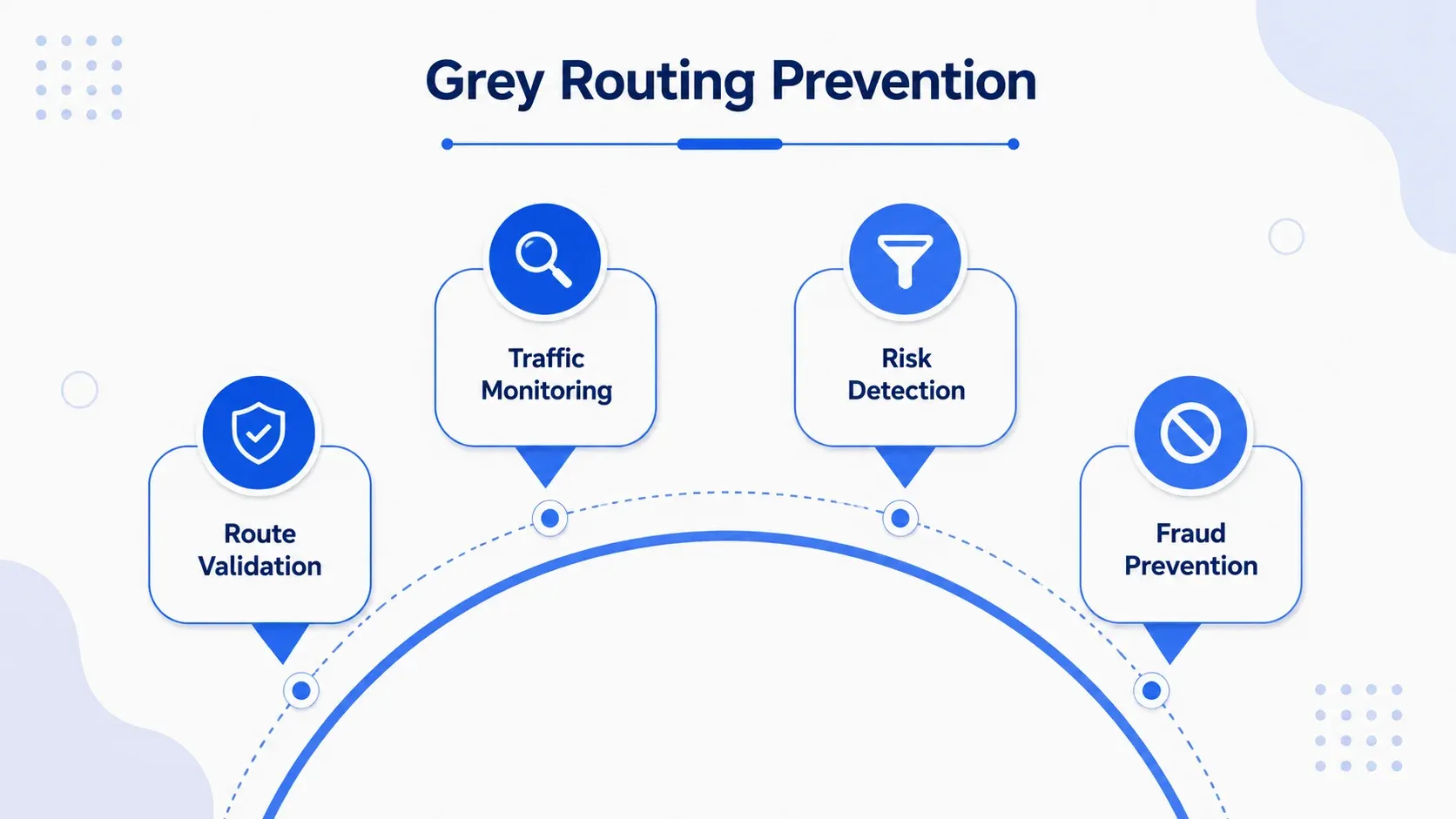
Grey routing is the silent killer of international wholesale VoIP economics. SIM-box operators bypass official PSTN interconnect by terminating international calls onto local mobile networks at retail rates.
It looks cheaper on paper, but the quality is poor. Regulators fine operators caught using it.
Downstream carriers eventually block the routes too — leaving customers with surprise ASR collapses.
Any international wholesale VoIP provider worth signing publishes its grey routing policy and names which carriers it refuses to buy from. It also runs anomaly detection to spot grey-route patterns inside customer traffic.
This is not just a quality issue — it is increasingly a regulatory one across the EU, UK, and major African markets.
STIR/SHAKEN and Compliance Across Markets
STIR/SHAKEN attestation has become a competitive feature for any international wholesale VoIP provider handling US-bound traffic. A-attested minutes get higher ASR, fewer spam labels, and better downstream acceptance.
A provider that has not implemented full attestation is quietly costing customers connection rates and brand reputation.
Outside the US, the regulatory floor varies. The EU's European Electronic Communications Code, the UK Ofcom framework, and country-specific licensing rules all shape the landscape. Together they determine what a global wholesale VoIP provider can and cannot do in each market.
A good international wholesale VoIP provider handles this compliance centrally so customers inherit it.
International DID Numbers and Global SIP Trunking
Pure outbound termination is half the picture. A complete international wholesale VoIP provider also offers inbound international DID numbers and global SIP trunking. That lets customers build local presence in dozens of markets without negotiating with national telcos directly.
Local, mobile, toll-free, and shared-cost numbers should all be provisionable from a single dashboard or API.
Twiching bundles several core services on one platform.
- Outbound A-Z international termination
- International DID numbers
- Global SIP trunking
- Wholesale internet telephony
- SIP termination services
- International voice over IP origination
That bundle is what unlocks higher-margin enterprise contracts.
It is also why Twiching exposes provisioning APIs for both number ranges and outbound trunks under one billing account.
Carrier-Grade VoIP Support and Operations
Further reading: FCC STIR/SHAKEN reference
Carrier-grade VoIP is mostly about what happens when something goes wrong.
A real international wholesale VoIP provider runs a 24/7 NOC with named escalation paths and 15-minute response on critical incidents. Route-quality engineers who can move minutes off a degraded carrier in minutes are what separates it from a software shop reselling someone else's network.
Twiching staffs its NOC across three time zones with engineers who actually understand the wholesale VoIP services stack. That stack spans SIP, RTP, codec negotiation, ASR analysis, and IRSF detection.
The same team handles cross-border VoIP wholesale issues, currency-related billing questions, and country-specific termination rate changes as they happen.
How to Evaluate an International Wholesale VoIP Provider
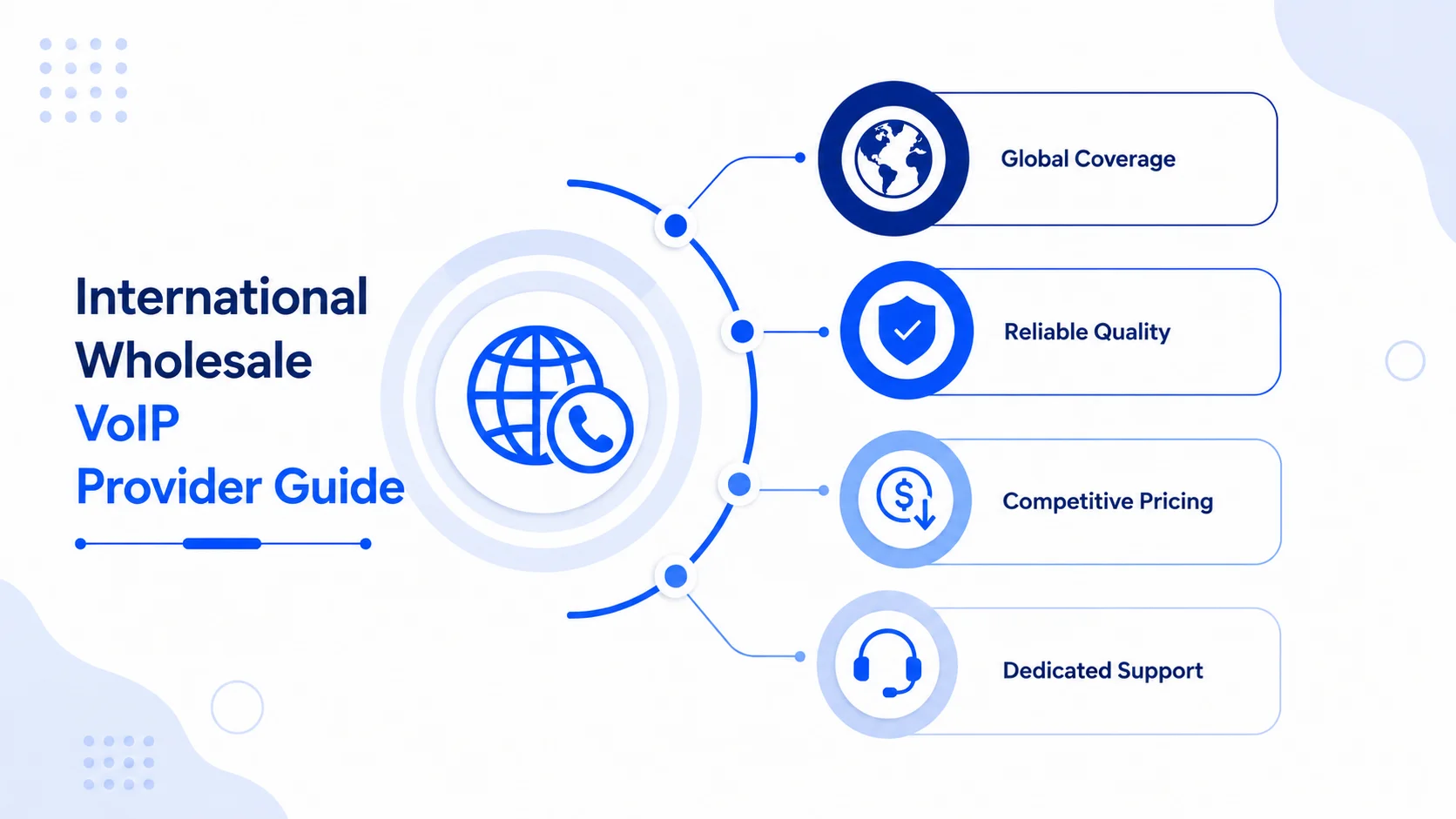
Marketing pages tend to look identical across international wholesale VoIP providers, so the real differences only show up when you check specifics. The seven items below cover the areas where a reseller of a reseller usually falls short of a genuine Tier 1 operator.
- 01Coverage — A-Z international termination across 200+ countries with named direct routes.
- 02Rate transparency — country-specific termination rates published with billing increments.
- 03Quality data — live ASR, PDD, and ACD per destination accessible via API.
- 04Grey routing posture — explicit policy and detection on suspicious in-country routes.
- 05STIR/SHAKEN — full attestation for US-bound traffic, regulatory posture per market.
- 06Operations — 24/7 NOC with 15-minute critical-incident SLA, real-time spend caps.
- 07Inbound parity — international DID numbers and global SIP trunking on the same platform.
Coverage and rate transparency filter out the weakest candidates fastest, since a reseller of a reseller rarely publishes country-specific detail — the remaining points then separate the genuinely strong operators from the merely adequate ones.
Conclusion
Choosing an international wholesale VoIP provider comes down to whether the provider owns the global VoIP termination footprint or quietly resells someone else's. Direct routes, transparent country-specific termination rates, STIR/SHAKEN attestation, explicit grey routing prevention, and a 24/7 NOC are the non-negotiables — and a credible provider should deliver A-Z international termination, international DID numbers, and global SIP trunking on a single platform.
Twiching is built to clear that bar, so ITSPs, resellers, and enterprises can run cross-border VoIP wholesale at carrier-grade quality without operating the carrier themselves.