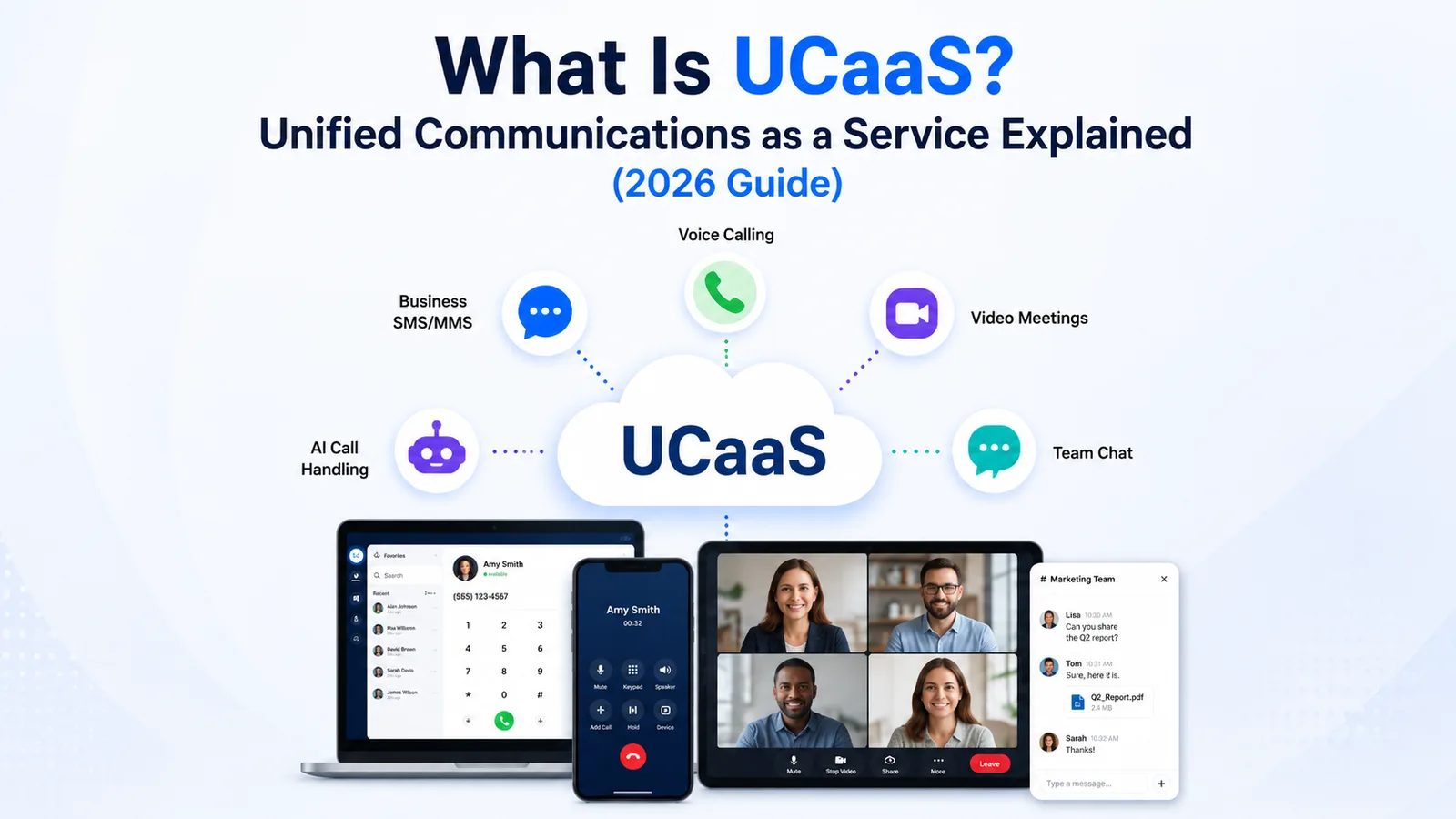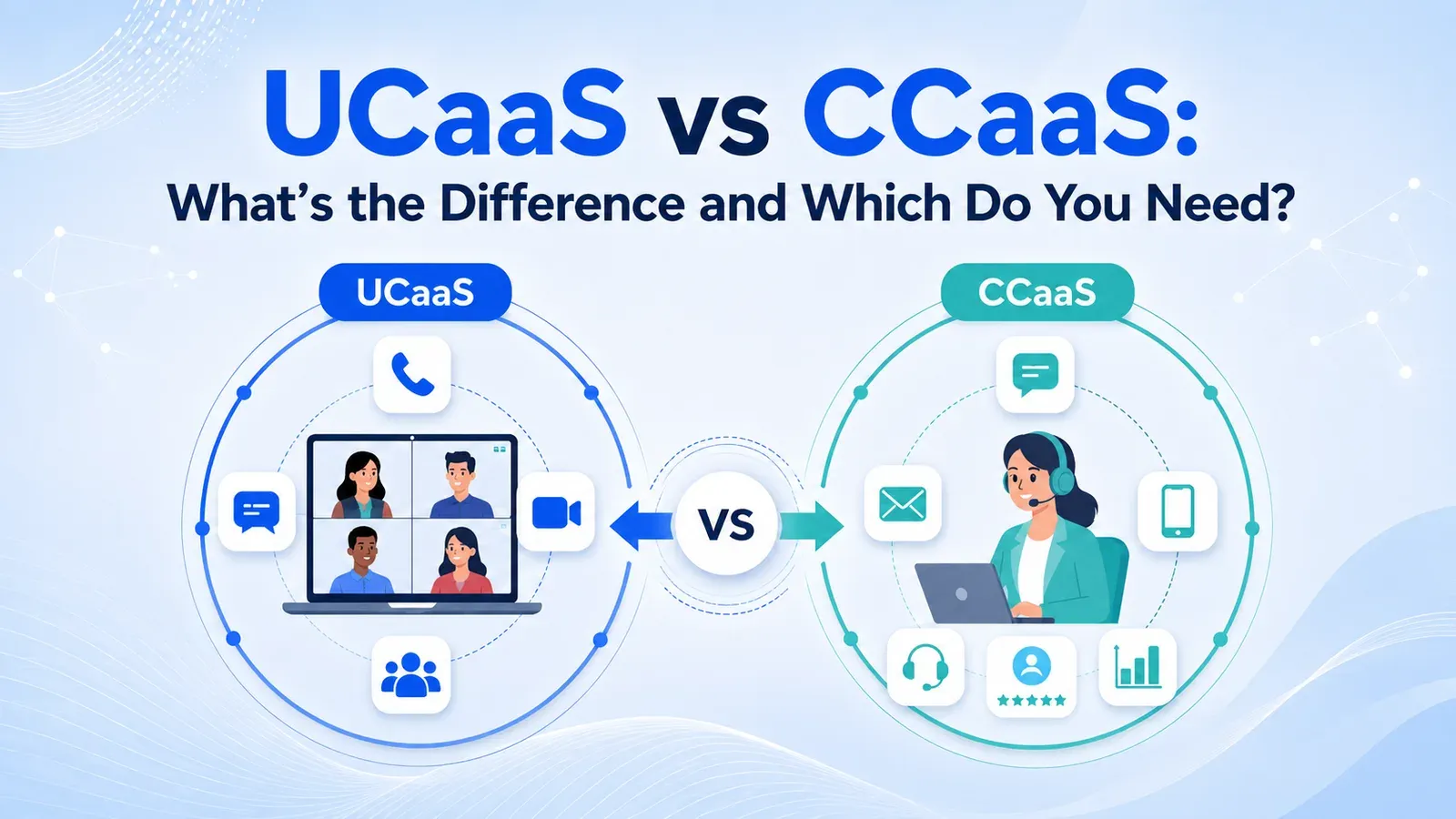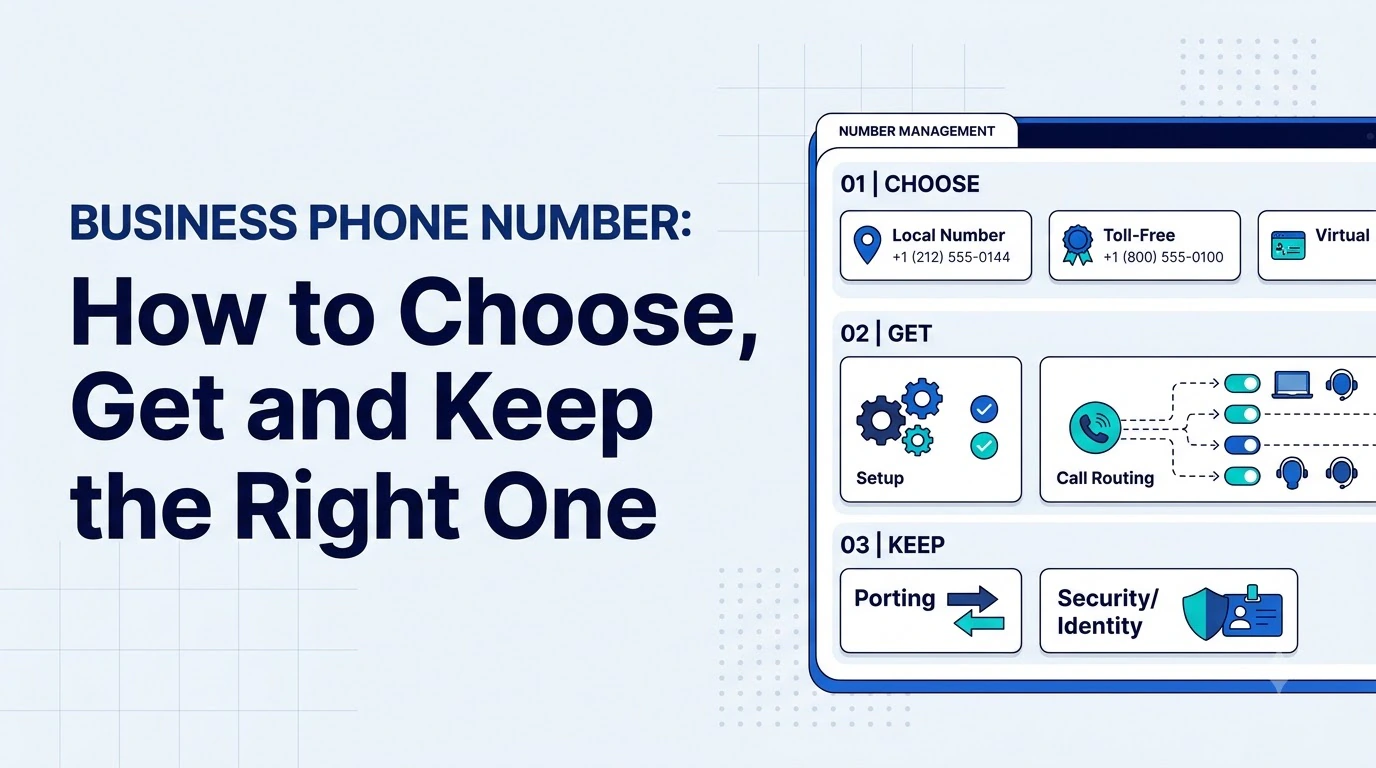
Introduction
A business phone number is the number your customers call to reach your company. It makes and receives your calls and texts, and it should be separate from anyone's personal mobile.
Get it right and customers reach you without thinking about it. Get it wrong and calls go unanswered or show up as spam.
This guide looks at the main types of business phone number, how to get one, how to port across the number you already have, what you need to know about caller ID and compliance, and how to pick the right one for your business.
What a Business Phone Number Is
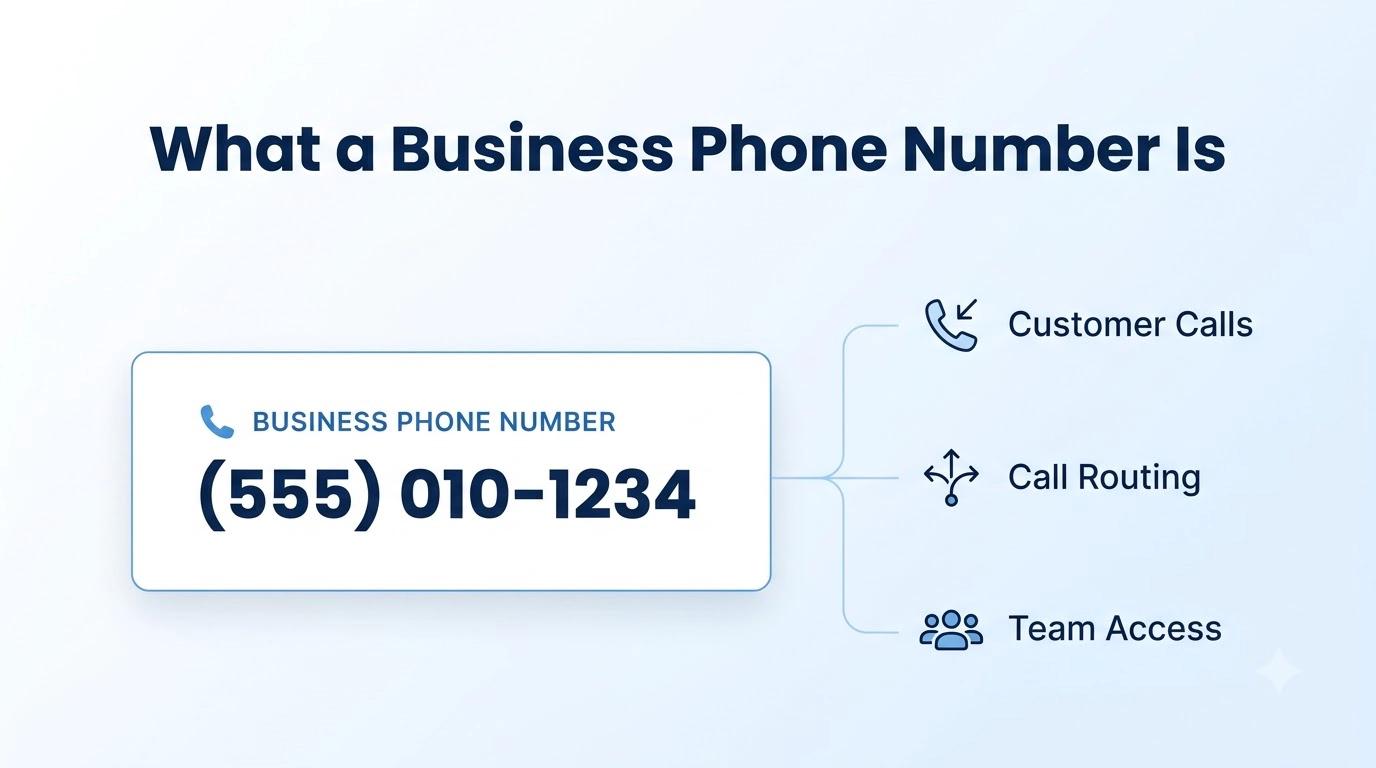
A business phone number is a number that you own and can direct to the right person to answer. Most are virtual today, which means the number isn't tied to a desk or a phone line. On a cloud phone system, it can ring on your laptop app, mobile app, desk phone or an entire team at once.
Because the number is separate from anyone's personal phone, employees can answer it without sharing their own number, new staff can be added within minutes, and if people leave the number stays with the business.
A good business phone number does more than ring. It can send and receive texts, display your business name on outgoing calls and route calls according to rules such as business hours.
Business Phone Number vs Personal and Free Numbers
Many small teams start out on a personal mobile or a free calling app. That can work for a while, but you may start to run into issues.
- Who controls it — personal mobile: One employee; free app number: Whoever holds the app account; business phone number: Your company
- When someone leaves — personal mobile: The number goes with them; free app number: The number can be lost with the account; business phone number: You reassign it
- Answering as a team — personal mobile: Not possible; free app number: Limited; business phone number: One number can ring a person or a whole team
- Texting — personal mobile: Tied to a personal plan; free app number: Varies by app; business phone number: Business texting, with registration
- Caller ID — personal mobile: A personal name or number; free app number: Often generic; business phone number: Your business name
- Hours and routing — personal mobile: None; free app number: Basic; business phone number: Business hours, auto-attendant and voicemail
The easiest test is to ask what happens when the one person who owns the number goes on vacation or leaves the business. If customers can no longer reach you, the number is not yet a business asset.
Types of Business Phone Number
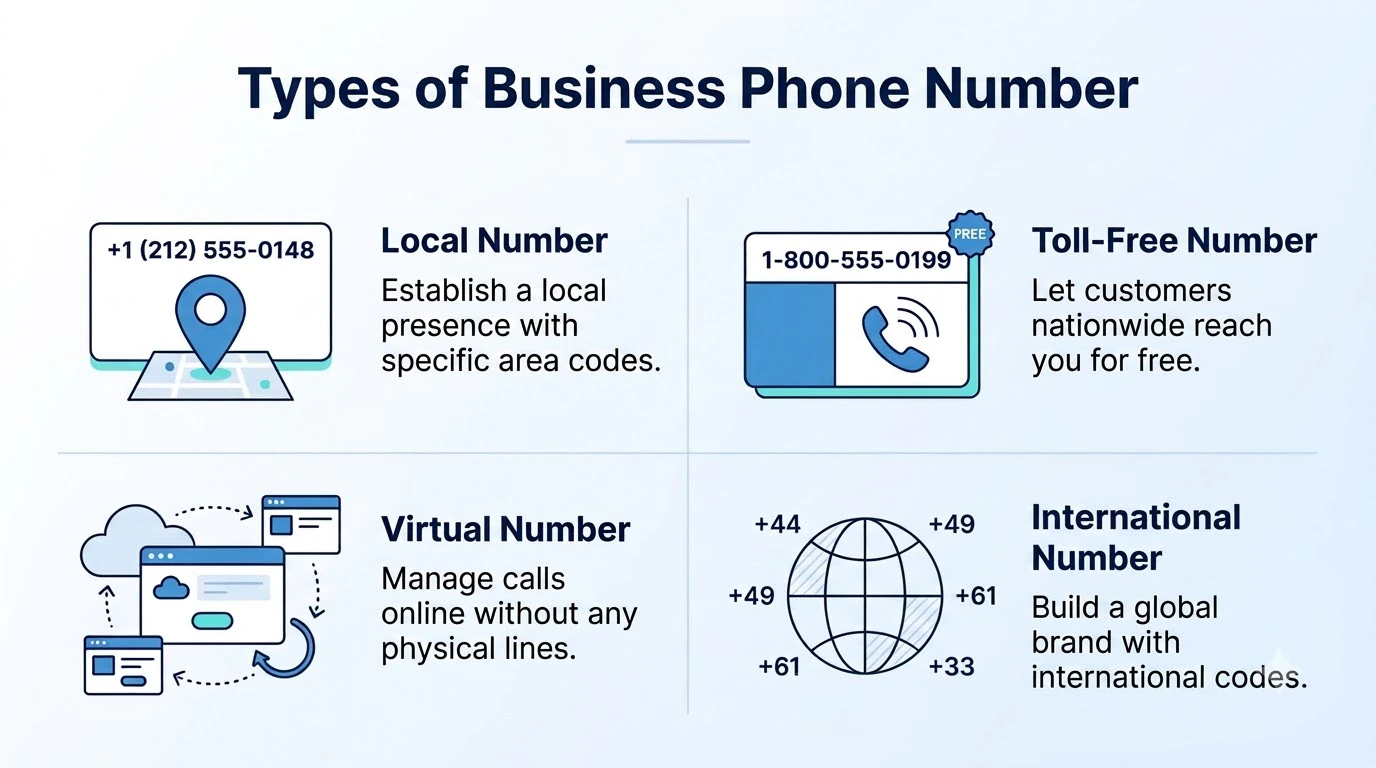
There are four main types to consider, depending on where your customers are and how they find you.
- Local — what it is: A number with a geographic area code; best for: Building trust in a specific market
- Toll-free — what it is: Prefixes such as 800, 888 and 877; best for: National customer service and sales lines
- Virtual — what it is: A number that runs over the internet, with no physical line; best for: Remote teams and cloud phone systems
- International — what it is: A local number in another country; best for: Serving customers abroad without long-distance calls
Local numbers are great if you are targeting a specific region, as people will usually recognize the area code. Toll-free numbers are great if you have customers nationwide, as callers won't be charged to dial.
You can also choose a vanity number, which is a local or toll-free number that spells a word or is easy to remember. It suits advertising, where recall matters.
Twiching's business phone numbers cover local numbers in any US area code, every US toll-free prefix, vanity search and local numbers across 191 countries, all managed from one dashboard.
Further reading: business phone numbers
Vanity numbers deserve extra thought, because a memorable number only helps if people actually remember it. Our guide to vanity number providers explains what makes one worth paying for.
Further reading: vanity number providers
How to Get a Business Phone Number
Once you know what number you want, ordering is usually quick. A short process helps you avoid buying the wrong one.
- 01Choose the type — Pick local, toll-free, virtual or international based on where your customers are.
- 02Search for availability — Look for the area code or word you want, and keep a few alternatives.
- 03Check what it can do — Confirm the number can take calls and texts, and that it supports your routing needs.
- 04Assign it — Point the number at a person, a team, an auto-attendant or a mobile app.
- 05Test it — Call it from an outside line, send a text and check the caller ID on an outbound call.
Having your business name and address to hand (exactly as they appear on your bill), who the account will be under and a brief list of who should be answering each number will help speed up the process.
Twiching states that numbers go live for calls in minutes. If you are starting a trial, note that external calls and SMS switch on after compliance verification, so build that step into your timeline.
Keeping Your Existing Business Phone Number
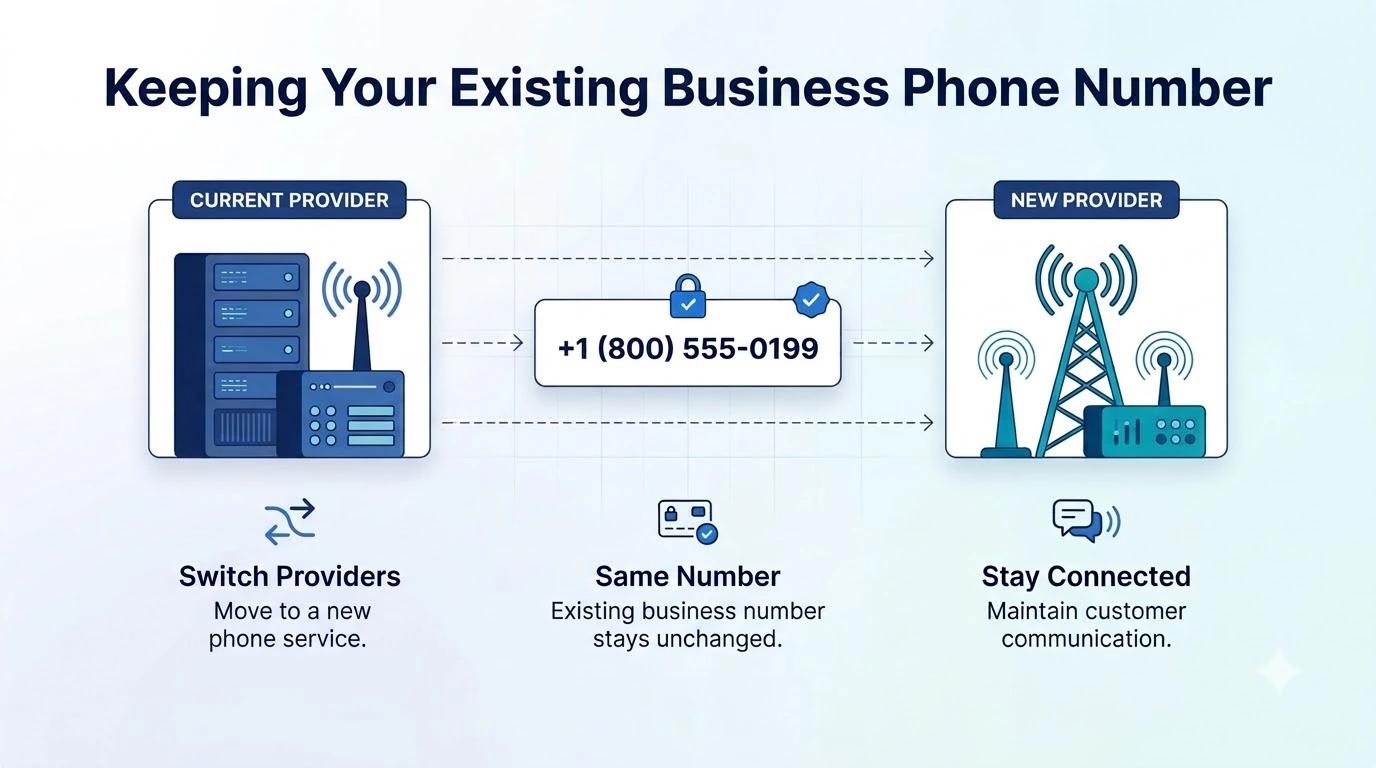
Most businesses already have a number that people know, and changing it means losing that recognition. Porting your number transfers it to your new provider, so people still dial the same digits.
Porting is a simple process. You complete a port request with your new provider. While your number is being transferred, you'll need to keep your previous service active. Once it has moved, you'll want to test it. Delays usually occur when your account details don't match, so be sure your business name and address are exactly the same as on your current bill.
Number portability in the United States is governed by federal rules. The FCC's numbering rules, including number portability, sit in 47 CFR Part 52, and they are the reference for what carriers must support. Confirm the details with your provider before you start.
Further reading: 47 CFR Part 52
Twiching's business numbers page states that port-in takes 5 to 10 business days and promises no ransom on the way out, so you are not locked in.
Caller ID and Compliance for a Business Phone Number
If your number is marked as spam, people won't answer it. Three things help protect it.
- Call authentication — STIR/SHAKEN signing tells carriers your outbound calls are genuinely from you. Twiching states that every outbound call is signed with A-level attestation across US networks.
- Text registration — US business texting requires 10DLC registration. Twiching states that its numbers are registered for 10DLC SMS, with the government registration fee passed through at cost.
- Branded caller ID — Showing your business name on outbound calls helps answer rates, and Twiching states that its branded caller ID is audited per CTIA.
Ask your provider to confirm they can do all three. The most important thing to check is whether authentication and registration are included or sold as extras.
What a Business Phone Number Costs
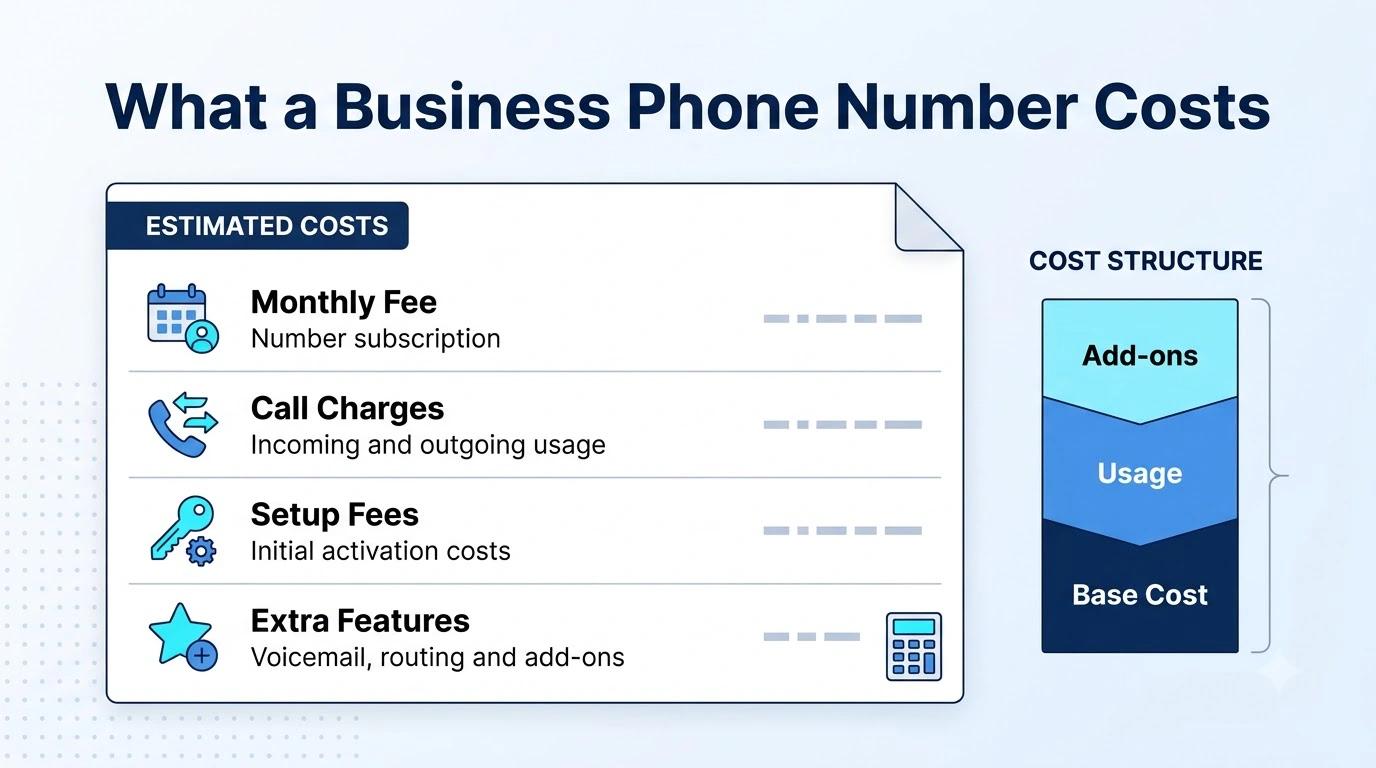
A business phone number usually comes with four kinds of cost: a monthly fee for the number or the plan that carries it, call charges for incoming and outgoing usage, setup fees and extra features such as voicemail, routing and add-ons. Be sure to check each part separately, because a low headline price can leave out the pieces you need.
Twiching's published plans, billed annually, start at $9.99 per user per month on Starter, with $15.99 on Professional and $25.99 on Enterprise, and unlimited US/Canada calling under a fair-use policy. For vanity numbers, the product page says that most are free and that a one-time premium applies to the truly memorable ones. Ask for current number pricing on the plan you are considering.
Remember to check for costs outside the monthly bill, such as registration fees for texting and any charge to port numbers in from your old carrier.
How to Choose a Business Phone Number
Match the number to how your customers will actually use it, not to what looks impressive.
- Customers in one market? A local number in that area code builds familiarity.
- Customers nationwide? A toll-free number keeps calls free for them.
- Heavy advertising? A vanity number earns its cost only if it is easy to say and spell.
- Customers abroad? An international number avoids long-distance charges for them.
- Need both calls and texts? Confirm the number supports both before you buy it.
Most growing businesses end up with more than one number, for example a local main line and a toll-free support line, all managed through one account. If you run a small business, one local number is a perfectly good place to start.
Mistakes to Avoid With a Business Phone Number
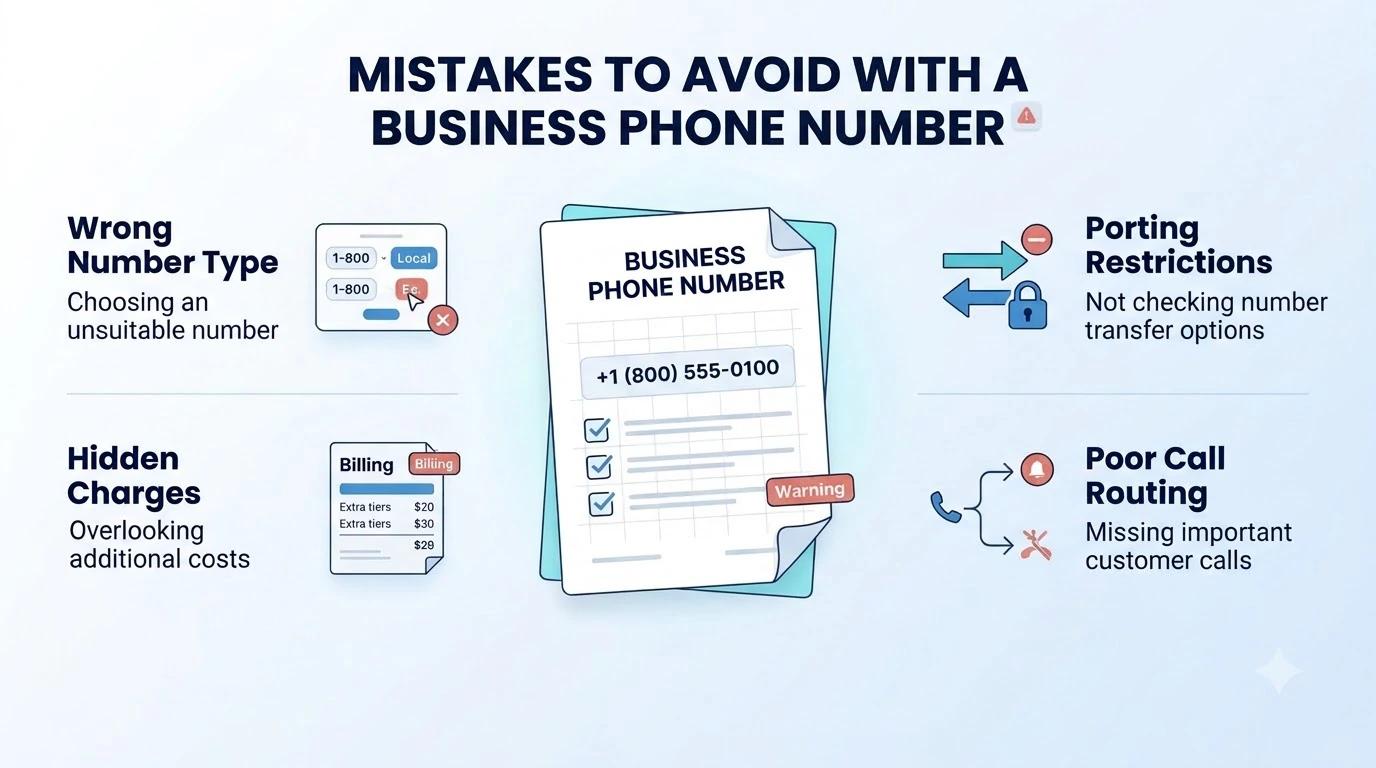
Most problems with a business phone number can be avoided if you spot them before launch.
- Choosing the wrong number type — A toll-free number for a purely local audience, or a local number for a national one, can cost you calls. Some numbers also handle calls only, so confirm texting before you commit.
- Not checking porting options — Confirm your number can be transferred, and keep the old service live until the port completes and you have tested incoming calls.
- Overlooking hidden charges — Registration fees for texting, setup fees and port-in charges can sit outside the monthly price.
- Setting up poor call routing — If every call rings one phone nobody is watching, customers end up in voicemail. Route to a team and set after-hours rules.
- Leaving the number in one person's account — Keep it under a company admin login so it survives staff changes.
- Skipping the test — Call from an outside line, send a text and check an outbound call before you announce the number.
Fixing these after launch may mean reprinting materials or explaining your number to customers again, so a short checklist now will save you money.
Conclusion
The right business phone number is one your customers know, can reach easily and feel confident answering. Choose the type that fits your market, keep your existing number if it has brand value and confirm your provider includes authentication and registration before you go live.
Start with the number your customers will see the most. Test it with real calls and texts, then add further numbers as your business grows.