Introduction
A vanity number turns a phone number into free advertising — 1-800-FLOWERS sells itself in a way that a random ten-digit string never could. But most guides to choosing a vanity number provider stop at listing companies to sign up with, without explaining what separates a number that actually gets remembered from one that just looks clever on a business card.
The mechanics matter: how letter-to-digit mapping works on a real keypad, why local and toll-free vanity numbers solve different problems, what a good number actually costs once you look past the acquisition fee, and how to tell whether the number is doing anything for your business at all. This guide covers the evaluation and setup process end to end, so you can judge any vanity number provider — and any specific number — on the criteria that actually predict recall and call volume.
What Actually Makes a Vanity Number Memorable
Every vanity number works the same way underneath: each digit key on a phone keypad maps to a set of letters (2 = ABC, 3 = DEF, and so on through 9 = WXYZ), and a vanity number substitutes letters for the digits people would otherwise have to memorize. 1-800-356-9377 becomes 1-800-FLOWERS. The number hasn't changed — only how a human brain has to encode it has.
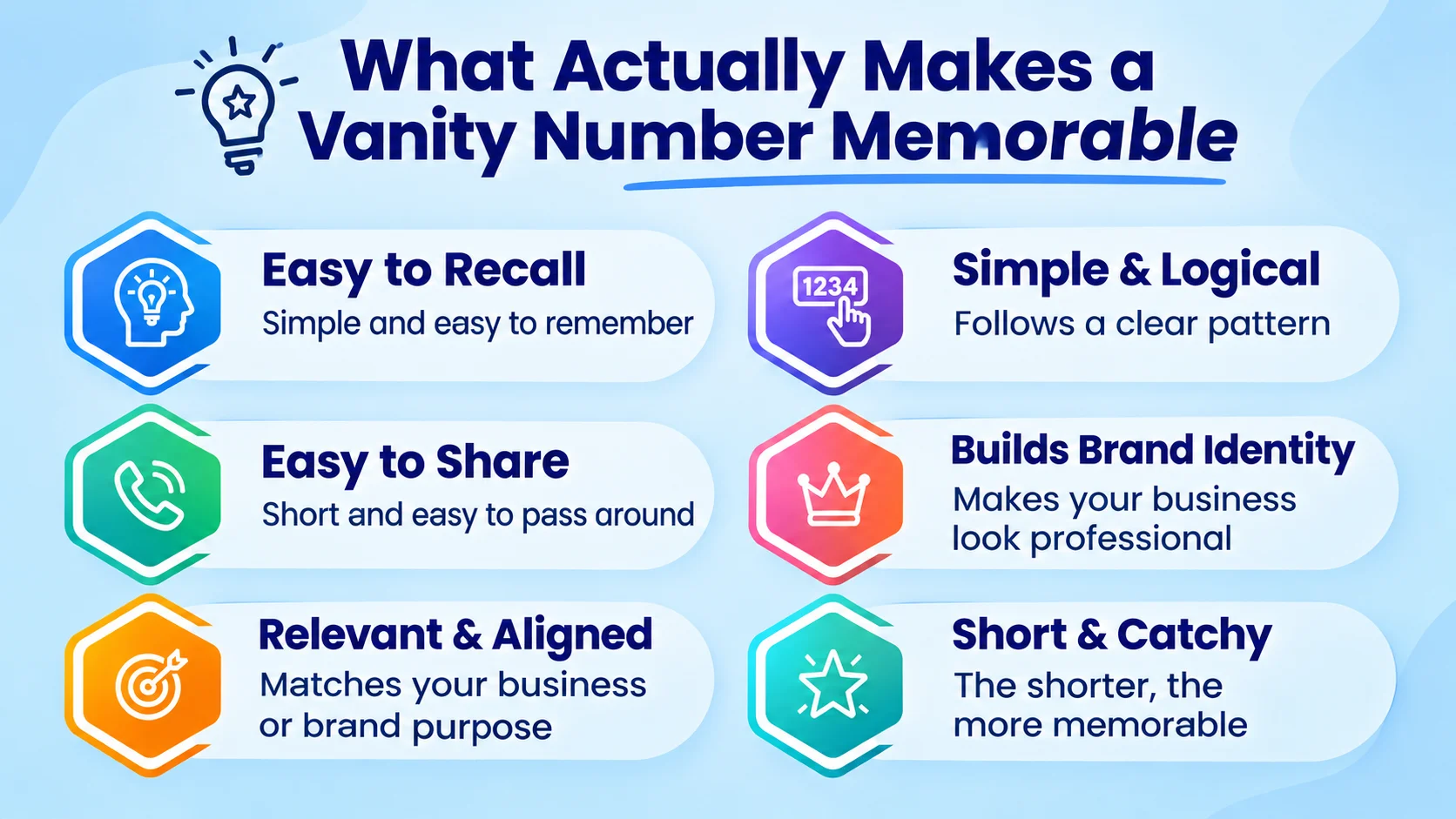
Not every letter substitution earns its keep, though. The numbers that actually get remembered tend to follow a few consistent patterns: they spell a real, common word rather than an invented one, they match or reinforce the business's actual name or category, and they avoid letters that are easy to mis-key or misremember. Q and Z sit on the same key as other letters in some keypad layouts and are rarely used in common words, so numbers built around them tend to underperform numbers built around high-frequency letters.
Length matters as much as spelling. A number where only the last four or five digits spell something (1-800-GO-DEPOT-style patterns) is far easier to recall than one requiring all seven digits to form a word, simply because there's less to hold in working memory.
Local vs. Toll-Free Vanity Numbers: Which Fits Your Business
A vanity number doesn't have to be a toll-free 1-800-style number — local vanity numbers, using a standard area code, work the same way and solve a different problem.
- Toll-free vanity numbers — best for businesses marketing nationally or across multiple regions, since a single number works everywhere and the toll-free prefix itself signals a business rather than a personal line
- Local vanity numbers — best for businesses that want to project a local, community-rooted presence, particularly service businesses (plumbers, law firms, clinics) where a local area code builds more trust than an 800 number
- Multiple vanity numbers — larger or multi-region businesses sometimes run several local vanity numbers per market alongside one toll-free number, routing all of them into the same phone system so no lead is lost regardless of which number someone dials
The choice isn't purely aesthetic — toll-free and local numbers are billed differently (toll-free carries a per-minute usage cost the caller doesn't pay but the business does) and are sourced through different channels, which affects both availability and price.
Further reading: top UCaaS features for business
How Vanity Number Sourcing Actually Works
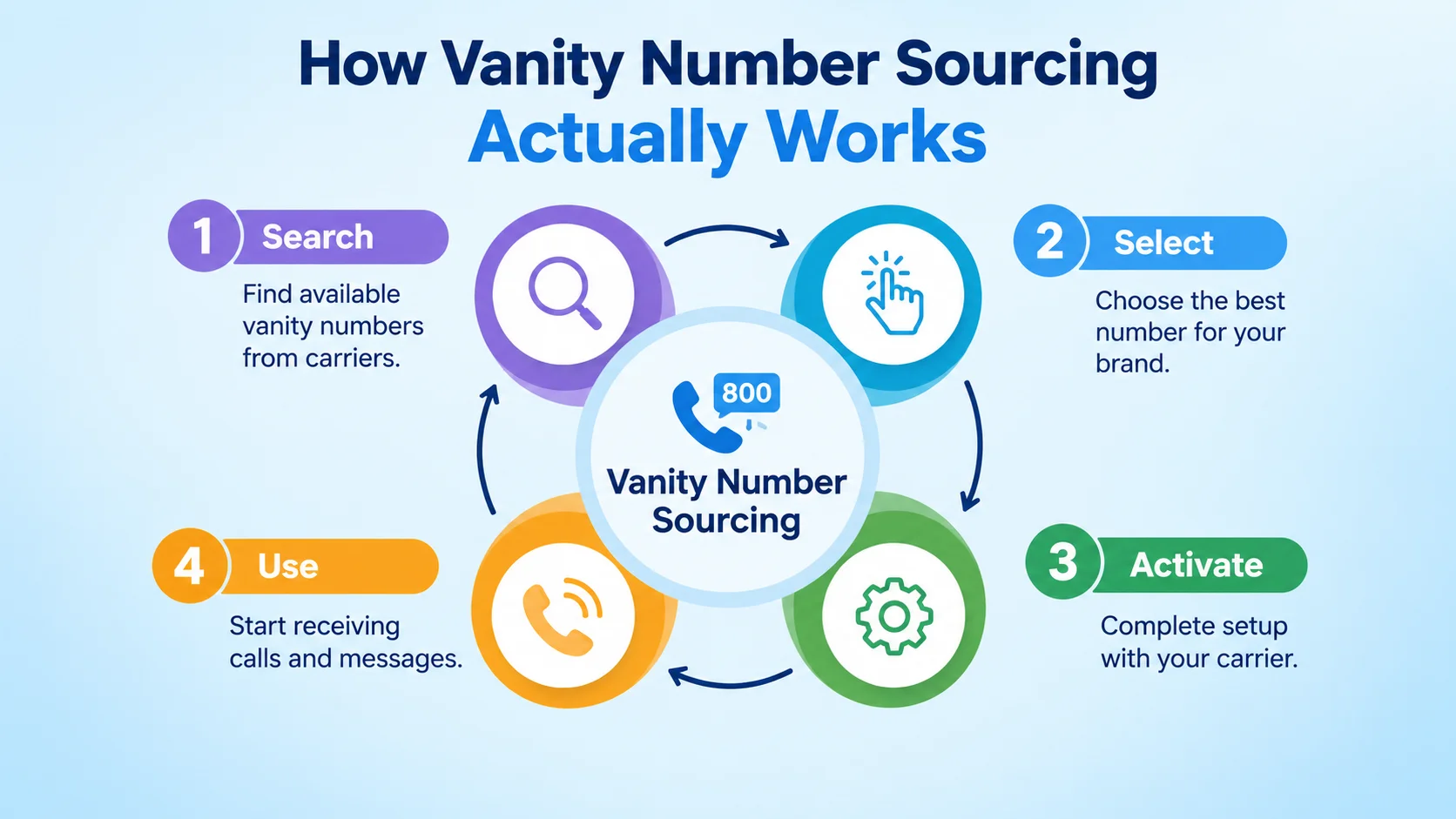
Vanity numbers, especially desirable toll-free ones, are a scarcer resource than most buyers expect. In the US, toll-free numbers are managed through a centralized reservation system, and providers acting as your Responsible Organization search that system on your behalf to find, reserve, and activate a specific number. The most desirable vanity combinations — short, common words in high-value industries — are frequently already taken or held by number brokers, which is why some vanity numbers are available for a modest activation fee while others are listed at a significant premium.
This creates a practical sourcing hierarchy: unclaimed combinations cost little beyond standard activation, secondary-market numbers held by a broker or previous owner carry a negotiated premium, and highly generic, universally desirable words (numbers matching common product categories) command the highest prices, sometimes requiring an ongoing negotiation rather than a simple purchase. A provider that's transparent about which tier a given number falls into — rather than quoting one flat price regardless of desirability — is generally easier to work with.
Further reading: Somos: Picking Your Toll-Free Number
What a Vanity Number Really Costs
The advertised acquisition or activation fee is rarely the full cost picture. A complete vanity number budget includes the one-time acquisition cost (ranging from negligible for an available combination to a substantial premium for a contested one), the recurring monthly service fee most providers charge to keep the number active, and — for toll-free numbers specifically — a per-minute usage charge the business pays for every inbound call, since the caller isn't billed.
Porting fees are the most commonly overlooked line item: if you later want to move a vanity number to a different provider or phone system, expect a porting charge and a processing window, which is worth checking before committing to a provider, not after you've decided to leave.
Integrating a Vanity Number Into Your Phone System
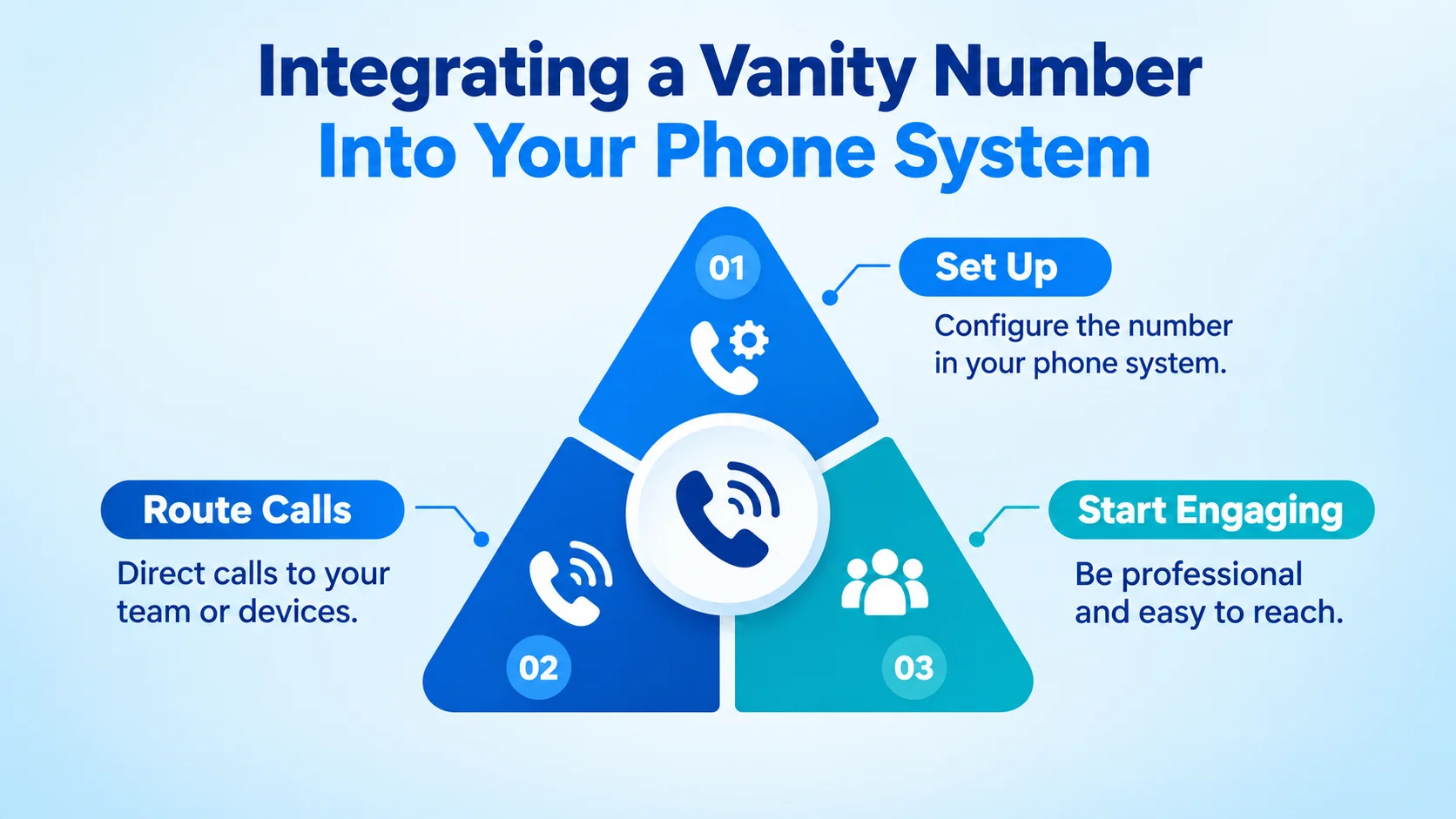
A vanity number is only useful once it actually rings through to someone who can answer it, which means the acquisition is really the first step of a setup process, not the whole project.
In practice this means forwarding or porting the vanity number into your existing business phone system or PBX, configuring how it routes — directly to a team, through an IVR menu, or into a call queue — and deciding whether it shares infrastructure with your other numbers or operates on separate routing logic entirely. Businesses running multiple vanity numbers for different campaigns typically route them all into the same underlying phone system while keeping each number's call data separate, so a call to the marketing-campaign vanity number and a call to the main support line both reach staff normally, but get reported independently.
Further reading: what is UCaaS
Common Vanity Number Mistakes That Hurt Recall
Not every vanity number delivers on its promise, and the failures tend to repeat across a small set of avoidable patterns.
- Mixed letters and digits — a number that's part word, part raw digits (1-800-3MY-DENTIST-type combinations) forces callers to switch between two different mental modes mid-dial, which undermines the entire point of a vanity number
- Words unrelated to the business — a clever or funny word that has nothing to do with what the business does is memorable as a phrase but doesn't help anyone connect it back to your brand when they actually need to call
- Regional or dialect ambiguity — words that are spelled one way but commonly mispronounced or misspelled in a target market create a gap between what people remember hearing and what they actually dial
- Numbers too long to hold in memory — as covered earlier, requiring all seven or ten digits to spell something asks more of working memory than most callers will reliably manage without looking the number up anyway, which defeats the purpose
Measuring Whether Your Vanity Number Is Actually Working
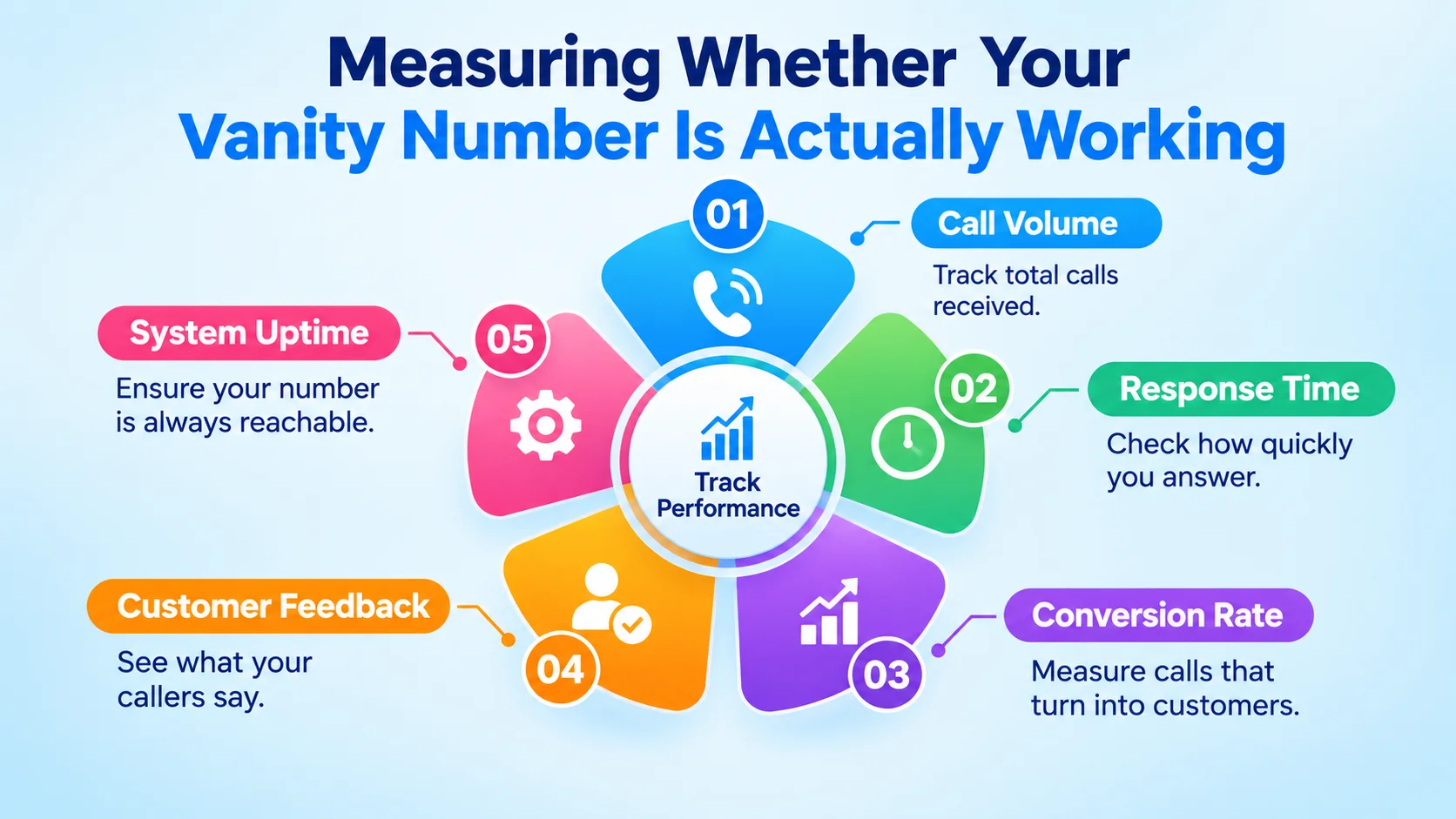
A vanity number is a marketing investment, and like any marketing investment it should be measured rather than assumed to be working. Call tracking is the standard method: assigning the vanity number its own tracking line separate from other contact numbers lets you see call volume, call source, and conversion outcomes tied specifically to that number, rather than blended into your overall inbound call data.
The comparison that actually matters is answer rate and conversion rate against a standard number running the same campaign, not just raw call volume — a vanity number that generates more calls but converts them at a lower rate than a plain number isn't necessarily the win it looks like on the surface. Running both side by side for a defined test period, before fully committing marketing spend to the vanity number, gives a cleaner read than assuming the memorability effect automatically translates to more revenue.
Conclusion
A vanity number earns its cost by being remembered at the exact moment someone needs to call — everything else is secondary to that one requirement. The letter-to-digit mechanics, the local-versus-toll-free decision, and the full pricing picture beyond the headline fee all exist in service of that single goal, and skipping any of them tends to produce a number that looks clever but doesn't actually convert better than a plain one.
Choose based on real recall potential, price out the full cost before committing, and measure the number's performance with the same rigor you'd apply to any other marketing spend, rather than assuming memorability alone will show up in your revenue.