Introduction
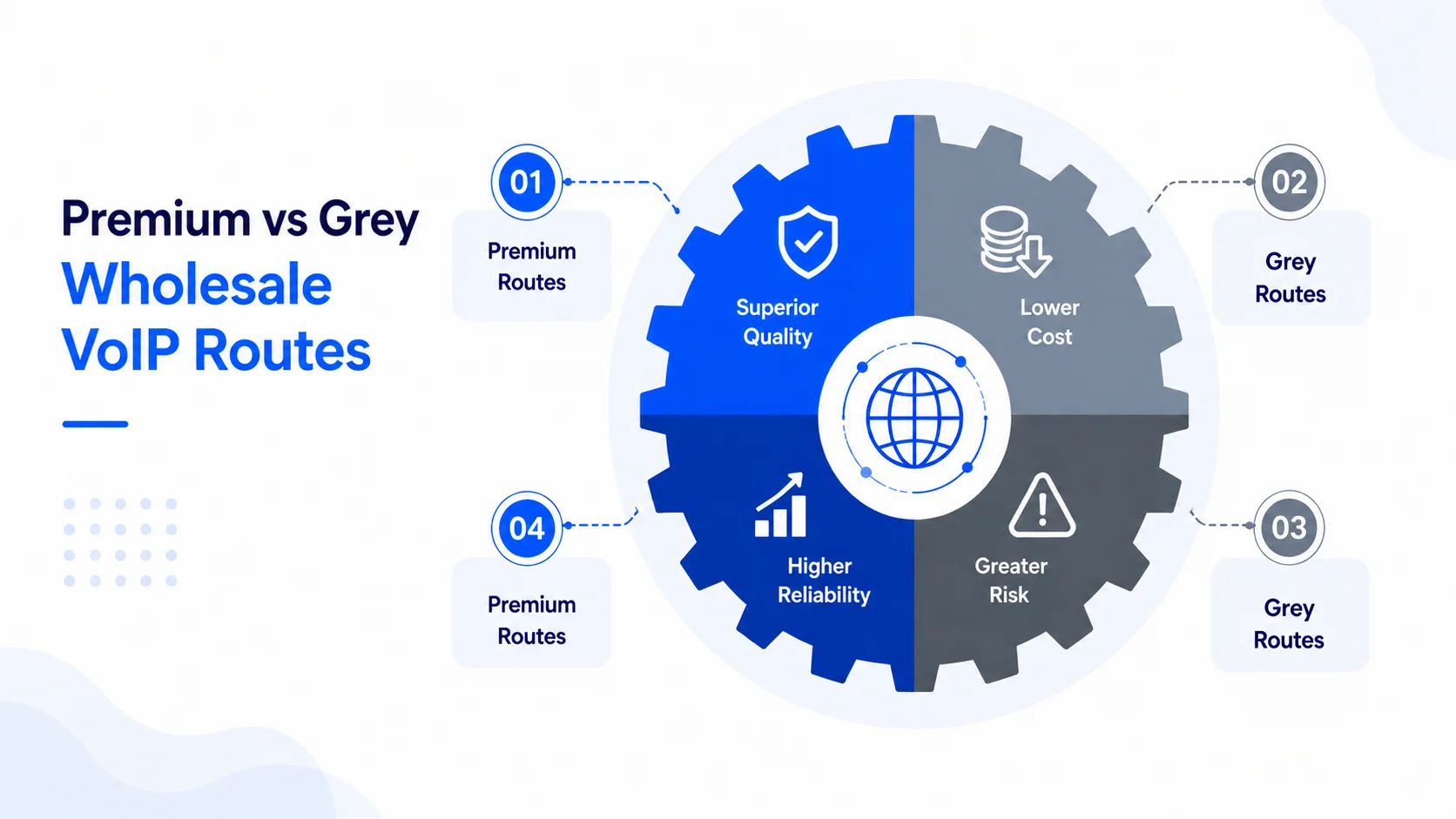
Premium and grey wholesale VoIP routes look identical on a rate deck but perform very differently in production. Premium routes terminate through direct, regulated interconnects with full caller ID and clean quality; grey routes arbitrage unregulated transit, exposing the buyer to regulatory risk. This guide compares the two and gives a test-call method for telling which deck you were actually sold.
Key Takeaways:
- Premium and grey routes can quote the same per-minute price yet perform completely differently in production.
- Premium routes run through direct, regulated interconnects with full white CLI and sustained ASR above 45%.
- Grey routes arbitrage SIM-box or unregulated transit, which shows up as broken caller ID and carrier spam-labelling.
- Grey-route traffic carries real fraud and regulatory exposure, not just a quality risk.
- A 500–2,000 call test batch measuring ASR, ACD, PDD, and MOS is the only reliable way to tell which deck you were actually sold.
What Separates a Premium Route From a Grey Route
On paper, a premium and a grey route to the same destination can look identical — same country code, same per-minute rate. The difference is entirely in how the call actually gets terminated.
A premium route moves through direct, regulated carrier interconnects with clean signalling end to end. A grey route reaches the same destination through unregulated transit or SIM-box termination. That hardware re-originates VoIP traffic as mobile calls to dodge termination fees, which is illegal in most jurisdictions and unreliable by nature.
CLI Integrity: White Routes vs Spoofed Caller ID
A white route preserves the original Caller Line Identity all the way to the handset. A grey route frequently can't — SIM-box termination strips or rewrites CLI, so the recipient sees a local mobile number instead of your actual business number.
This matters commercially as much as technically. Destination carriers increasingly flag high-volume SIM-box traffic as spam, which tanks answer rates on legitimate campaigns riding the same grey route.
ASR and ACD: Reading the Real Signal
Further reading: Wholesale VoIP
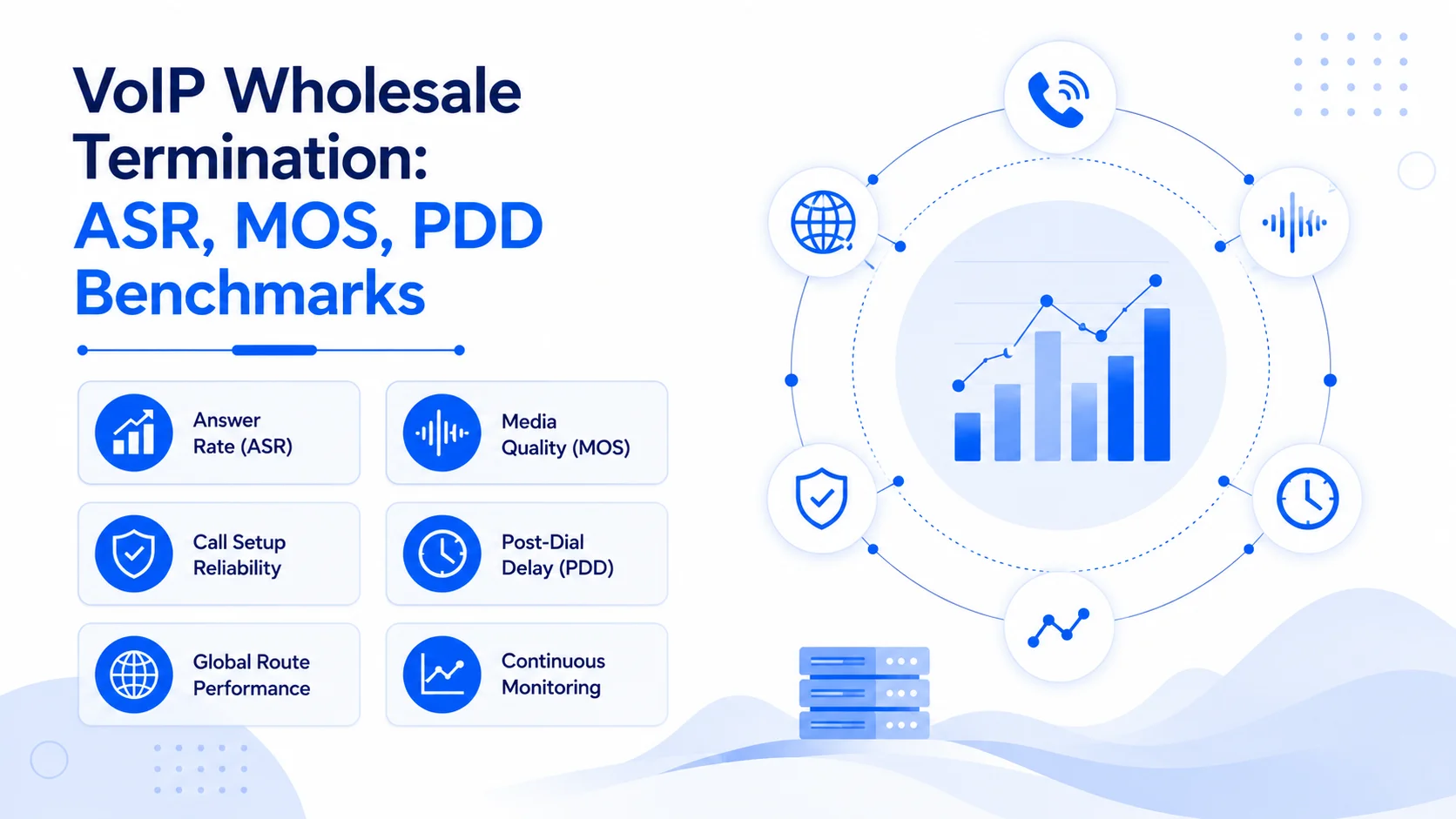
Answer-Seizure Ratio (ASR) and Average Call Duration (ACD) are the two numbers that expose a grey route fastest. A premium route to a well-connected destination should sustain ASR well above 45%. A grey route riding overloaded SIM-box capacity degrades under load and shows a visibly choppier ASR pattern hour to hour.
ACD tells a similar story. Grey routes tend to show a disproportionate number of very short calls — a signature of a poor connection. Recipients hang up before a real conversation starts.
Typical Premium vs Grey Benchmarks
- ASR: premium routes sustain 45%+ on major destinations; grey routes fluctuate and often sit well below.
- MOS: premium routes hold 4.0+; grey routes commonly sit in the 3.0–3.5 range with audible artefacts.
- CLI delivery: premium routes deliver white CLI reliably; grey routes frequently show spoofed or missing caller ID.
- Price: grey routes typically undercut premium by 20–40% — the discount is the tell, not a bargain.
Fraud and Regulatory Exposure on Grey Routes
Buying grey-route capacity isn't just a quality gamble — it's a compliance exposure. SIM-box termination is illegal bypass in most countries, and regulators increasingly hold the buyer, not just the operator running the boxes, responsible when traffic is traced back.
Destination carriers and regulators actively hunt for SIM-box signatures — abnormal call patterns, geographically implausible traffic spikes, repeated short-duration calls from the same number ranges. Blocked routes or fines land on whoever's traffic it turns out to be.
The Test-Call Methodology That Reveals Which Deck You Have
- 01Send 500–2,000 test calls across the route to the specific destinations you actually need.
- 02Measure ASR, ACD, PDD, and MOS per destination, not as a blended average.
- 03Test at multiple times of day — grey routes often perform acceptably off-peak and degrade sharply under load.
- 04Check CLI delivery on the receiving handset directly, not just in the CDR.
- 05Compare the measured numbers against the provider's written SLA, and treat any refusal to commit to numbers as a red flag.
Conclusion
Premium and grey routes rarely announce themselves on a rate sheet — the tell is always in the measured performance: ASR, ACD, CLI delivery, and a real test-call batch against the provider's stated SLA. Twiching's wholesale VoIP routes run exclusively through direct, regulated interconnects with white CLI, so buyers get the numbers up front instead of finding out the hard way after a campaign goes live.