Introduction
The voip wholesale market links telecom carriers, resellers, and big companies through high-capacity voice infrastructure, powering billions of calls daily across the global phone network. Knowing voip wholesale basics matters for any business handling large call volumes — from a carrier reselling capacity, to a company cutting global call costs, to a tech firm adding voice features into its products.
Defining the VoIP Wholesale Market
Voip wholesale is the buying and selling of large amounts of voice traffic between telecom carriers, at rates well below retail pricing. It lets businesses build money-making voice services on cheap underlying infrastructure.
Unlike consumer VoIP services built for individuals, this market runs at carrier scale. Monthly volumes range from hundreds of thousands to hundreds of millions of minutes.
At this scale, even tiny per-minute cost gaps add up to a big hit on revenue and margin. That impact decides whether voice service businesses can survive in tough markets.
Market Structure and Industry Tiers
Further reading: VoIP Wholesale Carrier List
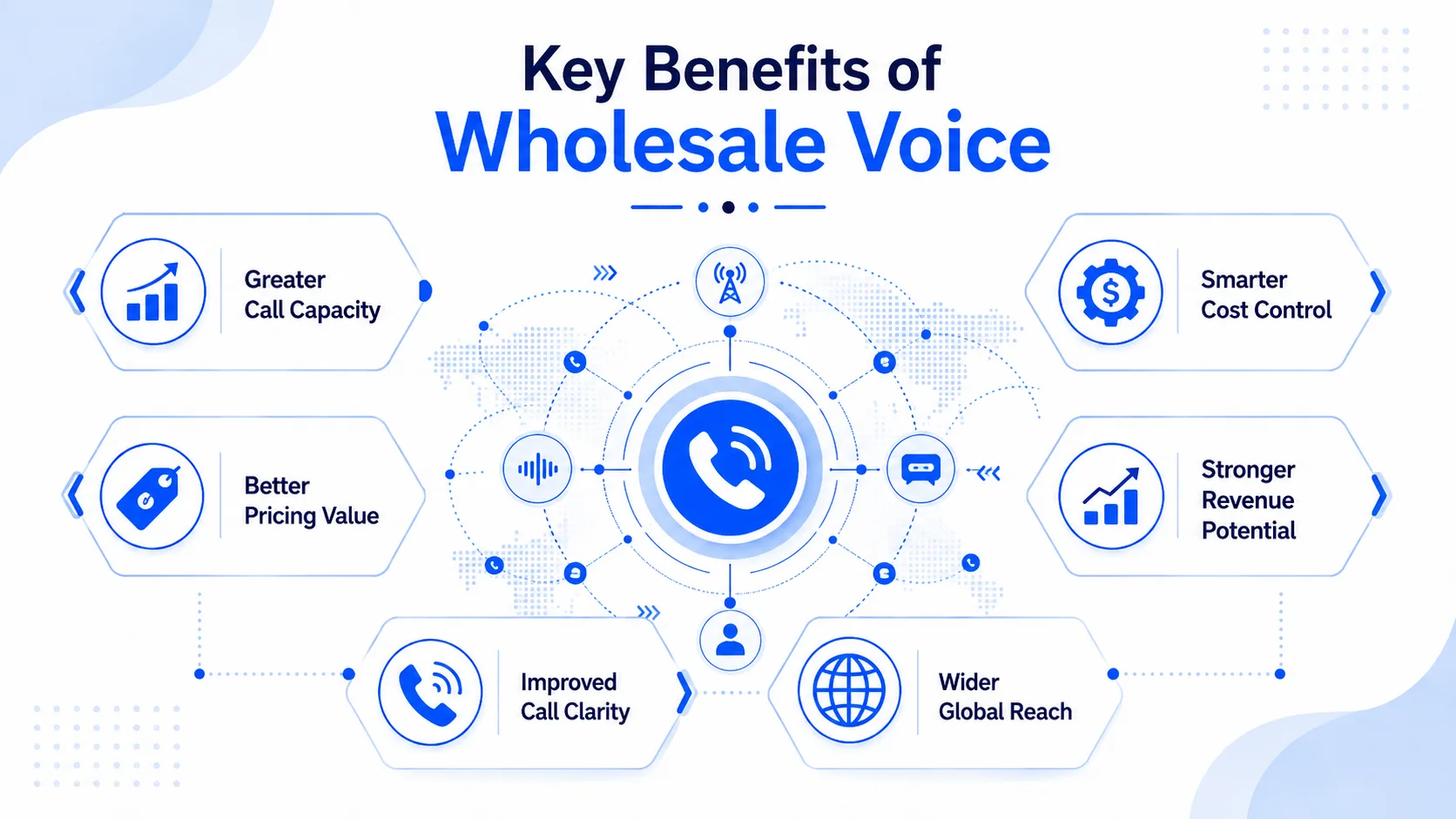
The voip wholesale world is split into clear tiers that show different levels of network ownership and market standing. Tier-1 carriers at the top own huge physical network infrastructure. They set the base pricing for global voice traffic.
Mid-tier aggregators buy capacity from many tier-1 operators. They mix it with better routing, billing platforms, and support services. They then resell it to smaller carriers who lack the scale to strike direct tier-1 deals on their own.
This layered setup lets operators of all sizes join the market.
Key Participants and Their Roles
Knowing the players in the voip wholesale market helps buyers find the right supplier type for their needs. Tier-1 carriers offer the lowest termination rates on major routes. But they need big minimum monthly volumes that only large operators can meet.
Aggregators and brokers offer more flexible deals with lower entry bars and one combined bill. This makes vendor management simpler for operators needing access to dozens of markets. They don't have to keep separate carrier ties in every country.
Pricing Dynamics and Rate Determination
Several factors drive rate levels in voip wholesale at the same time:
- Destination traffic volume
- The number of competing carriers serving a route
- Regulatory costs in destination countries
- Currency exchange rates
- Prevailing market competition
High-demand routes like US domestic, intra-European, and major Asia-Pacific corridors draw the most carriers. That rivalry gives them the best pricing.
Remote or low-traffic destinations have fewer competing operators and higher infrastructure costs. Their higher prices reflect the real cost of keeping steady links in markets with low demand.
Technology Infrastructure
Modern voip wholesale infrastructure runs on SIP-based design. Class 4 softswitches handle call routing and control, while dedicated media servers manage the voice streams crossing the network.
Routing smarts in leading platforms scan thousands of open paths in real time. They pick the best routes based on set mixes of cost targets, quality checks, and traffic priority rules.
These systems handle hundreds of calls per second while making routing calls in under a second. That needs hardware and software built and tuned just for high-volume voice traffic.
Codecs and Audio Quality Standards
Audio quality in voip wholesale networks depends on codec choice, network delay, packet loss, and jitter along the full path.
G.711 gives the highest fidelity using uncompressed PCM encoding at 64 kbps. That makes it the pick for premium routes and customer-facing apps where audio quality directly affects how happy users are.
G.729 squeezes voice to 8 kbps with a small quality trade-off, cutting bandwidth costs for high-volume traffic on tight paths. Quality-aware routing picks codec and path combos on the fly for current network conditions.
Building a Profitable VoIP Wholesale Business
Further reading: Wholesale VoIP platform
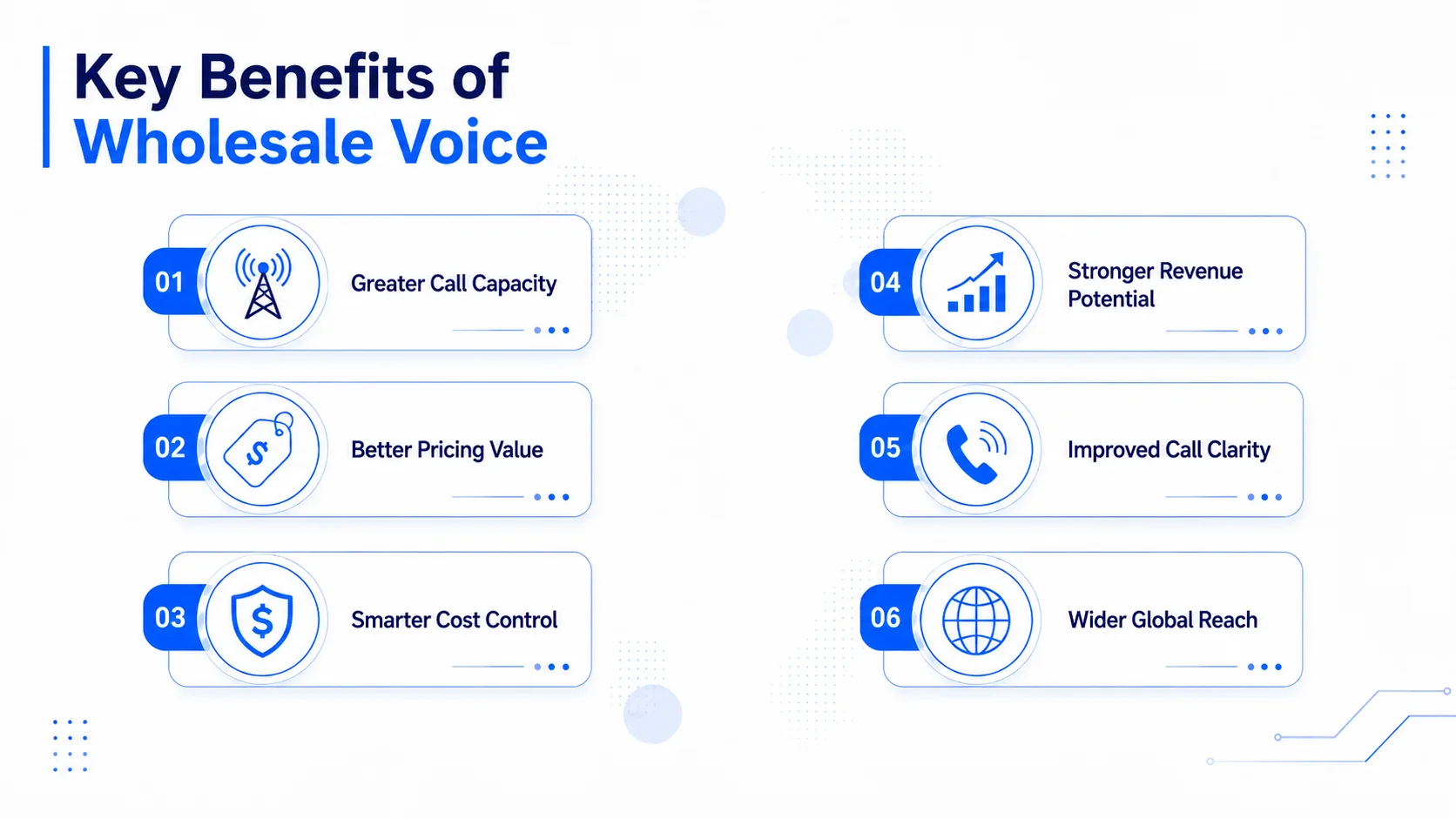
Starting a profitable voip wholesale operation takes real spend on the right tech stack, carrier ties, and business plan.
The key tech parts include:
- A routing platform for call control
- A real-time billing system for CDR processing and invoice generation
- A customer management portal
- Interconnection agreements with upstream carriers via SIP trunking
Focus your early operations on a small set of destination markets where you have strong carrier ties and truly good rates. That works better than wide coverage with average pricing across every destination.
Building Carrier Relationships
Your carrier ties are the top factor in long-term success for this voip wholesale business. Carriers who trust your traffic quality and pay record offer several perks:
- Better rates
- Priority for your traffic during congestion
- Quick help with quality fixes
Talk with account managers often, and pay invoices on time to build a strong credit name. Keep your traffic clean by setting up fraud controls. These controls stop bad actors from working your routes with IRSF and other schemes that hurt carrier ties.
Risk Management and Fraud Control
Risk management matters a lot in the voip wholesale business. Fraud, credit exposure, and route quality failures can each cause big money damage. Set up per-customer spending limits with real-time call volume checks so you can spot and stop fraud right away.
Manage credit exposure with care by setting customer credit limits that match their pay record and money strength.
Spread your carrier list across several providers to cut single-point-of-failure risk. A major outage at any single carrier could otherwise stop service to all your customers at once.
Regulatory Compliance in Voice Wholesale
Further reading: Voice over IP — Wikipedia
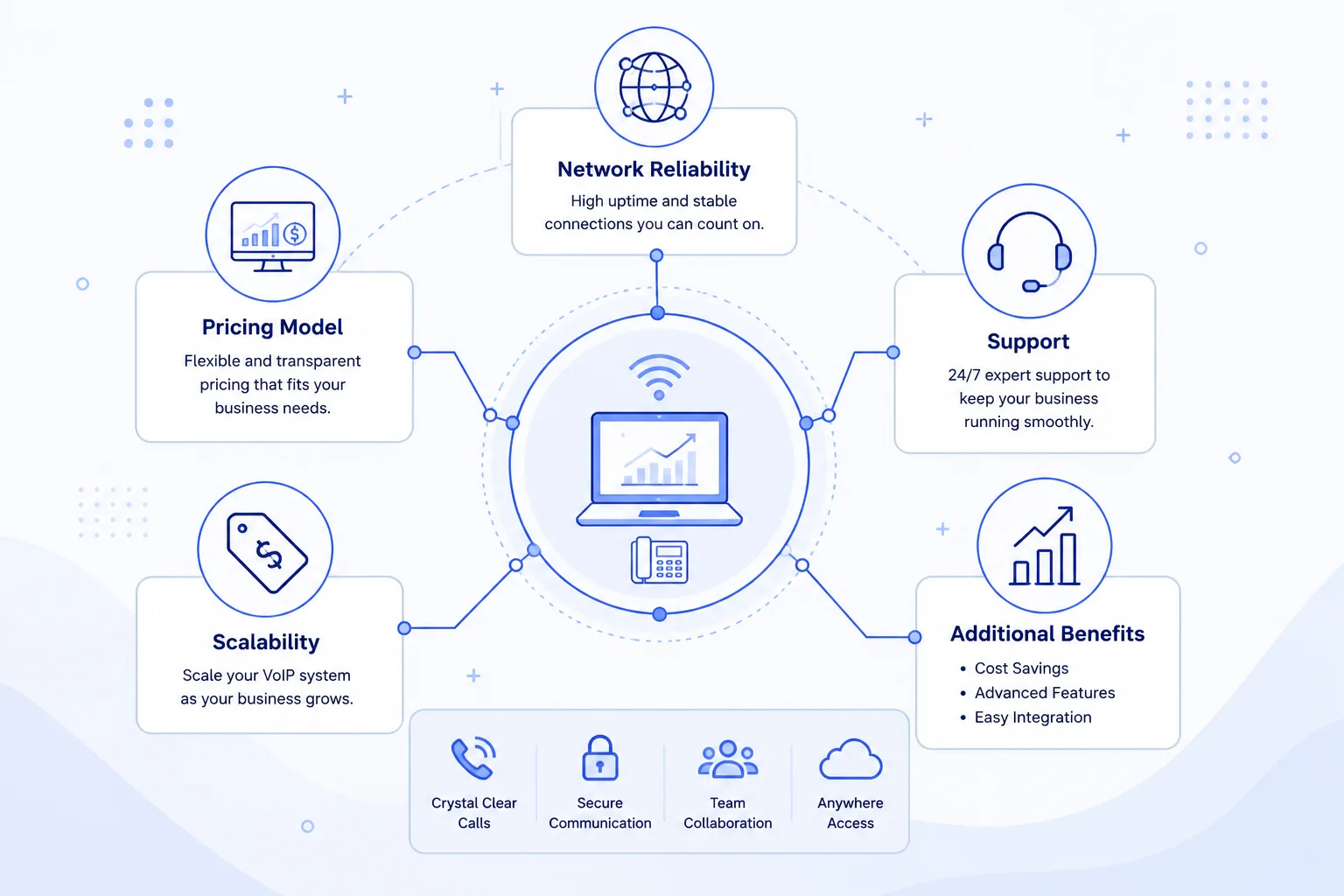
Working in the voip wholesale market means dealing with telecom rules that differ a lot across the countries where your traffic starts and ends.
Rule frameworks usually cover:
- Interconnection access rules
- Emergency services duties
- Lawful intercept features
- Numbering plan rules
- Consumer protection rules
Staying up to date with rule changes in key markets matters a lot. Regulators in many places are updating their telecom rules to cover VoIP tech that older rules never planned for.
Future of the VoIP Wholesale Industry
The voip wholesale industry is going through big change. New tech and tougher competition are driving it.
The ongoing global shift from TDM to all-IP infrastructure cuts link costs. At the same time, it grows the number of IP-ready carriers competing for wholesale traffic.
AI-powered routing improvements, forward-looking quality checks, and real-time fraud detection are becoming standard features. They are no longer extras that set providers apart.
Operators who invest in developer-friendly API platforms and strong analytics will win growing demand. That demand comes from cloud communication platforms, UCaaS providers, and CPaaS companies. All of these are becoming bigger wholesale voice customers.
Regulation Is Rewriting the Competitive Landscape
Beyond infrastructure shifts, rules are also rewriting the competitive playing field.
STIR/SHAKEN attestation in the United States is one driver. So is the rollout of CLI-check frameworks in the UK and EU, and new anti-robocall rules in Asia-Pacific. Together they force every wholesale operator to show real trust signals at the call-setup layer.
Providers who treat compliance as a checkbox will lose access to premium termination in tier-one markets. Others treat attestation, traceback speed, and originating-identity checks as real product features. They can charge real premiums for what regulators call 'fully attested' traffic.
The money gap between attested and non-attested routes grows every quarter. That gap is fast becoming the single biggest factor in long-term revenue per minute.
The Rise of the API-First Wholesale Buyer
A second big shift is the rise of the API-first wholesale buyer. CPaaS platforms, programmable SMS providers, AI voice-agent vendors, and embedded-communications startups now buy termination through code, not email-based rate sheets.
They want self-serve sign-up, rate lookups via code, webhook-driven CDR delivery, and credit-card billing. None of that fits the old manual-quote model.
Operators who update their business stack with REST APIs, OpenAPI schemas, sandbox accounts, and developer docs open up a new buyer group. Old-style rivals cannot reach these buyers.
Several mid-market wholesale carriers have already doubled how fast they win new accounts. They did this by adding a developer portal alongside their account-managed enterprise channel. This came with no loss to their existing carrier-to-carrier business.
Voice Inside Agentic AI Workflows
Looking further out, voice itself is becoming built into agentic AI workflows. Outbound AI receptionists, real-time mood scoring, multilingual call translation, and zero-touch fraud blocking at the SBC layer are no longer test projects. They are showing up in live tools from multiple vendors.
Wholesale voice infrastructure will increasingly be judged on more than cents-per-minute and ASR. Its ability to show real-time signals, like intent, mood, and fraud risk, alongside the call itself will matter too.
Operators who build open, code-friendly, and rule-rich platforms now will underpin the next wave of voice products.
Those still selling raw minutes over flat SIP trunks risk getting pushed into the lowest tier of the market. This is true even as overall voice volumes keep climbing.
Conclusion
The voice over IP market for carrier and wholesale traffic offers real business chances. This is true for businesses that mix the right tech infrastructure with strong carrier ties and tight operational management. Success needs clarity on your target market, investment in scalable and reliable platform tech, and steady attention to shifting rules and rivals. Businesses that build these strengths step by step will be well placed to compete well and grow profitably. Despite ongoing per-minute price drops, this market stays core to global telecom, and it will keep creating real business chances for well-run operators.