Introduction
UCaaS vendors consume VoIP wholesale services very differently from a typical reseller, needing multi-tenant SIP trunking, programmable DID provisioning over REST APIs, embedded number porting, and a BYOC (Bring Your Own Carrier) backplane. This guide walks through the API surface, billing model, and SLAs UCaaS vendors should demand from a carrier partner to keep per-seat pricing profitable at scale.
What VoIP Wholesale Services Actually Include
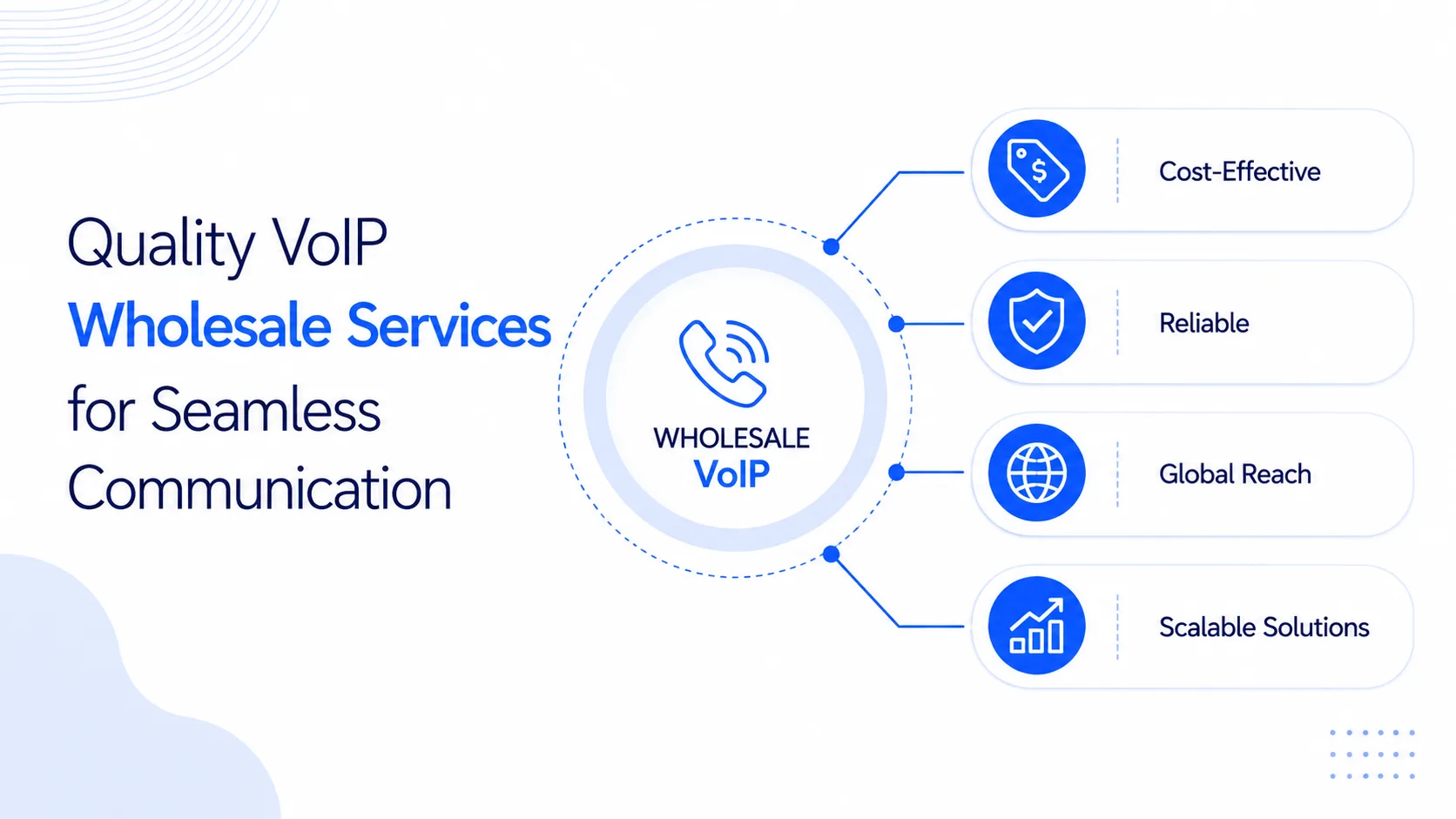
VoIP wholesale services are the carrier-grade voice products sold business-to-business — to ITSPs, contact-centre platforms, UCaaS vendors, resellers, and enterprises with high outbound volume. They sit one layer below retail VoIP and provide the SIP trunks, termination minutes, inbound numbers, and messaging that retail products depend on. Pricing is per-minute and per-DID, billing is metered in seconds, and the buyer brings the application.
Core VoIP wholesale services include SIP trunking, outbound wholesale VoIP termination, inbound DID origination, toll-free number hosting, number porting, and A2P SMS delivery. Advanced offerings layer on call recording, real-time analytics, AI-driven fraud monitoring, programmable APIs, and white-label VoIP reseller portals. A serious VoIP wholesale services provider exposes the whole stack on one platform.
SIP Trunking and Wholesale VoIP Termination
Further reading: Wholesale pricing & rate deck
SIP trunking is the entry point for most enterprise VoIP wholesale services contracts. A SIP trunk connects a customer's PBX or UCaaS platform directly to the carrier, replacing legacy PRI lines. Capacity scales elastically with traffic, and trunks are provisioned from the same dashboard as DID ranges and outbound termination.
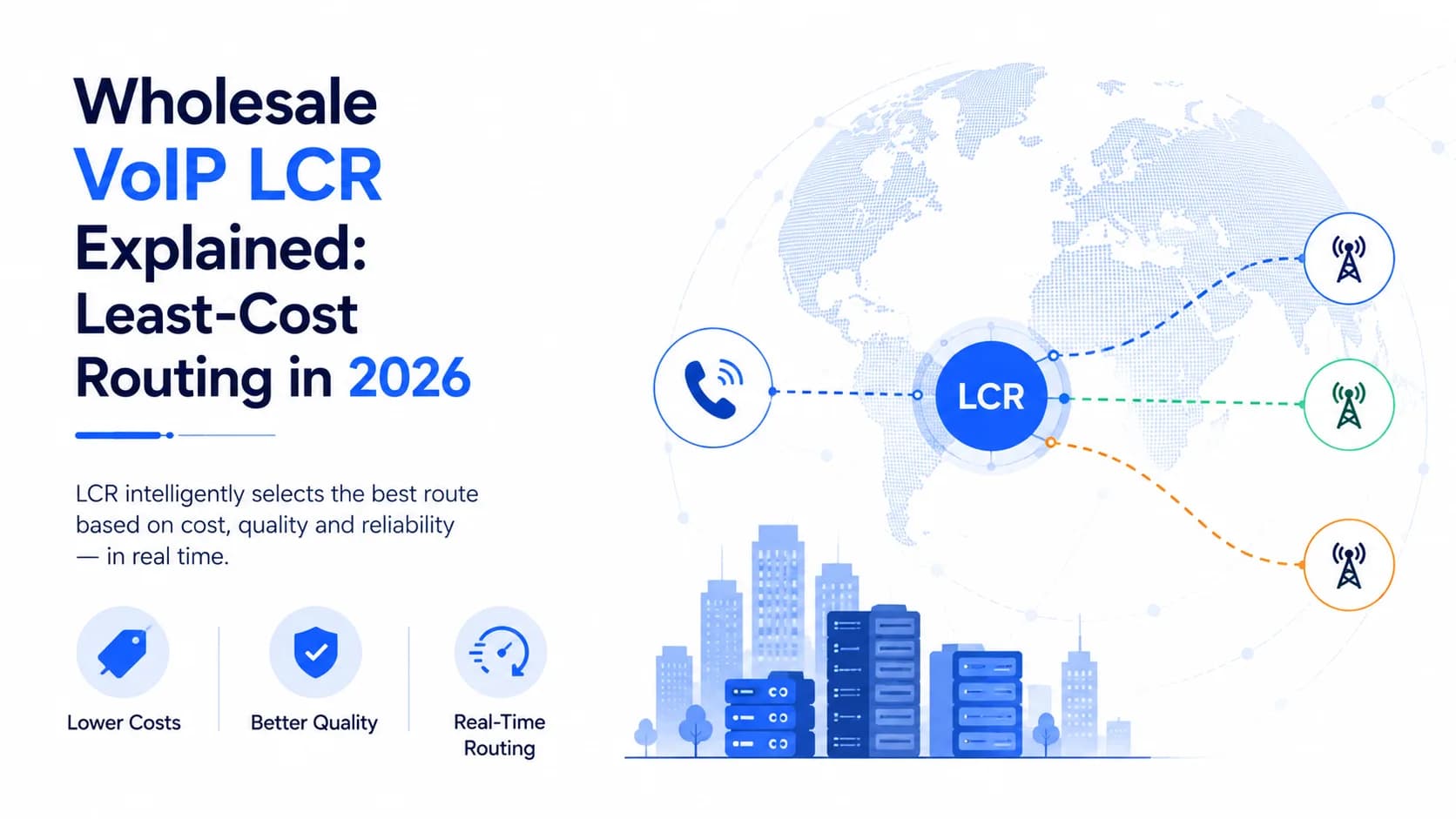
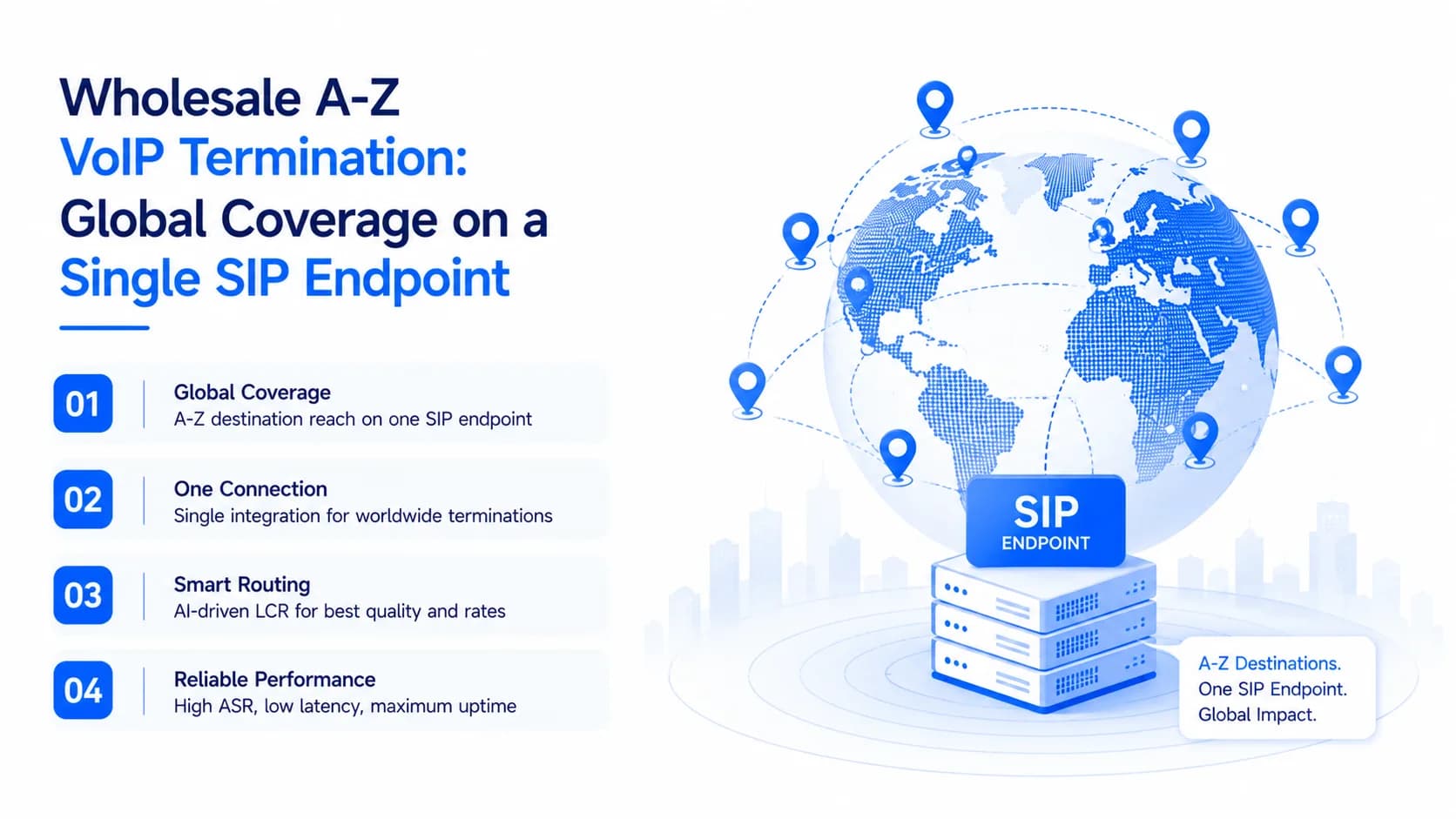
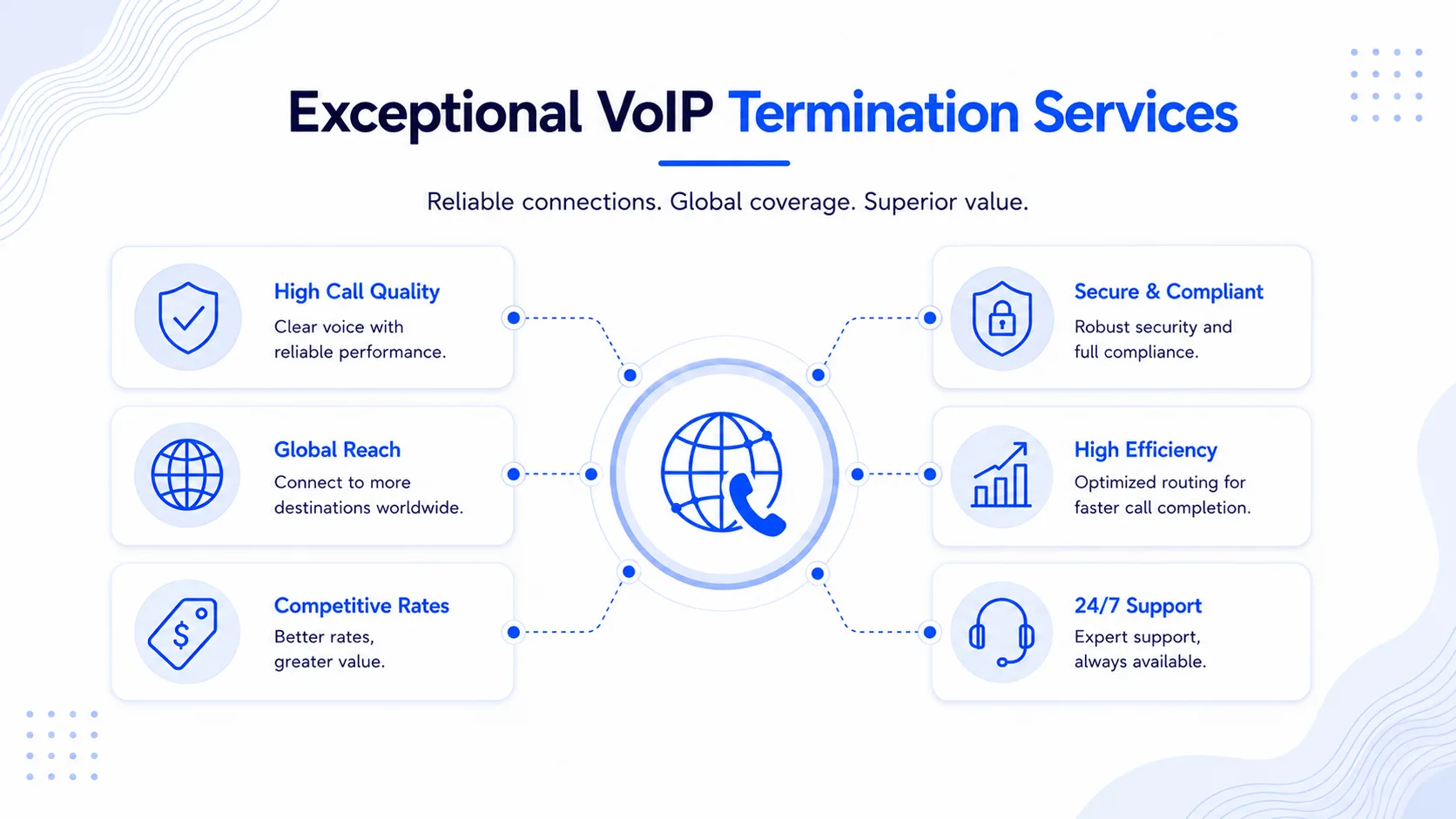
Wholesale VoIP termination is the volume side — outbound minutes delivered globally on A-Z international routes. Per-minute pricing, transparent billing increments, and live route-quality scoring are the table stakes. A credible VoIP wholesale services provider publishes wholesale VoIP rates per destination so customers can model real margins before signing, not after the first invoice.
Inbound DID Origination and Number Porting
DID origination is the inbound flip side of wholesale VoIP termination. Customers provision local, mobile, toll-free, and shared-cost numbers across 100+ countries from a single dashboard or API. Modern VoIP wholesale services provision DIDs in minutes, not days — and increasingly across geographies that used to require weeks of paperwork.
Number porting matters as much as origination. When customers switch carriers, their numbers come with them, and a VoIP wholesale services provider that handles porting cleanly removes one of the biggest friction points in the buyer journey.
It is a real differentiator between operators who run the platform and operators who resell it.
A2P SMS and Programmable Messaging
Further reading: Wholesale VoIP platform
Most VoIP wholesale services providers now extend their voice infrastructure to support A2P (application-to-person) messaging at wholesale rates. This lets customers send transactional messages, verification codes, and marketing campaigns through the same carrier relationships that carry their voice traffic. It means one contract, one billing relationship, and one set of compliance posture.
Programmable messaging APIs layered on top turn raw SMS delivery into a CPaaS-style product. Developers ship voice and messaging features against the same SDK. Meanwhile, the VoIP wholesale services provider handles the underlying carrier negotiations, sender-ID compliance, and short-code provisioning per market.
STIR/SHAKEN and Compliance Across Markets
STIR/SHAKEN attestation is now table stakes for any VoIP wholesale services provider handling US-bound traffic. Calls signed at A-attestation get higher ASR, fewer spam labels, and better acceptance by downstream carriers. The premium is small; the ASR improvement usually pays it back several times over.
Outside the US, the regulatory floor varies — GDPR for European call data, country-specific licensing, EU mobile termination caps, and per-market KYC requirements. A credible VoIP wholesale services provider centralises that compliance so customers inherit it rather than rebuild it. Twiching tracks the per-market posture and reflects it in every contract.
White-Label Reseller VoIP Wholesale Services
White-label reseller programmes are the multiplier behind every fast-growing wholesale VoIP services business. Resellers carry their own brand, set their own retail wholesale VoIP rates, and own the customer relationship. The underlying VoIP wholesale services provider handles softswitches, billing, fraud controls, and the 24/7 NOC.
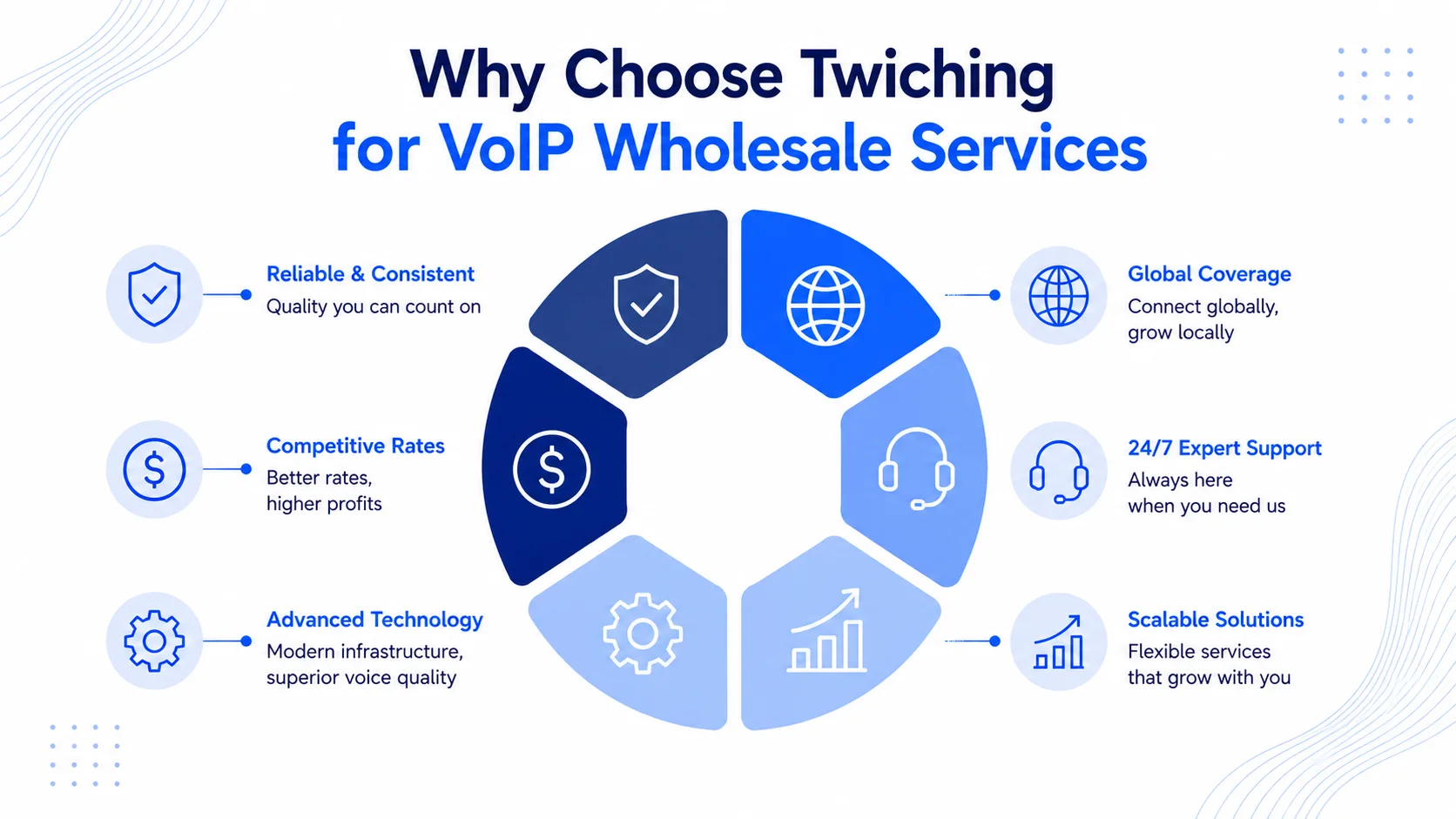
Fair reseller commissions paired with fast onboarding are the difference between a programme that scales and a programme that stalls. Twiching's white-label VoIP wholesale services programme bundles competitive wholesale VoIP rates with a branded portal at signup and KYC under 48 hours. It also gives full access to the same carrier-grade VoIP wholesale solutions that direct customers use.
Hosted VoIP vs. VoIP Wholesale Services
Hosted VoIP is a fully managed retail phone service — the provider handles handsets, features, voicemail, and support. VoIP wholesale services provide raw carrier capacity (SIP trunks, termination, DIDs) that customers connect to their own PBX or UCaaS platform. Hosted VoIP is for end users; VoIP wholesale services are for operators.
Operators choose VoIP wholesale services for two reasons: more control over the call path, and lower per-minute economics at scale. The trade-off is operational ownership.
The buyer brings the application layer and the customer relationship, while the wholesale provider supplies the underlying wholesale VoIP solutions and VoIP wholesale rates. The customer keeps margin from the spread to retail.
Can Small Businesses Access VoIP Wholesale Services?
Yes. The traditional volume minimums that locked small businesses out of wholesale pricing have largely disappeared. Modern VoIP wholesale services providers aggregate traffic across many customers and pass the bulk economics back.
Even single-location ITSPs and growing platforms can access carrier-tier wholesale VoIP rates, STIR/SHAKEN verified calling, and enterprise-grade features.
Twiching is built around exactly that model. Onboarding does not require a minute commitment, KYC completes in under 48 hours, and a dedicated implementation engineer wires up the SIP trunk. Real production traffic on the platform's VoIP wholesale services usually starts within a week of first contact.
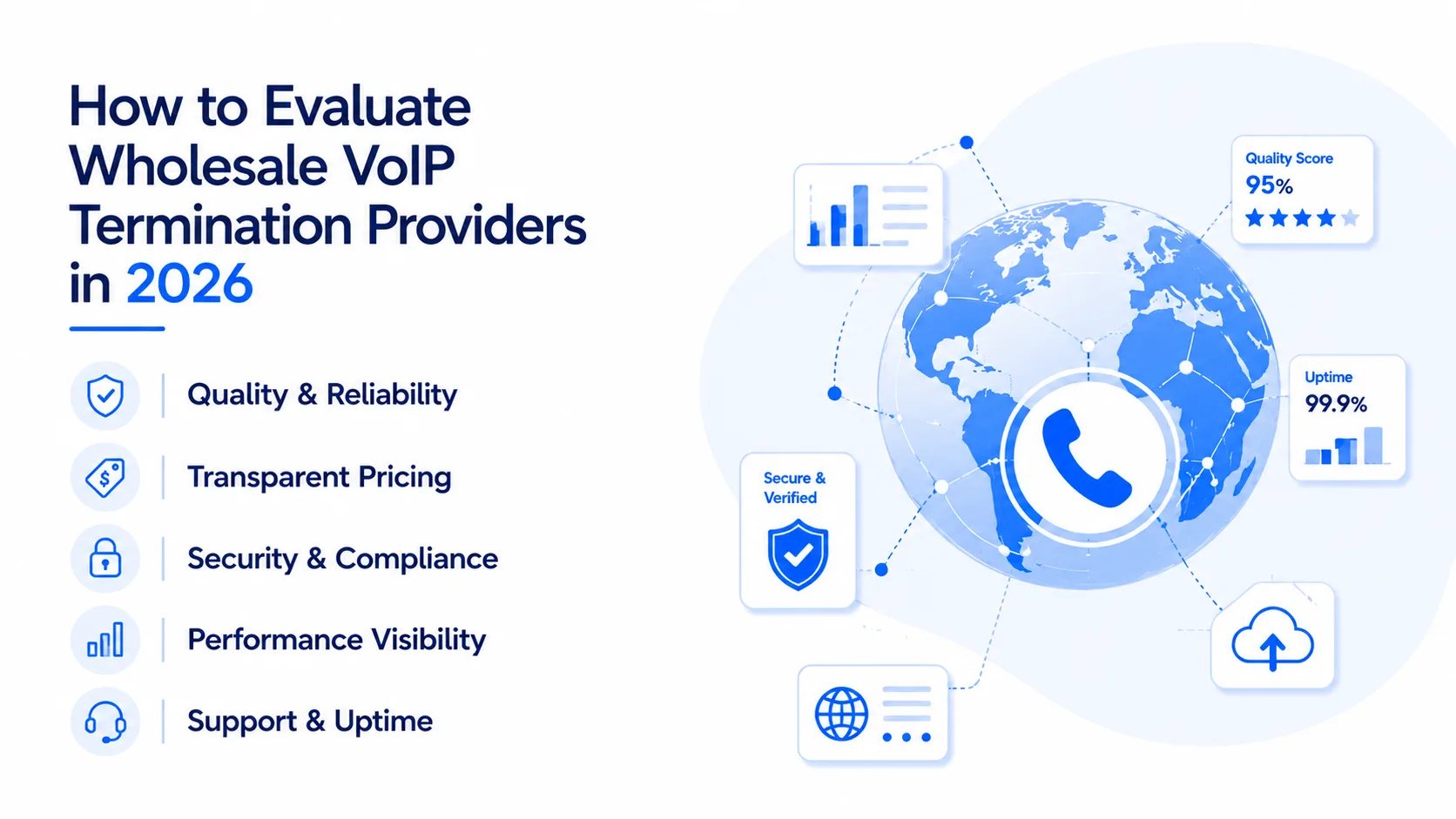
How to Choose a VoIP Wholesale Services Provider
- 01Service breadth — SIP trunking, wholesale VoIP termination, DID origination, and A2P SMS on one platform.
- 02Rate transparency — wholesale VoIP rates published per destination with billing increments and currency.
- 03Route quality — live ASR, ACD, and PDD per destination, accessible via API.
- 04STIR/SHAKEN — full attestation on US-bound traffic, with reporting visible to customers.
- 05Programmability — REST APIs for CDRs, provisioning, and rate-deck queries.
- 06Reseller programme — fair commissions, branded portal, fast onboarding.
- 07Support — 24/7 NOC with 15-minute critical-incident SLA and a named technical account manager.
VoIP wholesale services span a range of products that serve different customer needs. Outbound termination routes calls from your platform to PSTN endpoints globally.
Inbound origination provides DID numbers that route calls to your SIP infrastructure. SIP trunking connects business phone systems to the PSTN.
Each product has distinct technical requirements, pricing models, and quality metrics. Building a comprehensive wholesale offering that covers all three positions you to serve larger enterprise and ITSP customers who prefer consolidated sourcing.
Integration depth determines the operational value of VoIP wholesale services. Basic SIP termination with static credentials is simple but limited. Modern wholesale platforms offer REST APIs for number provisioning and webhooks for real-time call events.
They also provide CDR streaming to your data warehouse and white-label portals that let you brand the service for your own customers. Evaluate the API documentation and sandbox environment before committing — a poorly documented API creates more operational overhead than the service saves.
Platform integration capabilities separate leading VoIP wholesale services from commodity providers. A REST API that supports number provisioning, routing configuration, real-time CDR retrieval, and rate deck management allows you to build automated workflows that reduce operational costs.
Webhook support for real-time call events enables quality monitoring without constant API polling. Providers whose portals are web-only with no API access force manual processes that don't scale. Evaluate API documentation completeness and sandbox availability as part of your procurement process.
Compliance monitoring for VoIP wholesale services must cover both your obligations as a service provider and the obligations your carrier agreements place on your traffic. Implement automated traffic type monitoring that flags calls matching patterns indicative of prohibited use — robocalling campaigns, IRSF exploitation, or traffic misrepresentation.
Many carrier contracts include audit rights. A carrier that discovers non-compliant traffic patterns in your CDRs can terminate your agreement immediately and hold you liable for any resulting fraud losses. Proactive compliance monitoring protects both your reputation and your carrier relationships.
Conclusion
VoIP wholesale services are the carrier-grade building blocks every retail voice product is assembled from — SIP trunking, wholesale VoIP termination, DID origination, A2P SMS, white-label reseller programmes, and STIR/SHAKEN attestation underneath it all. The right provider exposes the full stack on one platform with transparent wholesale VoIP rates, real-time CDRs, and 24/7 NOC support. Twiching is built around that model, so ITSPs, resellers, contact-centre platforms, and growing businesses can build on carrier-grade VoIP wholesale services without operating the carrier themselves.