
Introduction
Running a wholesale VoIP business in 2026 looks nothing like it did five years ago. Margins are tighter, customers expect API-driven self-service, and STIR/SHAKEN attestation is now table stakes. This guide walks through five proven strategies to turn your wholesale VoIP solutions into a platform rather than a price sheet.
Why It Is Time to Supercharge Your Wholesale VoIP Business
The wholesale VoIP business that wins in 2026 will look very different from the one that won in 2021. Direct carrier interconnects, STIR/SHAKEN attestation, real-time fraud prevention, and a white-label VoIP reseller programme are no longer optional extras — they are the floor. Operators still running static LCR scripts and monthly invoices are already losing customers to competitors who automated those layers two years ago.
This guide is for owners and operators who want to supercharge wholesale VoIP growth without burning capital. Five concrete strategies, in the order they typically pay back fastest. Each one stacks on the previous — together they form a complete wholesale VoIP business model rather than a list of tactics.
The 5 Strategies That Move the Needle
Further reading: Wholesale pricing & rate deck
- 01Partner with a wholesale VoIP provider that owns its routes — every middleman erodes margin.
- 02Launch a white-label VoIP reseller programme to multiply distribution without hiring a sales army.
- 03Build wholesale VoIP fraud prevention into every layer of the platform, not bolted on.
- 04Cross-sell SIP trunking alongside wholesale VoIP termination to lock in enterprise contracts.
- 05Run a data-driven wholesale VoIP profitability loop on per-destination ASR/ACD KPIs.
Strategy 1 — Pick a Wholesale VoIP Provider with Direct Routes
The fastest way to undermine a wholesale VoIP business is to ride on top of someone else's wholesale routes. Every extra hop adds latency, eats margin, and shrinks the SLA you can honestly offer customers. The right wholesale VoIP carrier owns direct interconnects with Tier 1 partners, publishes live ASR and PDD per destination, and shares route-level CDR data through an API.
Twiching posts wholesale VoIP rates per destination publicly so partners can model their own margins before signing. That transparency is the single biggest filter separating a genuine wholesale VoIP provider from a reseller of a reseller. It is the foundation every other growth strategy builds on.

Strategy 2 — Launch a White-Label VoIP Reseller Programme
Further reading: Wholesale VoIP platform
A white-label VoIP reseller programme is the cleanest way to multiply distribution without doubling sales headcount. Resellers carry their own brand, set their own retail wholesale VoIP rates, and own the customer relationship. The wholesale VoIP business handles carrier interconnects, the billing engine, and fraud controls behind the scenes.
Fair reseller commissions matter more than the headline rate. A 2 percent margin on a defensible Tier 1 route beats a 10 percent margin on a flaky path resellers apologise for weekly.
Twiching's white-label VoIP reseller programme pairs competitive wholesale VoIP rates with a branded portal and fair commissions. Resellers also get 24/7 NOC support that they pass through as their own service.
Strategy 3 — Get Aggressive on Wholesale VoIP Fraud Prevention
IRSF and SIM-swap fraud are the single biggest existential risk to any wholesale VoIP business. A compromised customer trunk can rack up six-figure exposure overnight if there is no real-time cap.
Effective wholesale VoIP fraud prevention combines hard spend caps, destination whitelists, and anomaly detection. It pauses traffic the moment a pattern looks off — not the next morning when the report runs.
STIR/SHAKEN attestation adds another layer for US-bound traffic. Cryptographically signed caller ID makes spoofing harder, improves termination ASR on networks that prioritise A-attested calls, and increasingly affects whether retail carriers even accept your minutes. A wholesale VoIP provider that has not implemented STIR/SHAKEN attestation is leaving both revenue and brand reputation on the table.
Strategy 4 — Sell SIP Trunking Alongside Termination
Pure wholesale VoIP termination is a commodity. Bundling it with SIP trunking, DID number ranges, and managed PBX integrations is what unlocks higher-margin enterprise wholesale VoIP services. Customers prefer one provider for PRI replacement, outbound termination, and inbound number management — both for procurement simplicity and for unified billing.
This is also where the most modern wholesale VoIP business model shows up clearly. The best wholesale VoIP carrier operators treat SIP trunking as the front door, the entry point that pulls customers in.
They then expand into broader wholesale VoIP solutions over the customer lifecycle. The result is higher contract value and dramatically lower churn.
Strategy 5 — Use Real Data to Drive Wholesale VoIP Profitability
Wholesale VoIP profitability lives in the per-route P&L. ASR, ACD, and PDD per destination tell you which routes deserve more traffic and which are quietly bleeding minutes. Without that data piped into a daily review, the wholesale VoIP business is flying blind — and quietly subsidising the worst-performing carriers in the mix.
The most disciplined operators run a weekly LCR review: cheapest-to-best ranking with quality floors. Routes that fall below a defined ASR drop out of rotation until the upstream carrier remediates.
That single habit can lift wholesale VoIP business margins by 200 to 400 basis points over a quarter, with no change to a single wholesale VoIP rate quoted to customers.
How Twiching Supports Wholesale VoIP Growth Strategies
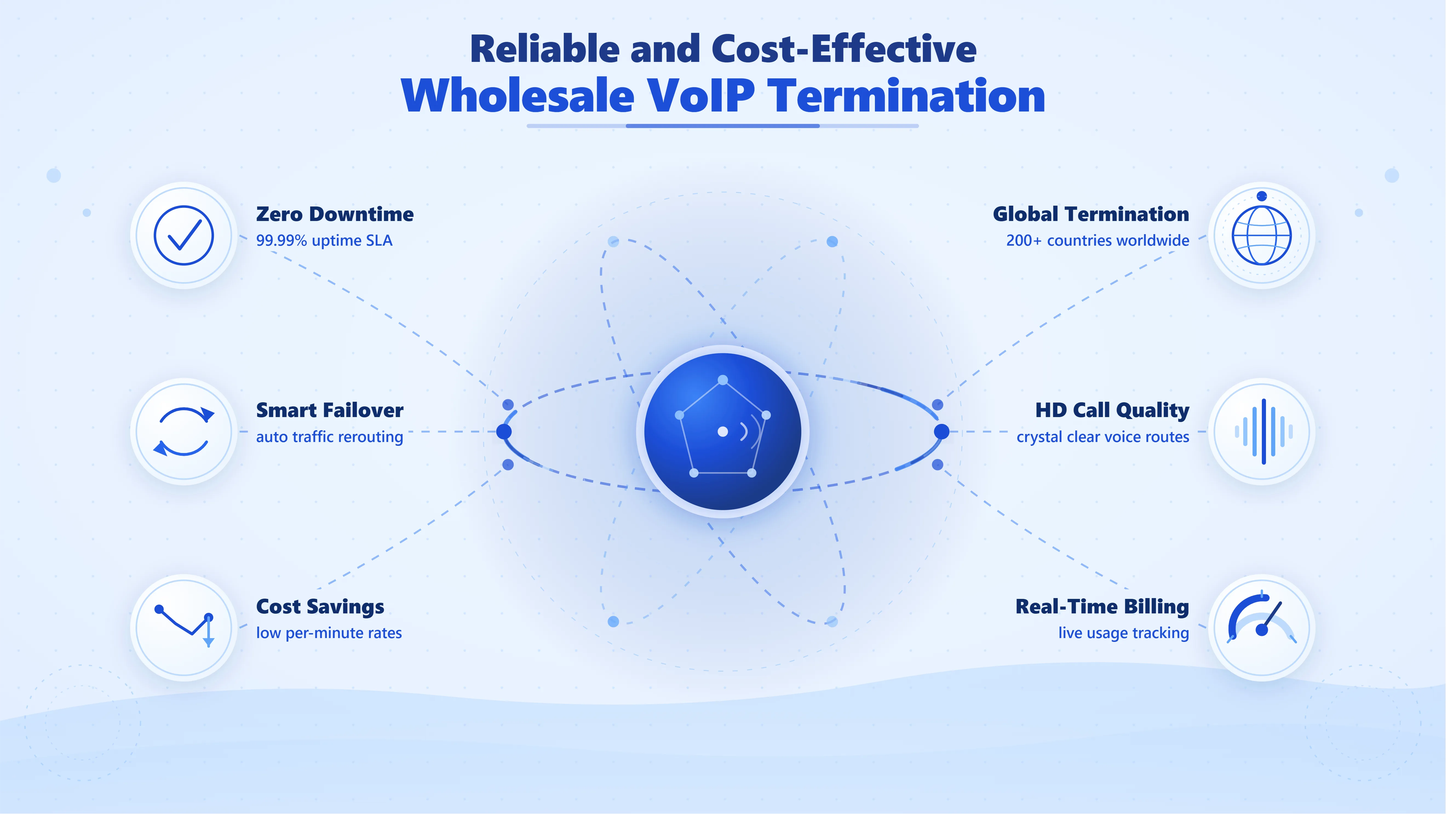
Twiching is purpose-built for wholesale VoIP business operators — ITSPs, resellers, contact-centre platforms, and enterprises with high-volume outbound. The platform combines competitive wholesale VoIP rates, a global softswitch fabric, and a white-label VoIP reseller programme with fair commissions. A 24/7 NOC responds to critical incidents within 15 minutes.
The same dashboard exposes per-destination CDRs, real-time spend caps, route-quality scoring, and STIR/SHAKEN attestation reporting — the operational primitives every wholesale VoIP growth strategy actually needs. Partners can launch a fully branded wholesale VoIP business on the platform in days, not months.
Scaling a wholesale VoIP business requires both route depth and operational efficiency. Route depth means having carrier relationships that cover 200+ country codes with competitive pricing.
Operational efficiency means automating rate deck management, CDR processing, and invoice reconciliation. That frees your team for high-value activities like customer acquisition and route optimisation instead of manual data entry.
Carriers that provide API access to rate decks and CDRs are essential partners for an efficient wholesale operation.
Customer retention in wholesale VoIP depends on consistency. Customers tolerate occasional route quality dips if you communicate proactively and resolve issues quickly.
Establish a real-time quality monitoring system that alerts you before customers notice degradation. When issues occur, send proactive notifications with estimated resolution times.
This transparency converts potential churn events into demonstrations of operational maturity that strengthen the relationship.
Operational efficiency is the hidden multiplier in wholesale VoIP growth. Automating rate deck management means ingesting carrier rate cards automatically, comparing them against your current pricing, and flagging arbitrage opportunities. This can save dozens of hours per month and identify margin improvements worth thousands of dollars annually.
Similarly, automating CDR reconciliation against carrier invoices recovers overbilling that manual spot-checks miss. The operators who grow fastest in wholesale VoIP are those who automate the routine so their teams can focus on relationship building and strategic routing decisions.
White-label reseller programmes are one of the most capital-efficient ways to scale a wholesale VoIP business. Instead of building your own sales force, you enable other ITSPs, MSPs, and telecoms resellers to sell your capacity under their own brand.
You provide the infrastructure, routing, and billing; they handle customer relationships and first-line support. Margins are lower per minute than direct sales, but the volume scale and reduced sales overhead make white-label channels highly profitable at scale.
Structure reseller agreements with tiered margin structures that reward volume commitment.
Analytics capabilities are becoming a key differentiator in wholesale VoIP. Operators can provide customers with granular call quality reports — ASR, MOS, and cost-per-minute by destination, time of day, and route. That transparency drives customer retention.
Building analytics on top of real-time CDR streaming with tools like ClickHouse, BigQuery, or Snowflake enables dashboards for both your operations team and your customers. This creates a data-driven service culture that competitors without analytics investment cannot easily replicate.
Conclusion
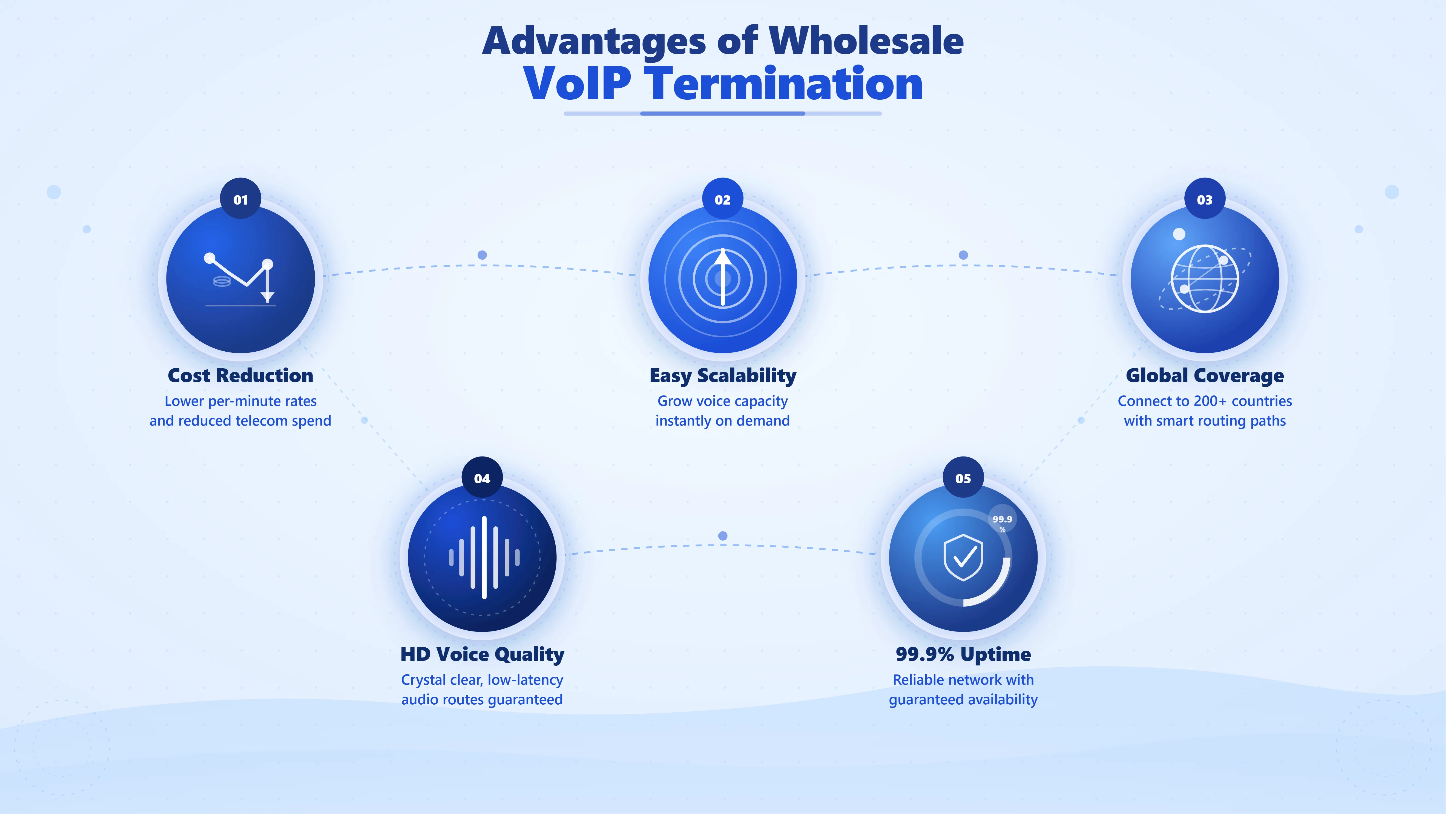
Supercharging a wholesale VoIP business is less about flashy features and more about executing five fundamentals well — direct routes, a fair white-label VoIP reseller programme, layered fraud prevention, SIP trunking cross-sell, and a relentless per-route profitability loop. Operators that get all five right pull ahead on margin and customer retention while the rest of the market is still arguing about wholesale VoIP rates. Twiching delivers the platform underneath every one of those strategies, so partners can focus on growing the wholesale VoIP business rather than building the carrier.