Introduction
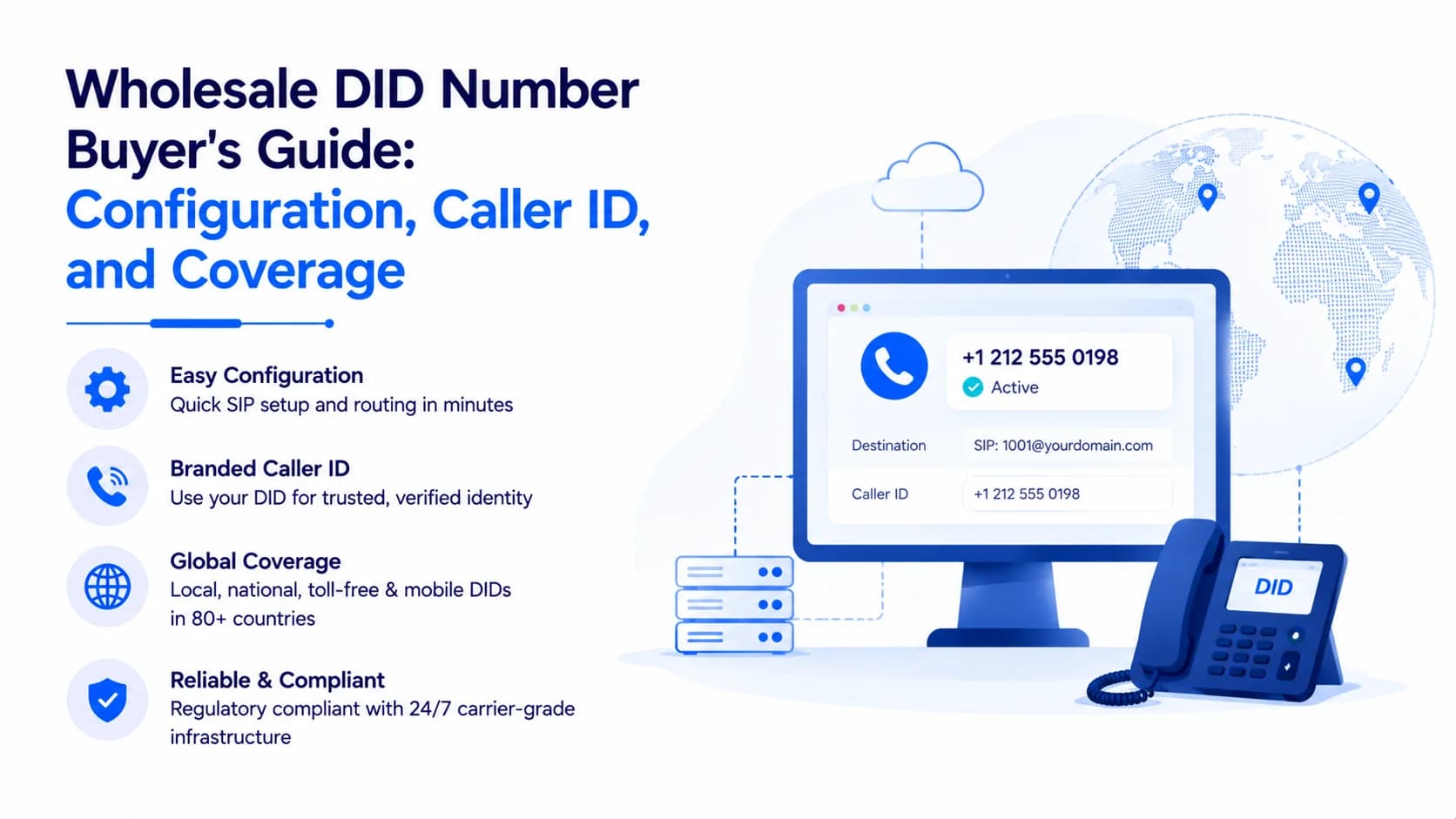
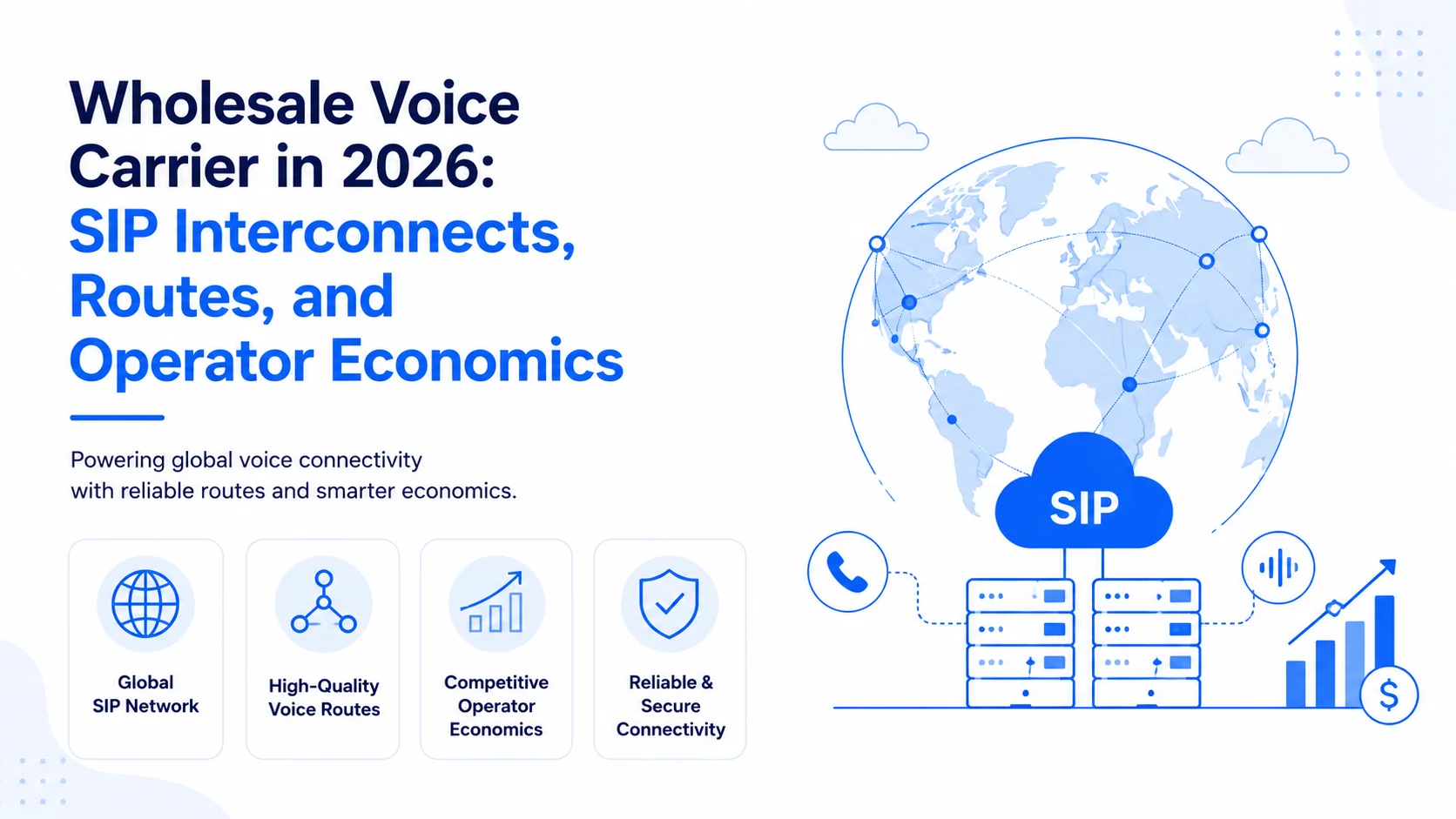
Wholesale DID is the carrier-tier purchase of Direct Inward Dialling numbers, sold for resale by ITSPs, CPaaS layers, and UCaaS platforms, or for high-volume direct inbound use. This guide covers how the SIP routing works, realistic pricing, porting, and regulatory requirements, with Twiching featured as a worked example.
Key Takeaways
- Wholesale DID is the carrier-tier purchase of Direct Inward Dialling numbers — local geographic, national, toll-free, mobile, and international — for resale or high-volume direct use.
- Inbound calls to a wholesale DID route over the PSTN to the provider, who forwards the SIP INVITE to the customer's configured endpoint (PBX, queue, UCaaS).
- Realistic wholesale DID pricing runs $0.50–$3.00/month per geographic number plus per-minute inbound termination at wholesale VoIP rates.
- Porting existing numbers into a wholesale DID provider is regulated, typically completes in 5–10 business days, and preserves the number across providers.
- Twiching operates a wholesale DID platform with self-service search and provisioning across 80+ countries via REST API, E.911 registration, and porting workflow management.
What Wholesale DID Actually Is
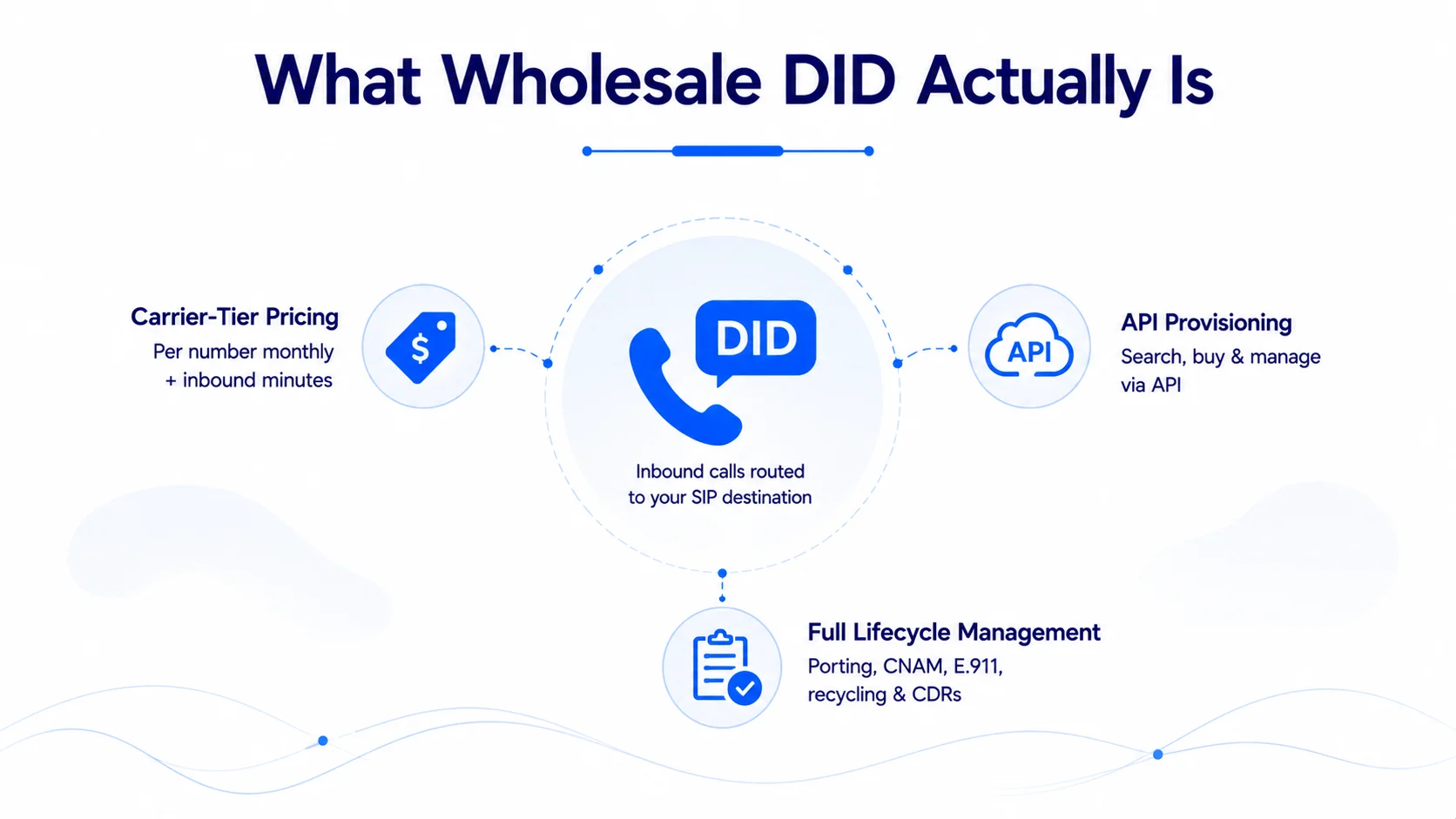
Wholesale DID — Direct Inward Dialling — is the carrier-level purchase of phone numbers that route inbound calls directly to a specific SIP destination. The wholesale layer differs from retail DID in three ways.
Pricing is per-number monthly at carrier-tier rates rather than bundled per seat, and inventory and provisioning happen via API rather than through a support ticket. The buyer typically resells the numbers — as an ITSP, CPaaS layer, or UCaaS platform — or uses them at volumes where retail per-seat pricing is uneconomic.
The buyer pays a monthly rental per number plus per-minute inbound termination at wholesale VoIP rates. The provider handles regulatory registration in each country and lifecycle operations — porting in and out, number recycling, E.911 updates. It also handles CNAM management where applicable, and the technical surface: number search inventory, provisioning API, routing configuration, and CDR feed.
How a Wholesale DID Call Routes
Further reading: Wholesale pricing & rate deck
An inbound call to a wholesale DID number flows through four hops. First, the caller's carrier routes the call over the PSTN to the wholesale DID provider that hosts the number. Second, the provider's softswitch looks up the routing configuration for that DID — what endpoint owns it, what failover routes exist, what CNAM display rules apply.
Third, the softswitch sends a SIP INVITE to the customer's registered SIP endpoint with the original calling number preserved. Fourth, the customer's PBX or UCaaS platform handles the call from there — IVR, queue, ring group, individual extension.
Behind the scenes the wholesale DID provider also generates a CDR for billing — monthly rental plus inbound minutes. It updates the per-number quality metrics (PDD, ASR) and feeds events into the customer's webhook stream if configured. The whole flow happens in single-digit seconds for the connection and millisecond increments for the SIP signalling.
Types of Wholesale DID Numbers
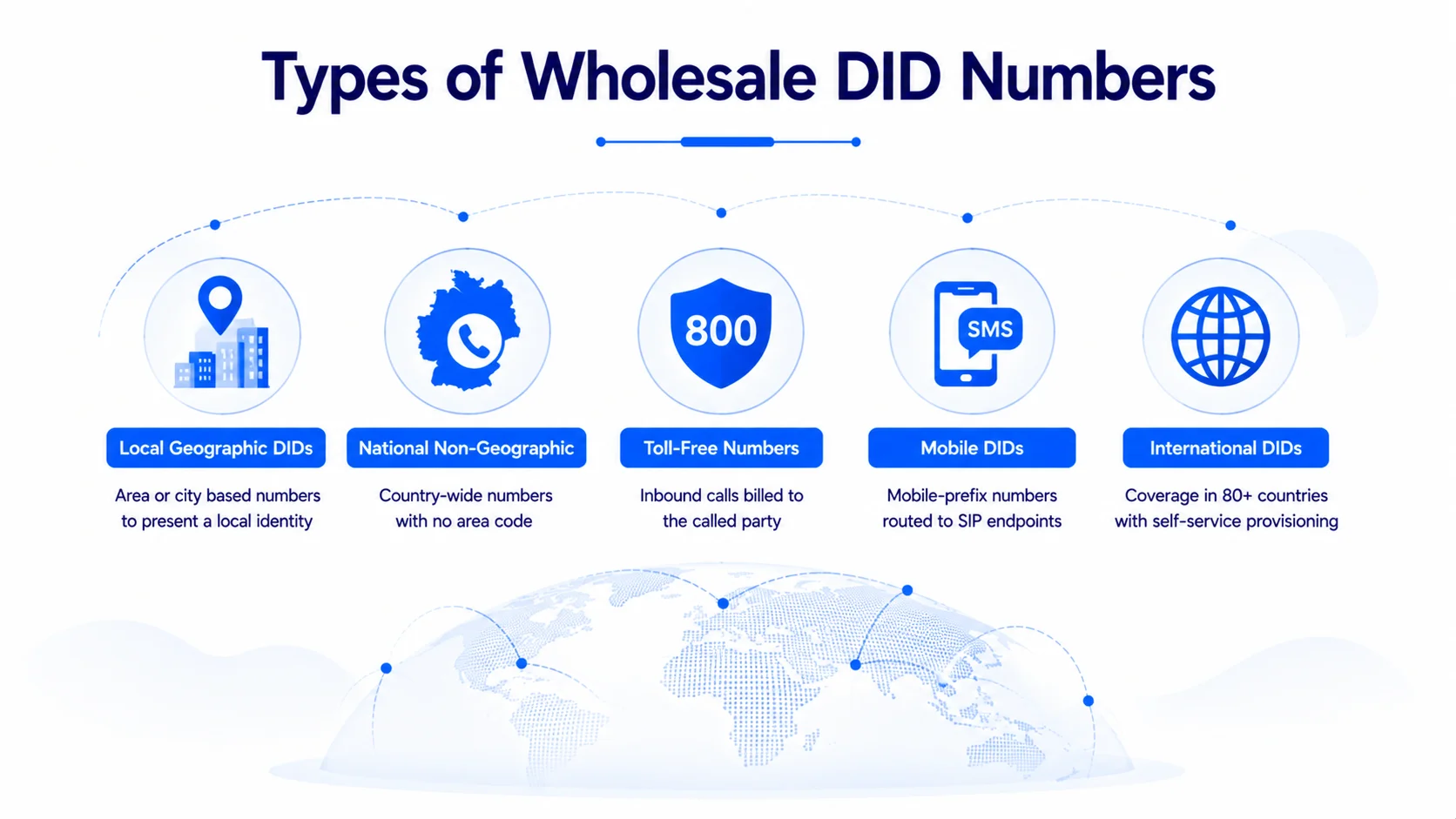
Wholesale DID providers offer several number types, each with distinct economics and regulatory treatment. Local geographic DIDs are tied to a specific area code or city code. They are the staple of wholesale DID inventory, used for presenting a local number to customers in each market.
National non-geographic numbers are country-wide identifiers with no area-code affinity, useful for brands that want one number across a country. Toll-free numbers (US 800-series, UK 0800, EU 00800) bill the called party for inbound minutes rather than the caller — pricing and regulation differ accordingly.
Mobile DIDs route to a mobile-prefix number even though the destination is a SIP endpoint. That is useful for SMS-receiving applications and for countries where mobile numbers signal trust differently from landlines. International DIDs cover countries the provider holds inventory in directly; Twiching's wholesale DID inventory covers 80+ countries with self-service search and provisioning.
Wholesale DID Pricing
Further reading: Wholesale voice solutions
Realistic wholesale DID pricing runs $0.50–$3.00 per number per month for standard geographic DIDs in major markets. Premium or vanity numbers and toll-free numbers run higher — typically $5–$15/month for toll-free with the called party paying inbound minutes.
Volume-tier discounts kick in at hundreds or thousands of numbers under a single account. Inbound termination is billed separately at per-minute wholesale VoIP rates, typically with 1-second increments after a 6-second minimum.
Setup fees vary. Strong wholesale DID providers charge nothing for self-service provisioning of standard geographic DIDs, and only small setup fees for ported numbers, toll-free, or premium numbers. Watch for hidden fees on E.911 registration, CNAM updates, address-of-record changes, and disconnection — these add up at scale and belong in the price comparison.
Porting Numbers Into a Wholesale DID Provider
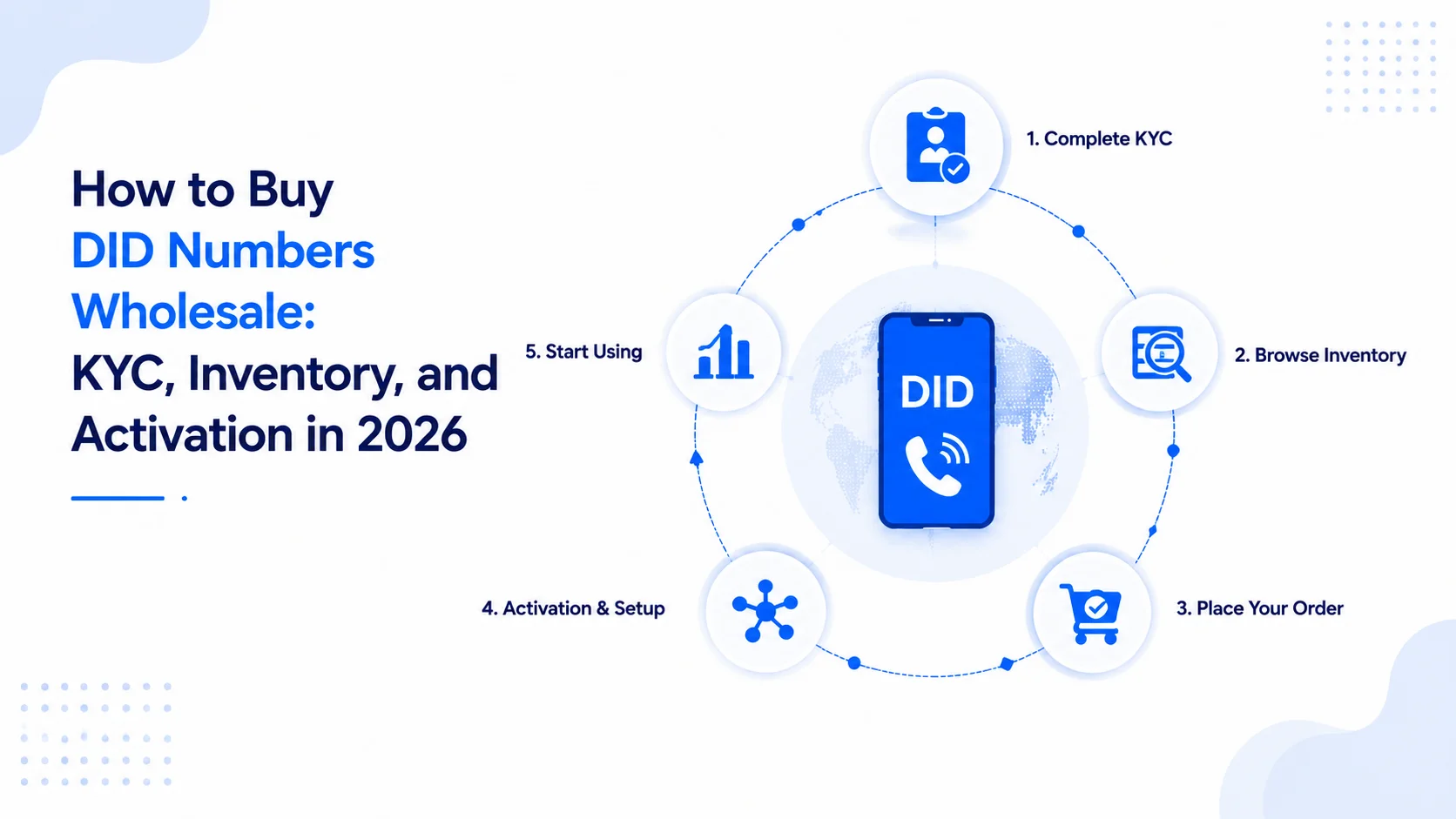
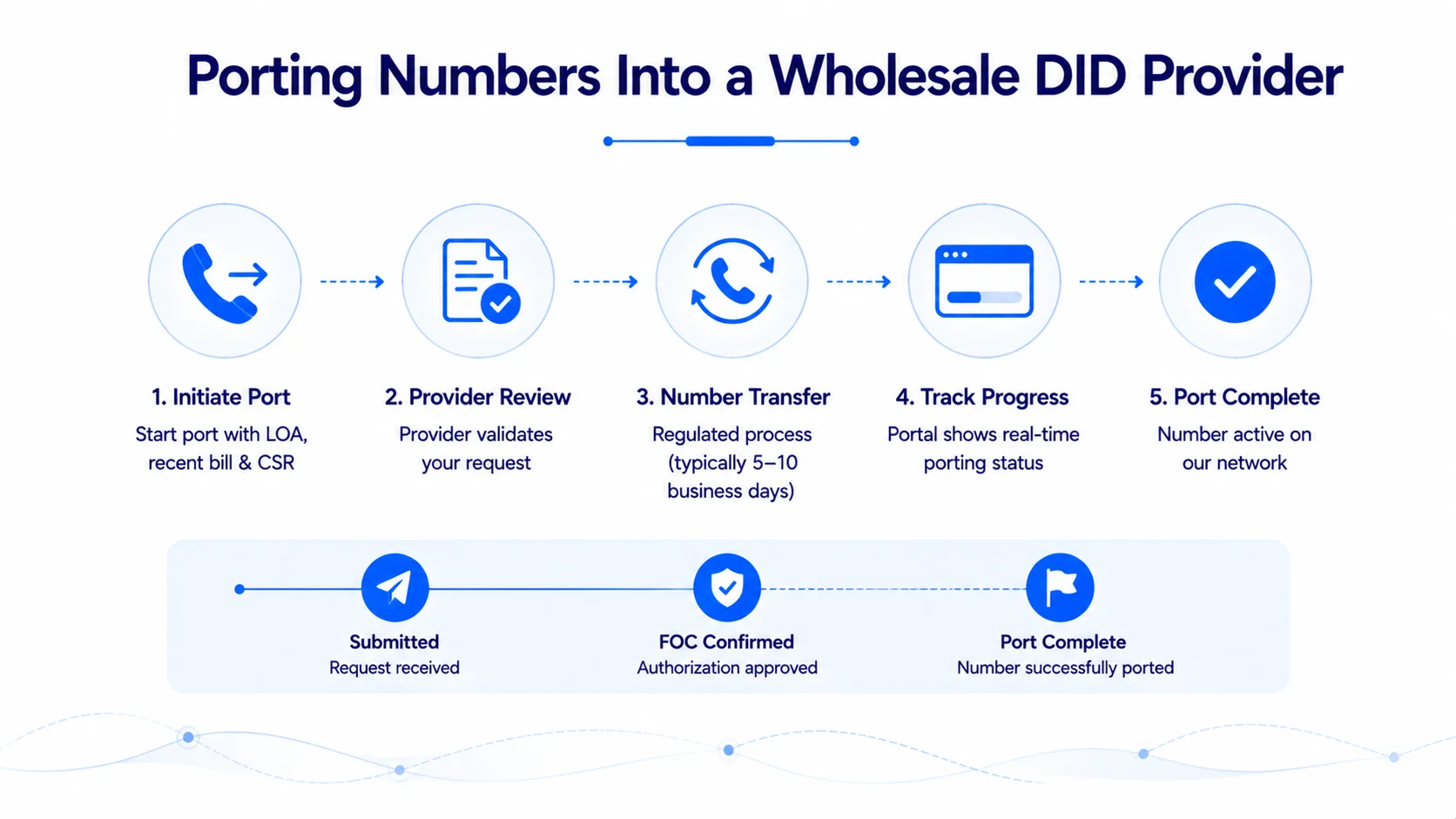
Porting moves an existing telephone number from its current carrier to a wholesale DID provider while preserving the number. The process is regulated in most countries, in the US under the FCC's local number portability rules.
It typically completes in 5–10 business days for standard geographic numbers, longer for toll-free and international. The buyer initiates the port through the new provider with a Letter of Authorisation, a recent bill from the losing carrier, and the customer service record.
Keep the losing carrier active until the port confirms complete — premature disconnection during the port window leaves the number stranded. Good wholesale DID providers expose porting status through the customer portal with stage-by-stage tracking. Twiching's portal shows each port through Submitted → FOC Confirmed → Port Complete with timestamps and any rejection reasons surfaced inline.
Regulatory Requirements for Wholesale DID
DID numbers are regulated, and the provider has to comply with each country's rules on behalf of the customer. E.911 registration in the US ties each DID to a physical address used by emergency dispatch.
Updates are required when the address changes, and many jurisdictions levy per-month E.911 fees. Address-of-record requirements apply in most European countries — the registered holder must have a physical address in the country issuing the number.
STIR/SHAKEN attestation on outbound caller ID from a DID is the related US requirement. The provider needs to be able to attest at A-level for outbound calls presenting that DID.
Wholesale DID providers without A-level attestation on customer-owned numbers leave their customers' outbound calls labelled or blocked. The provider that hosts the inbound DID and the provider that signs the outbound caller ID are usually the same provider for a clean attestation chain.
Provider Evaluation Checklist for Wholesale DID
Further reading: Wikipedia: Direct inward dialing
- 01Country coverage breadth — how many countries the wholesale DID provider holds inventory in directly
- 02Self-service search and provisioning via REST API, not provisioning-by-support-ticket
- 03Number type coverage — local geographic, national, toll-free, mobile, international
- 04Per-number monthly rental pricing published with effective dates and country, no hidden setup or E.911 fees
- 05Porting workflow exposed through the portal with stage-by-stage tracking and rejection-reason surfacing
- 06E.911 registration and address-of-record management included or transparently priced
- 07A-level STIR/SHAKEN attestation on customer-owned outbound caller ID using the hosted DIDs
- 08Inbound CDR streaming and webhook delivery for call events
- 09Number lifecycle tools — bulk operations, CSV import/export, range provisioning, disconnection workflow
- 1024/7 NOC for inbound routing issues with named escalation contacts
Twiching as a Wholesale DID Provider
Twiching operates a wholesale DID platform with self-service search and provisioning across 80+ countries via REST API. Number search returns inventory filtered by country, area code, and number type with availability flags.
Provisioning attaches the number to a customer SIP trunk in a single API call, and porting runs through the portal with stage-by-stage tracking. E.911 registration is integrated for US DIDs, address-of-record management handles European requirements, and A-level STIR/SHAKEN attestation signs outbound traffic presenting hosted DIDs.
Per-number monthly rental publishes per country, with bulk operations and range provisioning for customers running large DID estates. Inbound calls feed CDRs in real time via webhook or Kafka, and the routing configuration is editable through the portal and API.
The 24/7 NOC handles inbound routing issues with a 15-minute critical-incident SLA. White-label partners launch a branded wholesale DID business on the same inventory and platform.
Conclusion
Wholesale DID is a defined carrier-tier product — Direct Inward Dialling numbers at per-number monthly rentals plus per-minute inbound termination at wholesale VoIP rates, sold to ITSPs, CPaaS layers, UCaaS platforms, and large direct buyers. 911, address-of-record, STIR/SHAKEN attestation) cleanly, and meet 24/7 NOC response on inbound routing issues.
911 and address-of-record management, A-level outbound attestation on hosted DIDs, and a 24/7 NOC with a 15-minute critical-incident SLA. Compare current wholesale DID rentals and lifecycle cost against Twiching's published prices to benchmark whether the provider behind your current DID estate is still competitive.