Introduction
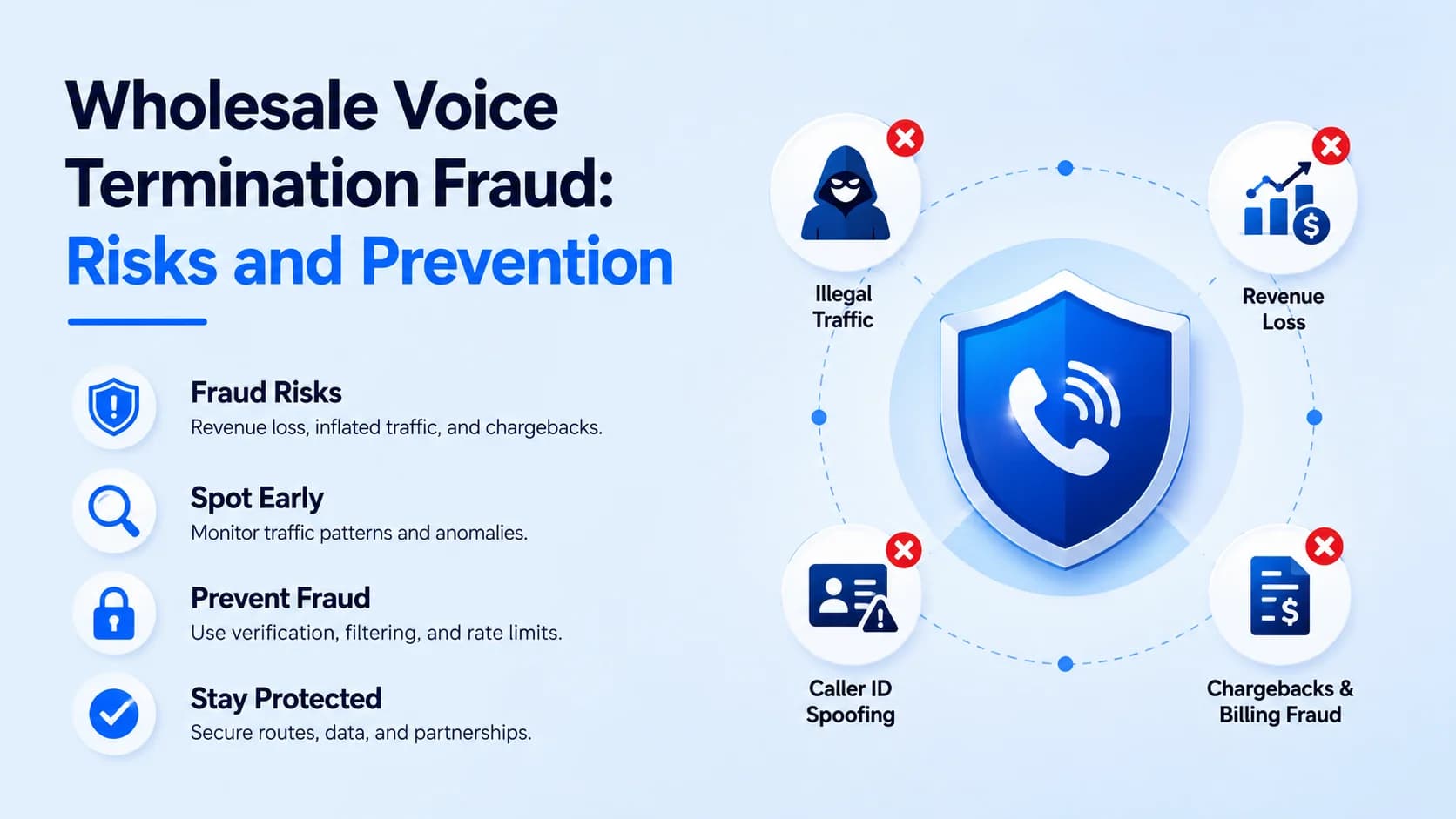
Wholesale voice termination fraud doesn't announce itself. It shows up as a normal-looking spike in call volume overnight, a batch of unfamiliar international destinations on a monthly invoice, or a customer's PBX quietly routing thousands of dollars in premium-rate calls before anyone notices.
Unlike a service outage, fraud can run for days or weeks looking exactly like legitimate traffic, which is what makes it expensive — the damage compounds silently until a bill or a carrier alert surfaces it. This guide covers the specific fraud types that target wholesale voice termination routes, the traffic-pattern signals that catch them early, and the architectural controls that prevent most of this from reaching a bill in the first place — treated as its own subject rather than a checklist item buried inside a broader buyer's guide.
Why Termination Routes Are a Specific Fraud Target
Further reading: Wholesale A-Z VoIP termination coverage
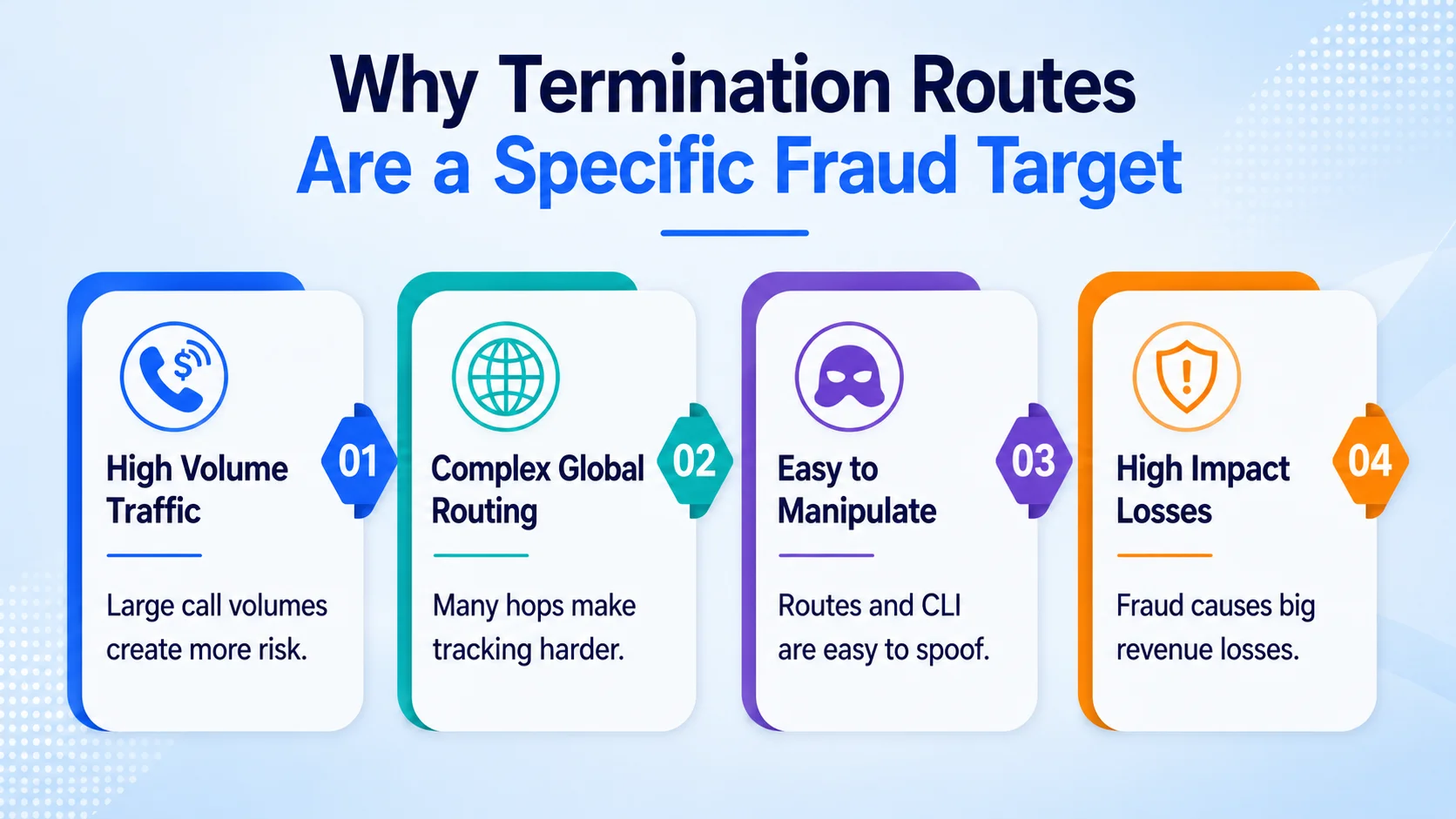
Wholesale voice termination is attractive to fraud specifically because it moves real money per call, at volume, often with less scrutiny than retail billing relationships. A termination route processes thousands of calls an hour without a human reviewing each one, and fraud schemes are built to exploit exactly that gap — generating traffic that looks statistically unremarkable at a glance while quietly routing value toward the fraudster.
The common thread across the fraud types below is that none of them require breaking into a carrier's core network. They exploit weak points at the edges — a compromised PBX, a premium-rate number arrangement, a caller-ID gap — and use the termination route simply as the pipe the stolen value flows through.
Further reading: wholesale voice traffic and grey routes
IRSF: Draining Revenue Through Calls That Look Legitimate
International Revenue Share Fraud works by exploiting the revenue-sharing arrangements that exist for certain premium or international number ranges. A fraudster gains access to a phone system — often through a compromised PBX or stolen account credentials — and generates high volumes of calls to premium-rate numbers they control or share revenue with. Each call looks like a normal international call from the terminating carrier's perspective; the fraud is in who profits from the call being placed at all.
IRSF is particularly costly because it's engineered to run when nobody's watching — nights, weekends, holidays — generating maximum call volume during the window before anyone reviews an invoice or notices unusual activity. A business can lose tens of thousands of dollars over a single unmonitored weekend before the pattern becomes visible on a bill.
Wangiri: The One-Ring Scam That Still Works
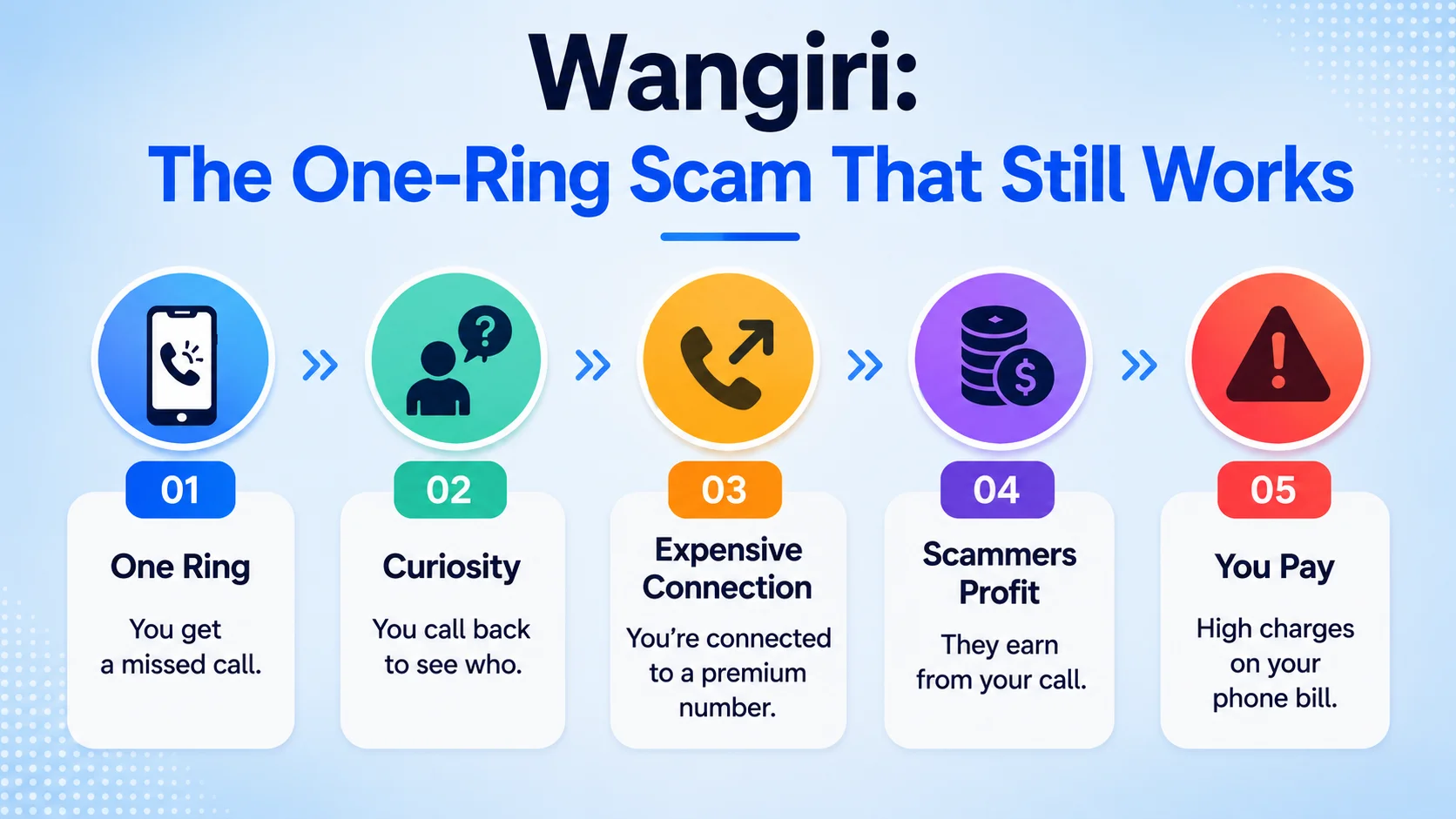
Wangiri — Japanese for "one ring and cut" — is a callback scam that relies entirely on human curiosity rather than any technical exploit. The fraudster places a very brief call, often just one ring, to a large number of targets from a premium-rate number. Some percentage of recipients, seeing a missed call, call the number back out of curiosity — and that callback connects to a premium-rate line the fraudster profits from, with charges accruing for as long as the target stays on the line, often padded with hold music or a fake automated menu to extend the call.
From a termination provider's perspective, Wangiri traffic shows a distinctive signature: extremely short outbound call durations at massive scale, targeting a broad, seemingly random set of numbers, from a source that generates enormous call attempt volume relative to any legitimate business's normal calling pattern.
PBX Hacking and Toll Fraud Through Compromised Systems
Toll fraud through a compromised PBX is one of the most common entry points into wholesale voice termination fraud, because a poorly secured PBX is often easier to compromise than any part of the carrier network itself. Weak or default admin credentials, unpatched PBX software, and exposed SIP ports scanned continuously by automated bots are the typical entry vectors — once inside, an attacker configures the compromised system to place large volumes of outbound calls, frequently to international or premium-rate destinations, generating charges the legitimate account holder didn't authorize.
The businesses most exposed are often smaller ones running a PBX without dedicated IT security oversight, where a default password or an unpatched vulnerability sits unnoticed for months. The termination provider bills the calls as placed, because from the network's perspective they were — the fraud is entirely upstream, inside the compromised customer system.
Further reading: CFCA: Communications Fraud Control Association
Detection Signals That Catch Fraud Before the Bill Arrives
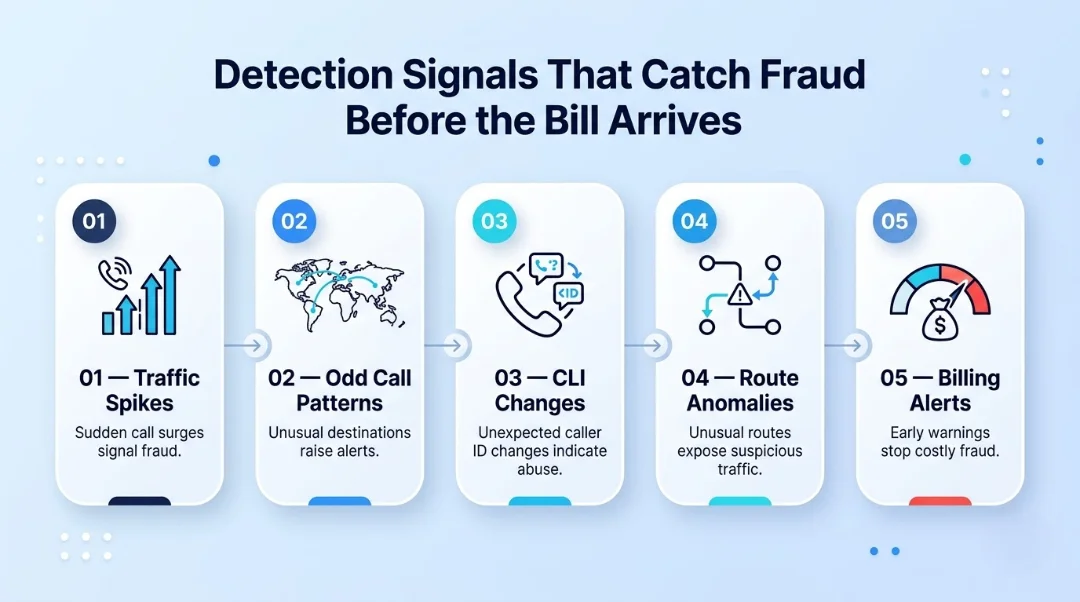
Every fraud type above leaves traffic-pattern signatures that differ from legitimate calling behavior, and these are what real-time fraud monitoring systems are built to watch for.
- Sudden volume spikes outside normal business hours — legitimate traffic follows a business's actual working pattern; a spike at 3am on a Saturday from an account that normally only calls during business hours is a strong signal
- Geographic anomalies — calls suddenly appearing to destinations an account has never called before, especially premium-rate or high-risk country codes
- Abnormal call duration distributions — Wangiri-style traffic clusters around extremely short durations at high volume; IRSF traffic often clusters around durations padded just long enough to maximize revenue share
- Velocity thresholds — a rate of call attempts far exceeding what the account's historical pattern or provisioned channel count would normally support
- Failed authentication attempts preceding a spike — repeated failed logins to a PBX or account portal shortly before a fraud spike often indicates the compromise that enabled it
None of these signals is proof of fraud in isolation — legitimate businesses do occasionally have real traffic spikes — but a monitoring system correlating several of them together is what separates real-time fraud detection from static rate-limiting alone.
Building Prevention Into Termination Architecture
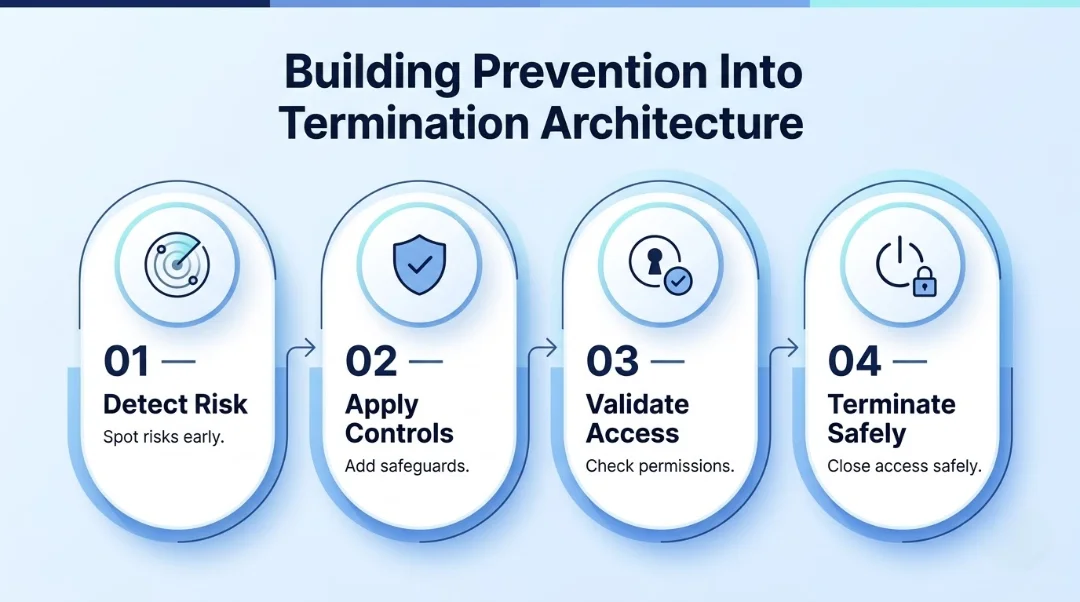
Detection catches fraud in progress; prevention is architecture that limits how much damage a fraud attempt can do before detection even triggers.
- Velocity and spend caps — a hard ceiling on call volume or spend per account within a given window limits maximum exposure even if fraud goes undetected for a period, turning a potentially unlimited loss into a bounded one
- Geo-fencing high-risk destinations — accounts that never legitimately call certain premium-rate or high-fraud-risk destinations can have those destinations blocked by default, requiring explicit opt-in rather than allowing them open by default
- Real-time alerting tied to automatic suspension — a detection system that only generates a report reviewed the next business day is far less useful than one that can automatically suspend or throttle an account the moment a high-confidence fraud pattern triggers
- PBX and credential hygiene requirements — providers that enforce strong authentication and flag customers running known-vulnerable PBX software close off the most common entry vector before it gets exploited
The architectural goal is layered defense: no single control stops every fraud type, but velocity caps, geo-fencing, and real-time alerting together catch most fraud patterns at a stage where the financial exposure is still small.
Further reading: wholesale voice carrier fraud controls
What to Do When Fraud Is Discovered on Your Account
Speed matters more than anything else once fraud is confirmed. Suspending or restricting the compromised account or trunk immediately stops ongoing losses even before the root cause is fully understood. From there, changing all credentials associated with the affected system, reviewing PBX configuration for unauthorized changes, and pulling detailed CDRs for the affected period to document the exact scope of the fraud all matter for both remediation and any subsequent billing dispute.
Most wholesale termination providers have a defined fraud dispute process, and documentation is what makes that process work in your favor — the CDRs, the timeline of when the compromise was discovered, and evidence of the security gap that was closed afterward all strengthen a case for credit on fraudulent charges, versus a vague report with no supporting detail.
Conclusion
Fraud against wholesale voice termination routes succeeds by looking ordinary for as long as possible — a call that appears legitimate to a carrier, a callback driven by simple curiosity, traffic originating from an account that's technically authorized to place it. Recognizing IRSF, Wangiri, and PBX-hacking-driven toll fraud for what they actually are, rather than treating them as one vague category of 'fraud risk,' is what makes the specific detection signals and architectural controls in this guide worth implementing deliberately.
The businesses that avoid the worst losses aren't the ones that never get targeted — nearly everyone eventually is — they're the ones whose monitoring and account controls catch it within minutes instead of over a long, expensive weekend.