Introduction
A route can post a 65% ASR, five-nines uptime, and still sound bad. Answer rate and availability tell you whether a call connects and stays up — they say almost nothing about whether the two people on that call can actually understand each other clearly.
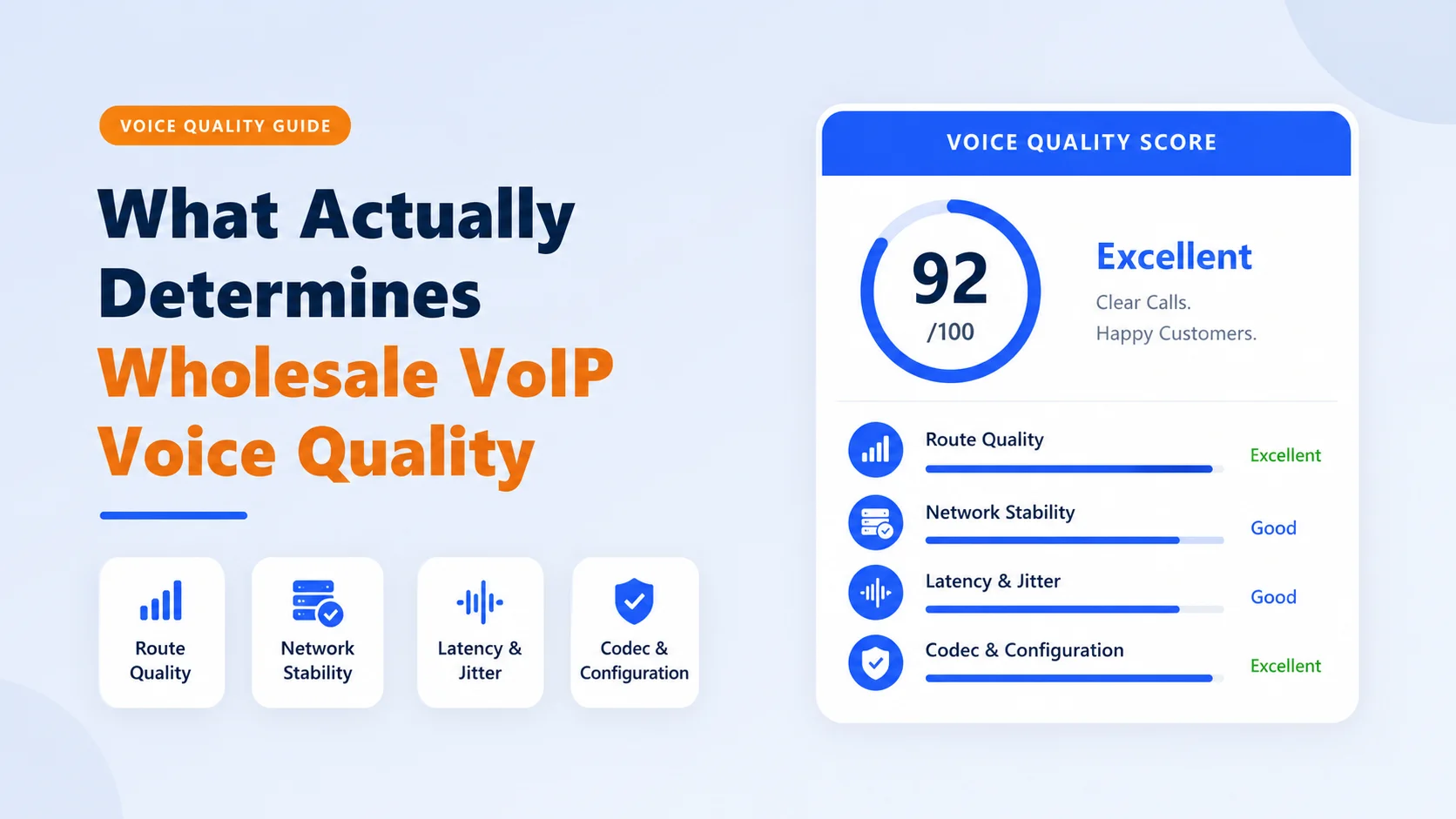
Voice quality is a separate axis entirely, governed by a different set of factors most buyer's guides skip past on their way to rate decks and SLA percentages: how the audio gets encoded, how echo gets suppressed, how the receiving end smooths over network hiccups before they become audible. This guide is about that second axis — the actual acoustic experience of a wholesale VoIP call — covering MOS scoring, codec tradeoffs, echo cancellation, jitter buffer behavior, and packet loss concealment, along with how to test for real audio quality instead of inferring it from network statistics alone.
Why Connection Metrics Don't Measure How Calls Sound
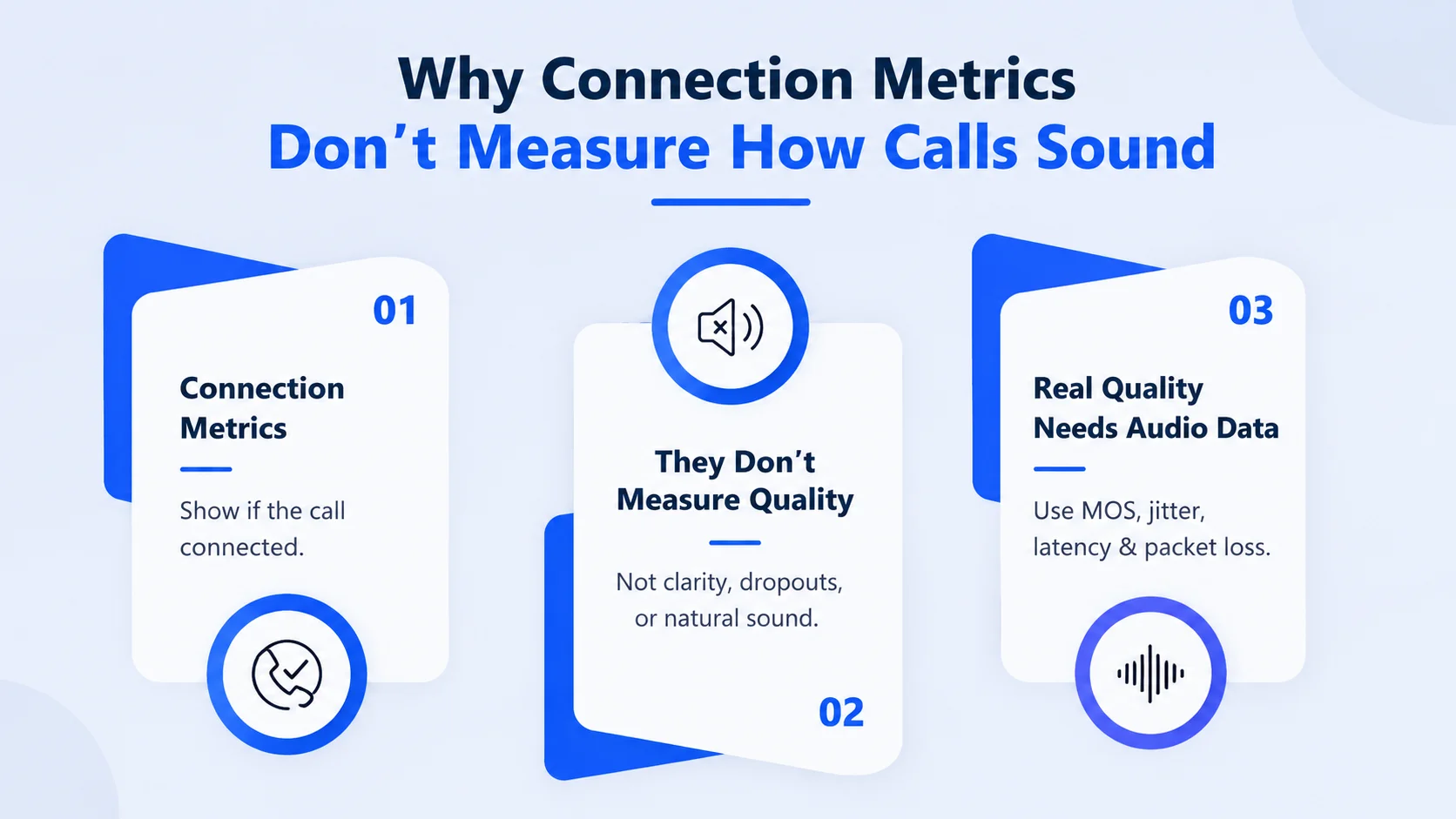
ASR, ACD, and uptime are connection-layer metrics — they describe whether a call happens and how long it lasts, not what it sounds like while it's happening. A route can deliver a perfect connection record while still producing calls that sound muffled, echo-laden, or intermittently choppy, because none of those symptoms affect whether the call connected or how long it stayed up.
This gap matters because a buyer evaluating routes purely on connection statistics can end up with a technically reliable route that customers still complain about — the complaints just show up as "call quality issues" in support tickets rather than anywhere on a route-performance dashboard.
Further reading: wholesale voice traffic and ASR/ACD metrics
MOS: The Score Built Specifically to Measure This
Mean Opinion Score (MOS) is a standardized 1-to-5 rating of perceived audio quality, originally derived from human listeners rating sample calls and now commonly estimated algorithmically in real time for production traffic. A MOS above 4.0 is generally considered toll-quality — indistinguishable from a traditional phone call to most listeners. Scores in the 3.5–4.0 range are noticeably degraded but usually still usable; below 3.5, quality issues become distracting enough to affect the conversation itself.
- 4.0–5.0 — toll-quality, comparable to a traditional landline call
- 3.5–4.0 — noticeably degraded but generally functional for normal conversation
- Below 3.5 — quality issues become distracting; below roughly 3.0, calls become genuinely difficult to conduct
A provider that can report real-time or near-real-time MOS per route, rather than only ASR and PDD, is measuring something meaningfully different from — and arguably more directly relevant to — the actual customer experience than connection statistics alone.
Codec Choice and Its Direct Effect on Clarity
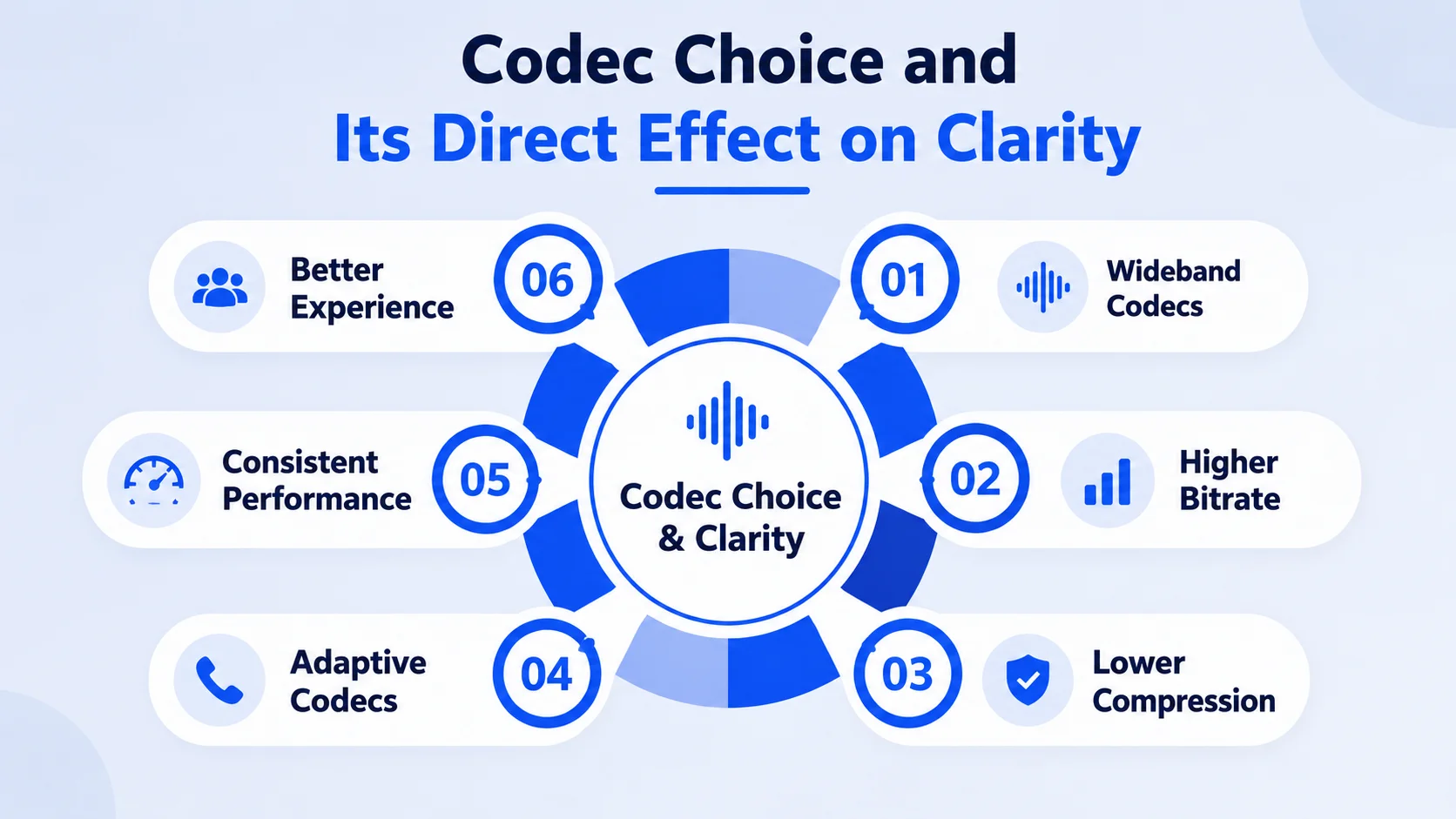
The codec a call uses sets a ceiling on how good it can possibly sound, independent of everything else in the network path. G.711 encodes audio with minimal compression, delivering the closest thing to toll-quality sound at the cost of higher bandwidth per call. G.729 compresses more aggressively, trading some clarity for significantly lower bandwidth use — noticeable on close listening but often acceptable for routine business calls. Opus, increasingly common on modern wholesale routes, adapts its bitrate dynamically to network conditions and can match or exceed G.711 quality while using less bandwidth in good network conditions.
Codec mismatches between what your system offers and what a route actually negotiates can silently downgrade quality below what either side's headline specs suggest — confirming which codec a call actually used, not just which ones are theoretically supported, is worth verifying rather than assuming.
Further reading: Opus Codec — official project site
Echo Cancellation and Why Some Routes Sound Hollow
Echo on a VoIP call comes from acoustic or electrical reflection of the sender's own voice back to them, delayed just enough to be perceptible and distracting. Echo cancellation algorithms model and subtract that reflected signal in real time, and how well a route implements this directly affects whether calls sound clean or subtly (or not so subtly) hollow.
Echo problems are often route-dependent rather than universal — a provider's network might handle echo cleanly on most paths but poorly on specific interconnects, particularly ones involving older TDM-to-IP gateway conversions where analog echo is more likely to enter the signal path in the first place. A route that sounds fine on a quick test call can still have echo issues that only surface on longer conversations or specific destination types, which is part of why quality testing benefits from more than a handful of short calls.
Jitter Buffers and Packet Loss Concealment
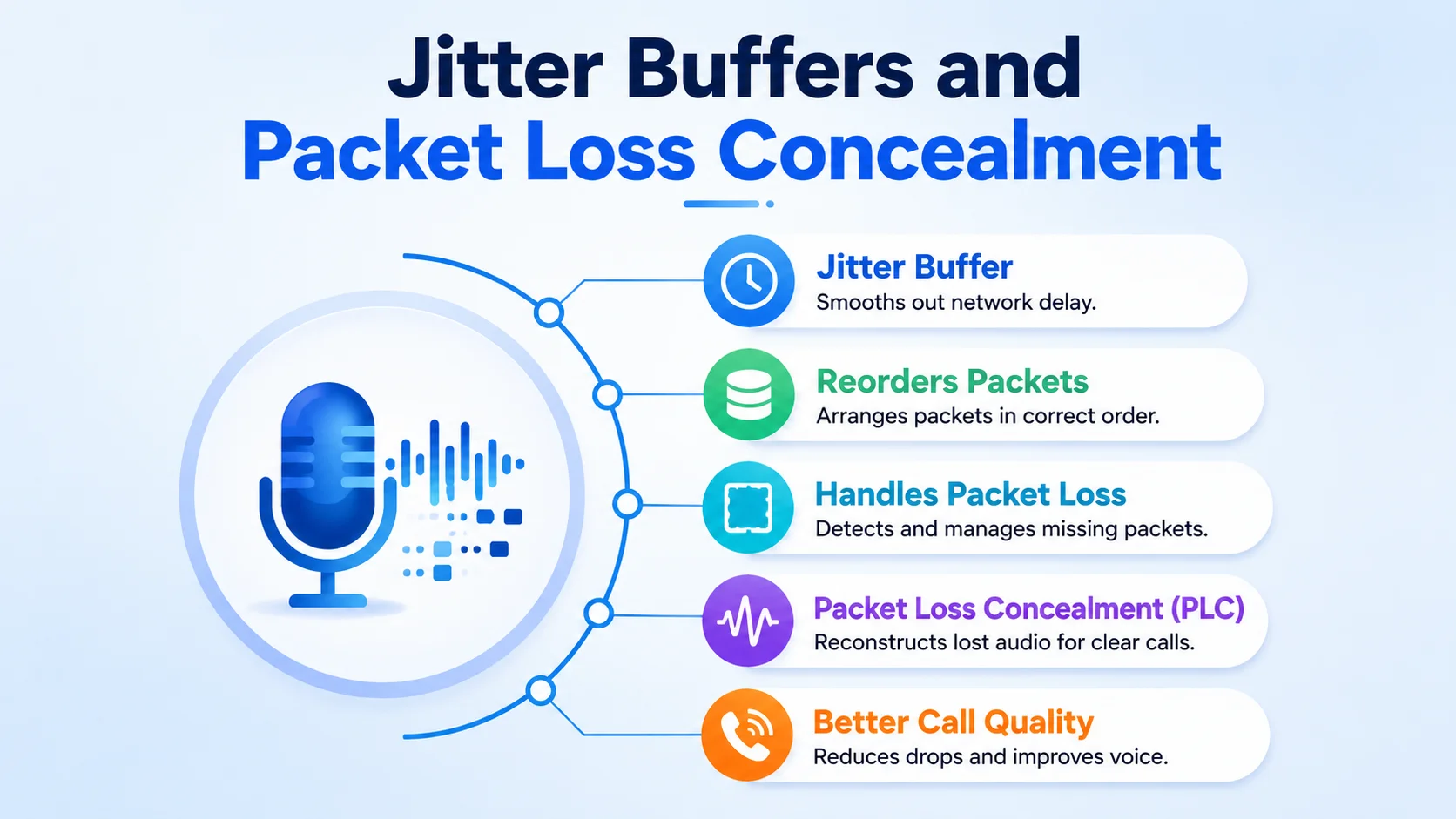
These two mechanisms work together to hide network imperfections from the listener, and how well they're tuned determines whether minor network hiccups are inaudible or obviously disruptive. A jitter buffer holds incoming audio packets briefly and releases them at a steady pace, smoothing out the uneven arrival timing that real networks produce — a buffer that's too small lets jitter through as choppy audio, while one that's too large adds noticeable conversational delay.
Packet loss concealment (PLC) handles the packets that never arrive at all, using algorithms to intelligently estimate and fill the gap rather than leaving silence or an audible glitch. Good PLC can make occasional packet loss essentially imperceptible; poor implementations turn the same loss rate into an obviously broken-sounding call. Two routes with identical measured packet loss percentages can sound completely different depending on how well each one's PLC is implemented — another reason raw network statistics alone don't fully predict perceived quality.
Further reading: troubleshooting wholesale VoIP termination call quality
How to Actually Test Voice Quality Before Committing
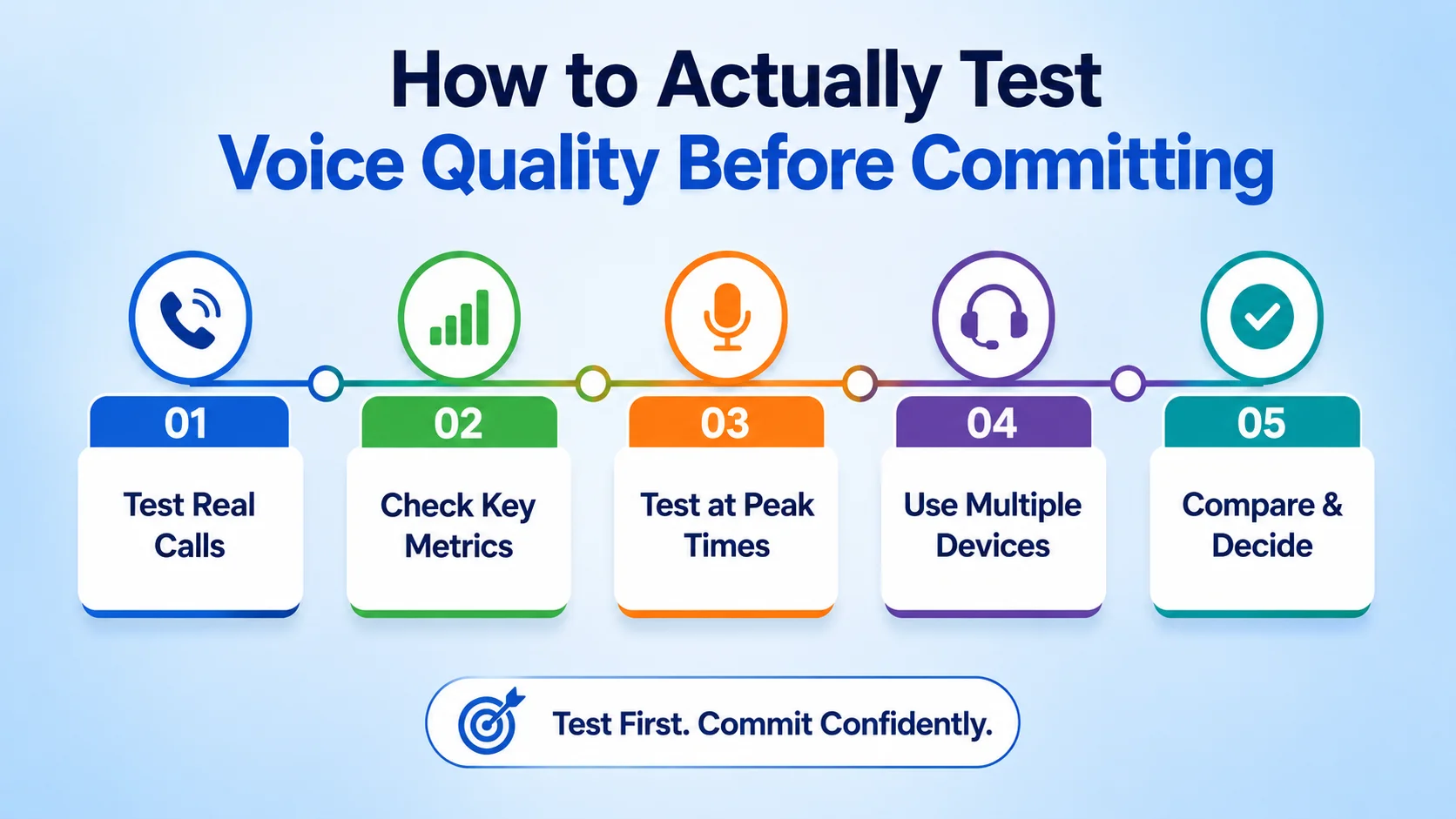
Testing for voice quality specifically requires listening, not just monitoring dashboards — network statistics can look clean while the audio still has problems the numbers don't capture.
- Place real conversational-length calls, not quick connection tests — echo and jitter-buffer problems often surface only after a minute or more of continuous speech
- Test across multiple destinations and times of day — quality can vary by route and by network congestion patterns that a single test window won't reveal
- Listen specifically for echo, choppiness, and unnatural pauses — these are the audible symptoms of the mechanisms covered above, not abstractions on a report
- Ask for real-time MOS data per route if the provider offers it, and compare it against your own subjective listening rather than trusting either signal alone
A provider confident in their voice quality will support this kind of testing without resistance — reluctance to let you actually listen to real call quality before committing is itself a signal worth taking seriously.
Conclusion
Voice quality and connection reliability are related but genuinely separate problems, measured by different signals and solved by different engineering. ASR and uptime tell you whether calls happen; MOS, codec choice, echo cancellation, and jitter buffer tuning tell you whether those calls are actually pleasant to be on.
A wholesale VoIP evaluation that stops at connection metrics is only answering half the question a customer actually cares about — the other half only shows up when you listen to a real, full-length call and judge it the way an actual caller would.