Introduction
Small and mid-sized buyers under 100,000 minutes a month face a different termination voip wholesale market than Tier 1 carriers, since most published rate decks assume volume deals SMBs cannot hit. This guide walks SMB operators through fair pricing without minimum commits, basic SIP trunk sizing, and security floors like STIR/SHAKEN — plus the questions that separate honest providers from grey-route resellers.
What Is Termination VoIP Wholesale?
This segment of the telecom market handles the final routing step. It carries a voice call from an originating carrier network to the destination subscriber on another network.
When you dial any phone number, your call may cross two, three, or more carrier networks. It has to reach the person you are trying to call. The deals and tech links that make these handoffs work are at the heart of how global voice calls happen.
Every cross-network call creates a termination deal. This builds a market that handles hundreds of millions of money settlements every day across thousands of linked operators worldwide.
The Technical Mechanics of Voice Termination
Further reading: Wholesale Termination VoIP
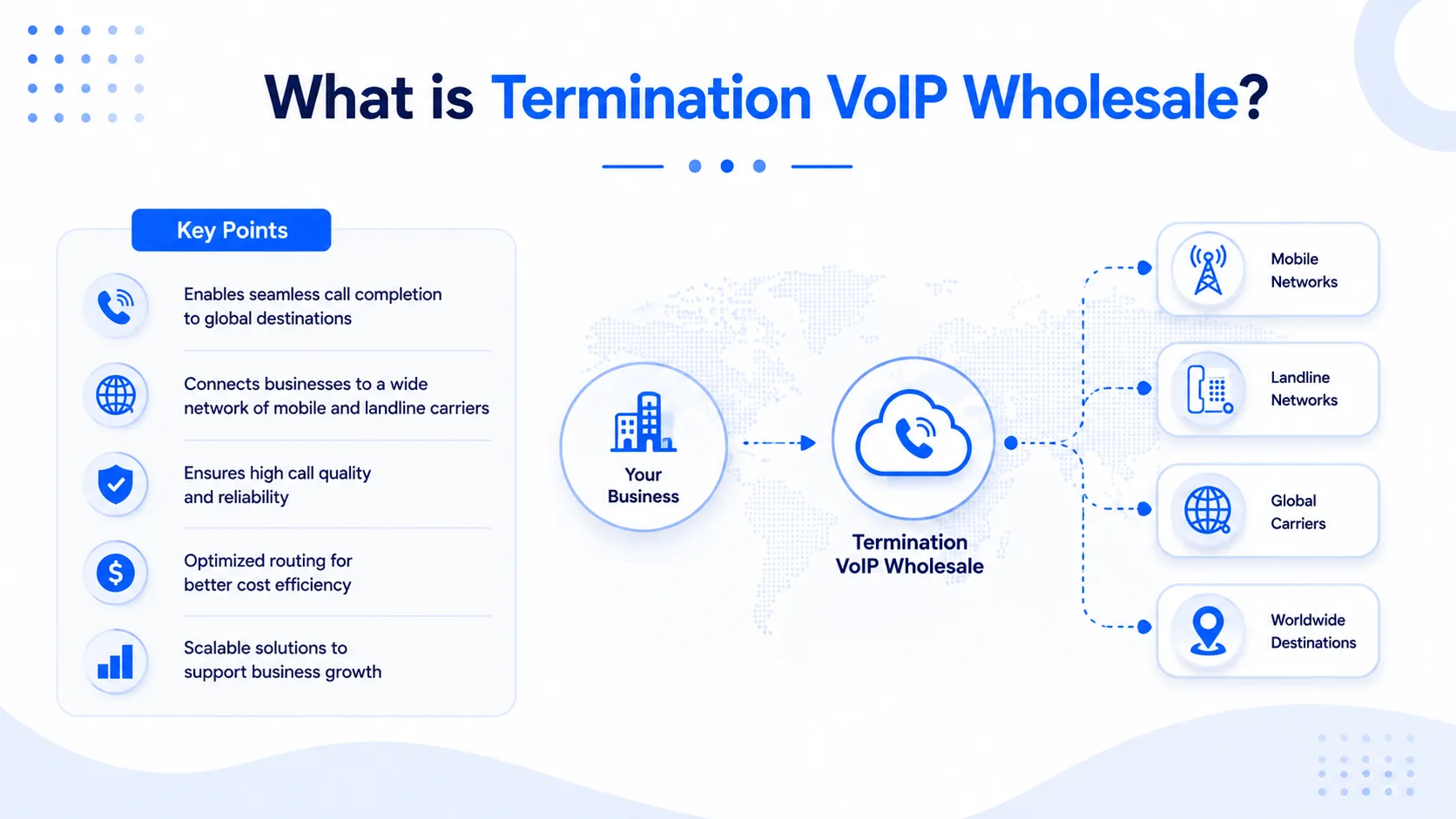
The termination voip wholesale process starts the moment a call enters a wholesale carrier network. At that point, the routing engine checks the destination.
The engine looks at its routing table for all open paths to the destination. It drops paths that fail quality checks. Then it picks the best route based on cost and priority rules the operator has set up.
This whole decision happens in milliseconds, hidden from the caller and recipient. Each call takes the best open path the moment it is placed, with no real delay.
Least-Cost Routing Technology
Least-cost routing is the engine behind termination voip wholesale operations. It decides how traffic is split across many carriers for each destination. The goal is cutting cost while still meeting quality standards.
LCR engines keep live rate tables from every linked upstream carrier. They apply set quality filters before picking the cheapest route that still passes.
Operators can set up different LCR profiles for different customer tiers. Top customers get routing that puts quality first. High-volume, quality-tolerant traffic gets pushed harder toward cost savings.
Quality Metrics in Wholesale Termination
Measuring how well termination voip wholesale routes perform takes tracking a set of standard metrics. Every carrier and reseller should watch these all the time.
Answer Seizure Ratio shows what share of call attempts reach the destination. Well-kept routes usually stay above 60 percent on major destinations.
Average Call Duration backs up ASR by showing whether finished calls last a fair amount of time.
An unusually short ACD suggests calls are connecting but then dropping. This often points to audio quality problems or wrong number routing.
Selecting a Wholesale Termination Partner
Picking the right termination voip wholesale provider is a big decision. It affects the quality and cost of every outbound call you place or route for your customers.
Check providers on these five points:
- How wide their network reach is.
- How good their direct carrier links are.
- How clear their rates are.
- How fast their support is.
- How strong their fraud protection is.
Providers with direct links to local networks in your key destination countries usually beat those that rely on resold routes from third parties.
They give you better completion rates, lower delay, and steadier pricing. That steadiness lets you plan your business further ahead.
Negotiating Competitive Rates
Rate talks in termination voip wholesale markets work best when you bring clear traffic data and firm volume numbers to the table.
Carriers respond best to buyers who show clean, high-quality traffic with steady monthly volumes and a record of paying on time.
Prepare a traffic breakdown covering your top 20 destinations by volume. Use this data to anchor your rate talks.
Volume tiers usually offer real per-minute rate gains when your traffic is steady. Steady traffic backs up the commitment. Avoid over-promising volumes you cannot reliably hit.
Multi-Provider Routing Strategy
Building strength into your termination voip wholesale setup means keeping active ties with more than one provider, not putting all traffic with a single carrier.
A multi-provider setup builds routing backup that keeps service running when any one provider has an outage. It also drives pricing competition that helps your costs over time.
Keep at least two active providers per major destination group. Set up auto failover so traffic reroutes within seconds when primary routes hit quality drops or uptime issues.
Regulatory Compliance Requirements
Further reading: Wholesale VoIP platform
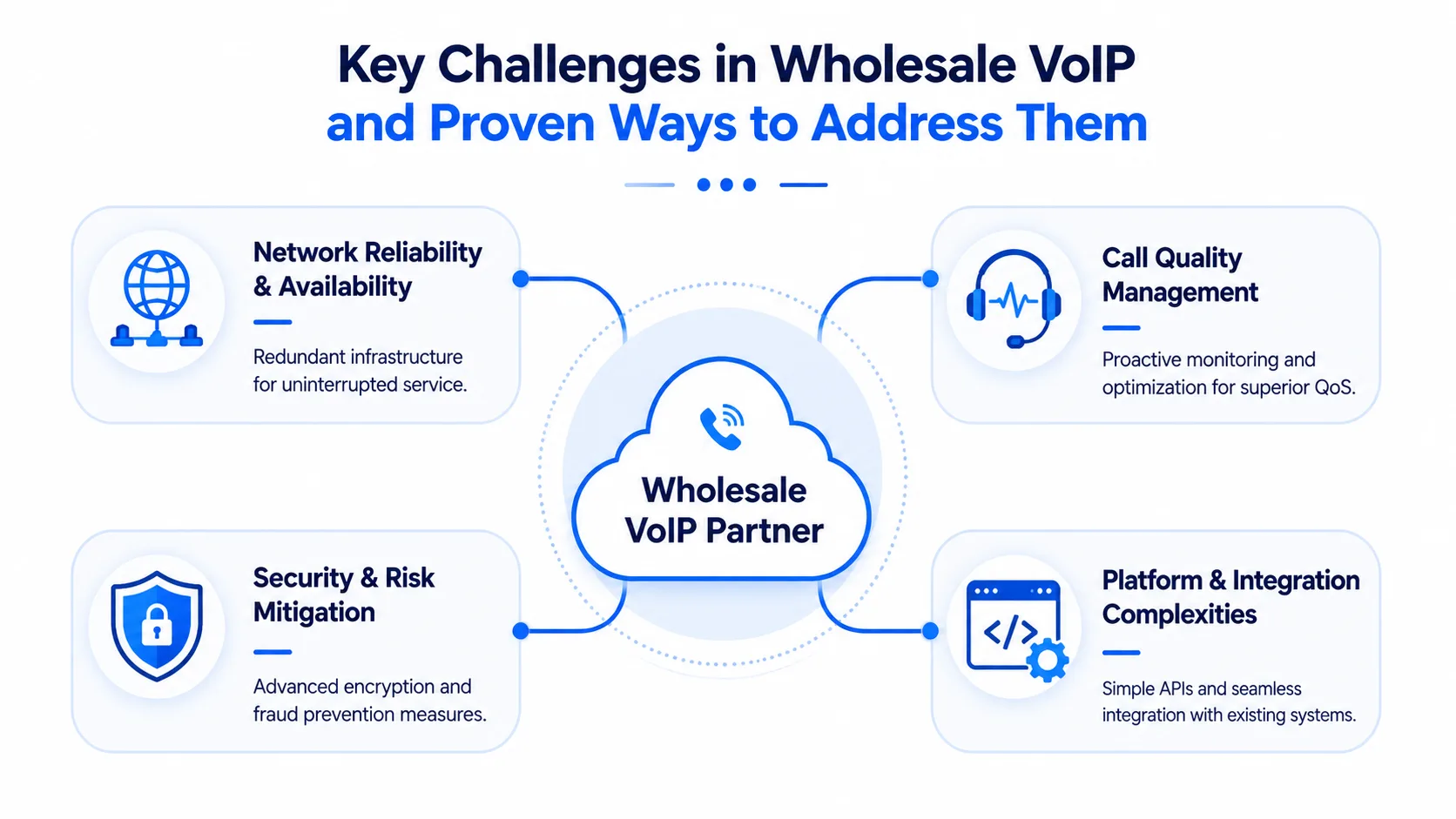
Running a termination voip wholesale business means knowing and following telecom rules in every country where your traffic ends up.
Voice termination faces several types of rules, and these differ a lot across markets:
- Interconnection access rules
- Numbering plan rules
- Lawful intercept duties
- Country-specific tax rules
Work with providers who hold proper licenses and follow the rules in each country they serve. This protects your business from the legal, money, and reputation risks of routing traffic through carriers that break the rules.
Fraud Prevention and Traffic Security
Fraud is one of the most serious money risks in wholesale voice termination. Schemes like IRSF cause millions in unauthorized charges each year across the industry.
The best termination voip wholesale providers run real-time AI-powered fraud detection with auto traffic shutoff. This can spot and stop suspicious traffic patterns within seconds.
When picking a provider, ask for details on how they detect fraud and how fast they act once it is found. Also ask who is on the hook when fraud happens despite these safeguards.
Technology Infrastructure and Redundancy
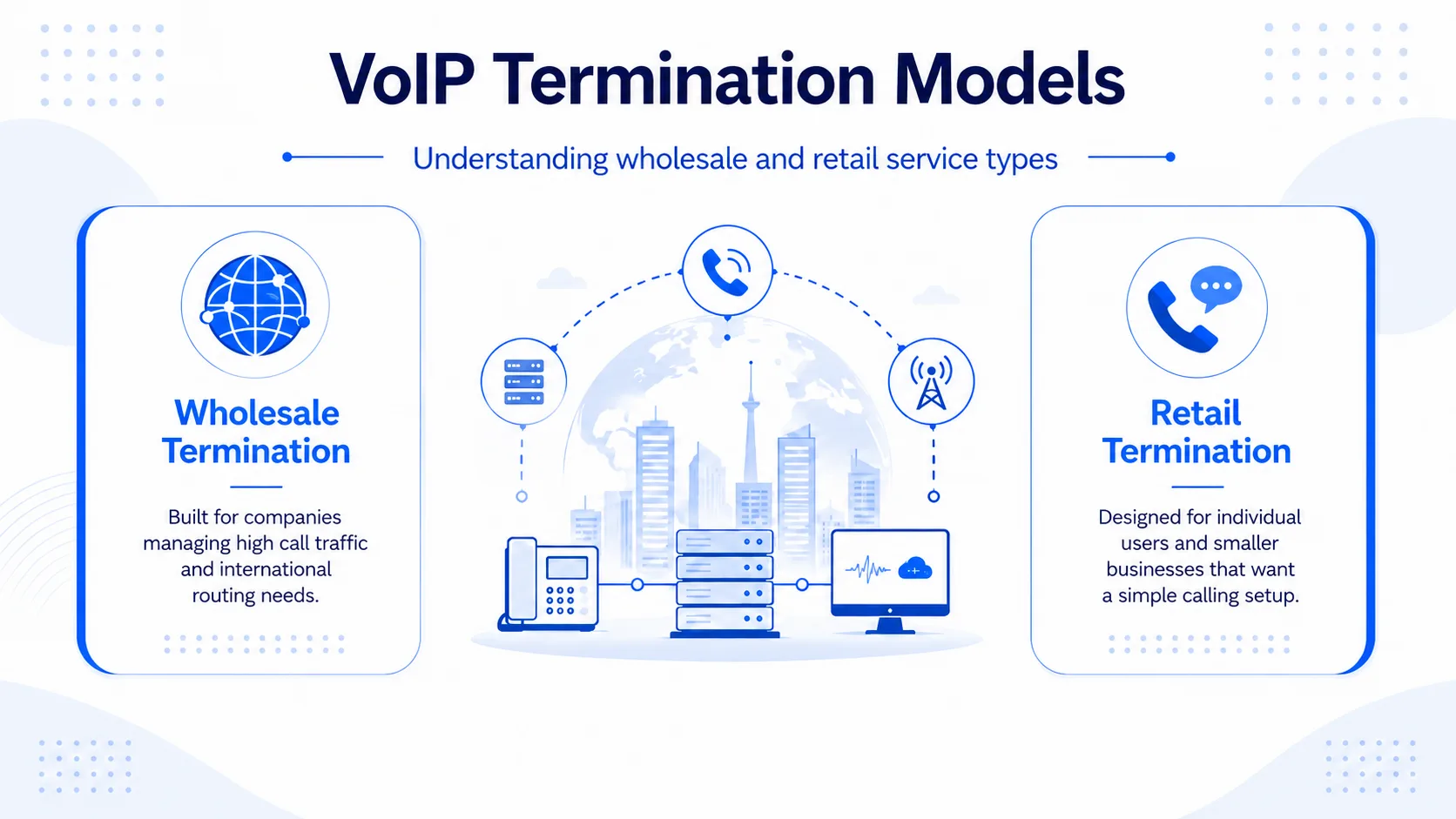
Big-league wholesale voice termination runs on a few core building blocks:
- Class 4 softswitches for call routing
- Session border controllers for security and protocol handling
- High-speed billing systems that can process millions of CDRs a day
- Several switching centers spread across regions
- Backup internet links from different providers
- Auto failover logic that reroutes traffic in milliseconds when any part fails
Backup at every layer of this stack matters.
This level of backup is what sets real wholesale carriers apart from smaller providers whose setup cannot promise the uptime carrier customers need.
Billing and CDR Reconciliation
Accurate billing and settlement in wholesale voice needs steady CDR checks. This confirms charges match agreed rates and that call counts match between buyer and seller records.
Even small per-minute gaps add up across millions of monthly minutes into a big money hit. That makes regular checks a smart use of time.
Solid wholesale voice providers offer full CDR exports in standard formats that plug into customer billing systems. This lets checks run on their own. Gaps get caught before invoices go out, not disputed after payment.
Careful checking is not just a finance task. It also doubles as one of the highest-value quality controls in the whole termination stack.
A growing gap between the originating switch's CDRs and the upstream carrier's invoice is a warning sign. It can point to upstream rerouting, unauthorized resold capacity, or quiet rate changes the carrier never shared.
Operators who automate side-by-side checks at the destination-prefix level usually find one to three gaps every billing cycle. Amounts recovered range from a few hundred dollars on small routes to five-figure fixes on busy corridors.
The same data also exposes carrier moves such as call stretching, billing on unanswered calls, or rounding rules that break from the contract. Once written down, all of these turn into formal credit claims instead of losses.
The most advanced wholesale operations add a second layer on top of checking: live margin tracking.
Instead of waiting for the monthly invoice, finance and operations share one dashboard. It reworks blended buy-rate versus blended sell-rate for every active customer in near real time. Alerts fire whenever any destination slips below a set margin floor.
The dashboard shows problems in three groups at once:
- Pricing errors uploaded into the routing engine
- Sudden upstream rate hikes not yet passed downstream
- Customer traffic that has shifted into a pricier destination mix
Catching any of these within hours instead of weeks routinely saves margin points that would otherwise slip away unnoticed.
Finally, treat CDRs as a real asset, not just a billing side effect. Anonymized totals help in several ways:
- They feed sales talks with destination-level pricing benchmarks
- They support tier re-talks with carriers
- They give the proof base for routing engine tuning
Operators who keep at least eighteen months of clean CDR history on hand for quick analysis gain a real planning edge.
This data edge shows up in a few ways:
- They can model seasonal traffic well
- They can show lenders real stability during funding rounds
- They can answer RFPs with solid coverage and quality numbers instead of sales talk
The setup to do this is now cheap: column storage, an SQL tool, and a weekly data load into a small data warehouse. This is always among the best-paying moves any wholesale carrier can make.
Conclusion
The wholesale voice termination market is complex and always changing. But it stays core to global telecom, and a real business chance for well-run operators. Building a strong operation here means combining careful provider checks, active quality tracking, tight fraud controls, and steady rate improvement into one plan. Firms that build these strengths step by step will always beat rivals who treat termination as a plain commodity buy. They deliver better quality to customers while keeping the low costs needed for lasting, profitable operations.