Introduction
Picking the right wholesale sip termination providers is one of the biggest decisions any voice over IP business makes, directly setting the quality, cost, and uptime of every outbound call your platform handles. The best providers mix deep global carrier links with clear pricing, sharp routing tech, and quick support — giving their customers a real edge in the markets they serve.
What Wholesale SIP Termination Providers Deliver
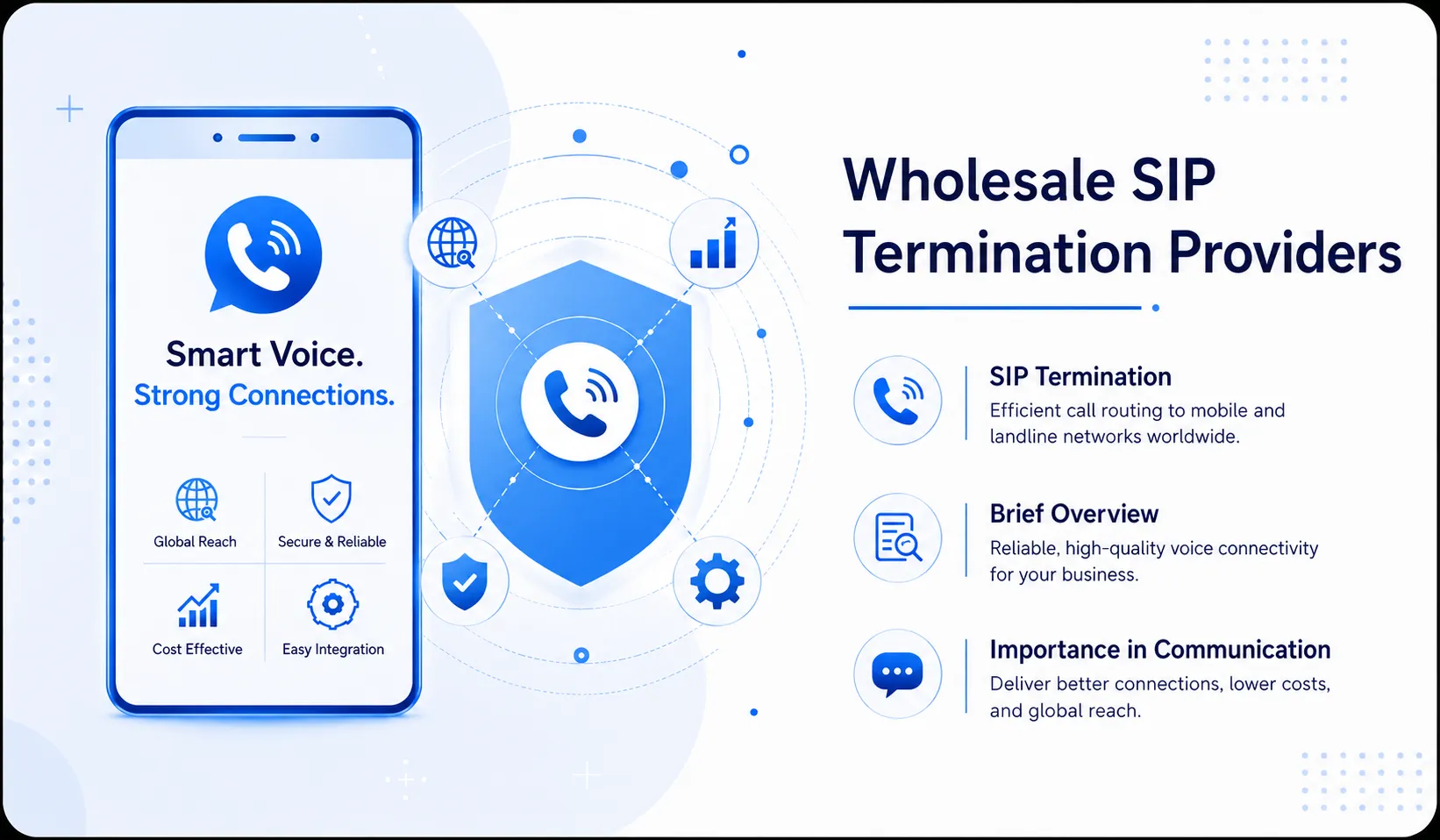
These specialized carriers supply the setup needed to route SIP-based voice calls from your network to any phone number worldwide. They handle the tricky interconnection deals and tech protocols that make cross-carrier calls possible at scale.
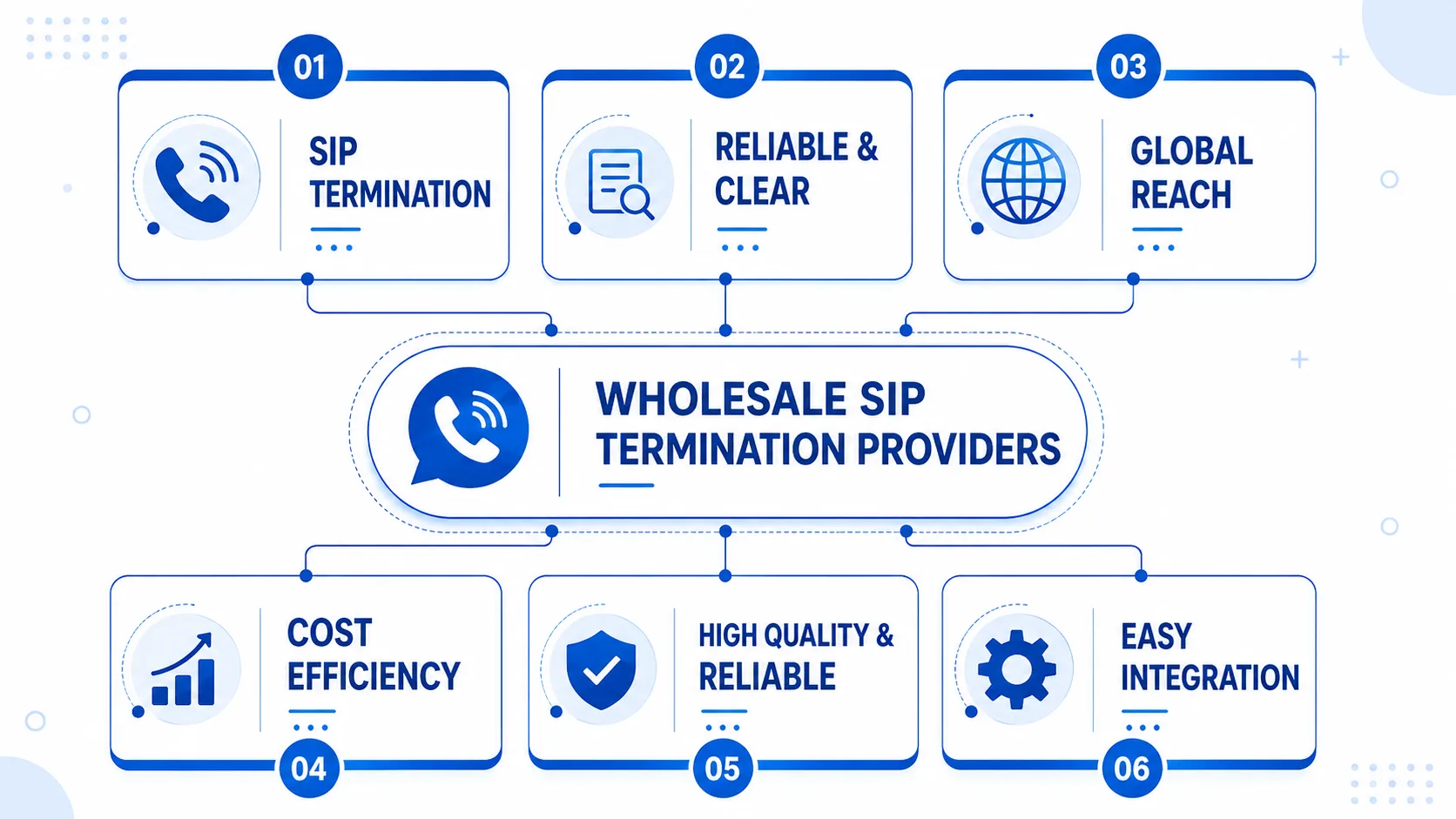
They keep ties with local phone companies, mobile network operators, and other wholesale carriers in each country they serve. This makes sure calls can reach both fixed-line and mobile phones at good per-minute rates.
Route diversity is a key trait of top-tier providers. They keep multiple separate paths per destination, so traffic can reroute on its own when primary carriers hit quality problems or outages.
Evaluating Wholesale SIP Termination Providers
Further reading: Wholesale Termination VoIP
A step-by-step check of wholesale sip termination providers starts with network coverage, using the rate decks each candidate gives you.
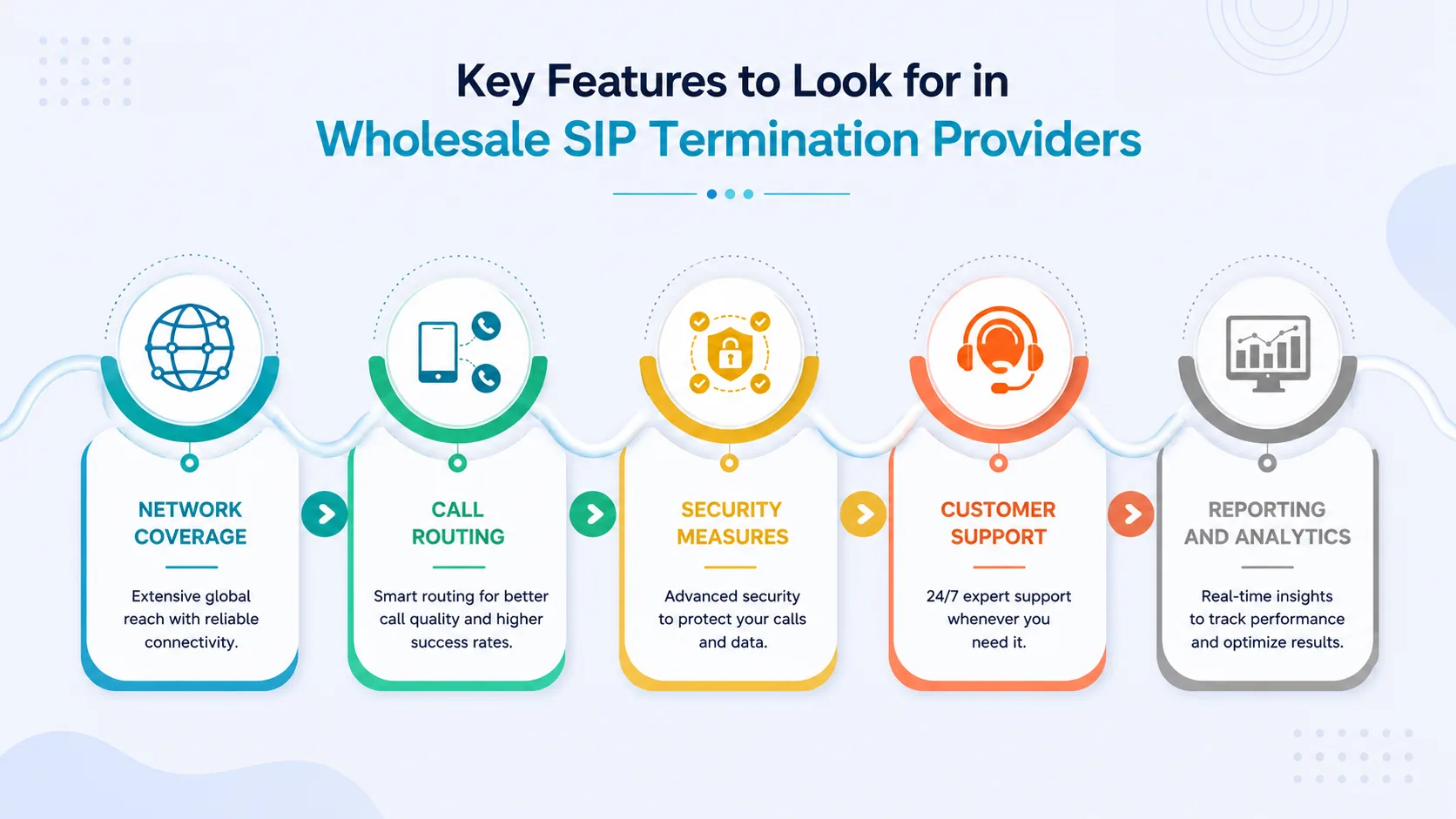
Compare rates on your top destinations. Then check whether providers offer direct routes with carrier links in those countries, or rely mostly on resold traffic from third-party carriers.
Direct links usually give better quality than resold routes. Fewer hops mean less delay, lower jitter, and better call completion rates, which directly boosts customer happiness.
Technical Infrastructure Requirements
The switching setup and network design of wholesale sip termination providers varies widely. This has a direct effect on the service quality your customers get.
Put providers first who run several switching centers spread across regions, with auto failover between spots. That way, a problem at any single site cannot disrupt your whole customer base.
Ask providers about their Class 4 softswitch platforms and network layout records. Also ask about peering ties at major internet exchanges and past uptime on the routes that matter most to your business.
Quality Monitoring and Reporting
Solid wholesale sip termination providers make full real-time quality data open through web dashboards, API links, and auto alerts.
Watch Answer Seizure Ratio, Average Call Duration, and post-dial delay on all active routes daily. Look into any numbers that fall outside normal ranges before problems show up for your customers.
Providers who share quality data on their own and speak openly about network incidents show real operational maturity. This builds long-term trust and makes for truly useful business ties.
Pricing Models and Contract Structures
Wholesale sip termination providers offer several pricing models built for different business types and traffic patterns.
Flat per-minute rates give steady costs for high-volume traffic to set destinations. Tiered volume pricing rewards growth instead, giving better rates at higher commitment levels.
Knowing which pricing model fits your traffic is key to getting good value. Businesses with mixed or unpredictable traffic often do better with flexible deals that have no minimums. This holds true even at slightly higher headline rates, because locked-in contracts risk shortfall penalties.
Negotiating Better Commercial Terms
Good talks with wholesale sip termination providers take prep work. Gather quotes from several rival providers at the same time. Your traffic volume data, destination mix, and pay record are your main bargaining chips.
Cover rate levels, minimum commitment terms, billing cycles, dispute steps, and quality fixes clearly in contract talks.
The contract details matter just as much as headline per-minute rates. These are the details that set what happens when quality falls below agreed levels, or when billing disputes come up. Together they set the true value of the deal.
Fraud Prevention Capabilities
Further reading: Wholesale voice solutions
Fraud prevention is a growing factor when comparing wholesale sip termination providers. IRSF and other call fraud schemes can cause large money losses fast in wholesale voice setups.
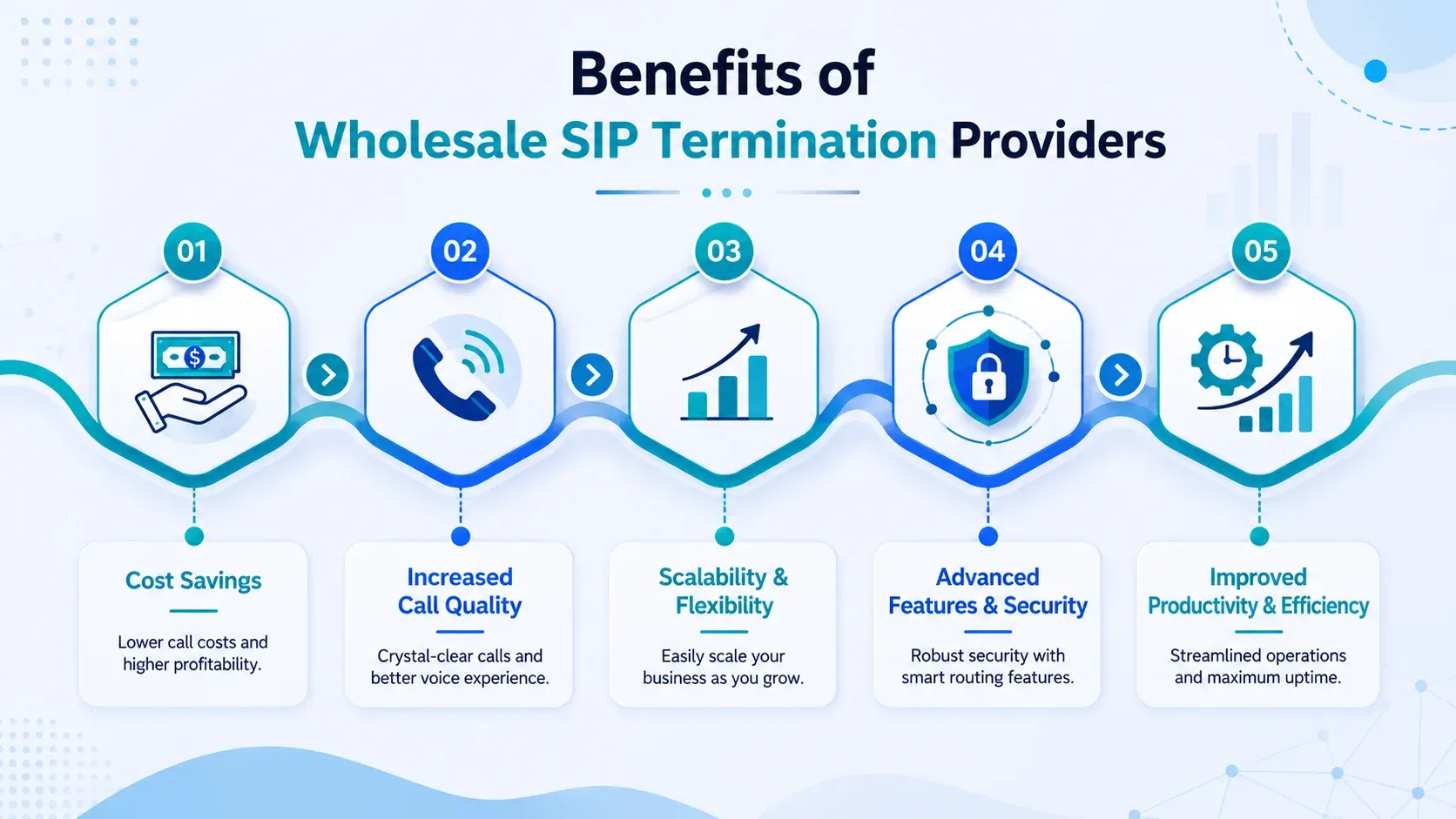
The best providers run real-time AI-powered fraud detection systems that spot odd traffic patterns and auto-stop compromised traffic flows within seconds of finding them.
Ask providers detailed questions about:
- How they detect fraud
- The usual time between attack start and shutdown
- The contract terms that apply when fraud losses go past set limits despite auto controls
Building Multi-Provider Routing Architecture
Smart operators build their call routing setup around several wholesale sip termination providers rather than leaning on a single supplier.
A well-built multi-provider setup spreads traffic based on real-time quality, rate levels, and how strong each tie is. It also includes auto failover to backup providers when primary routes hit trouble.
This approach needs a routing platform that can handle several SIP links at once. But for high-volume operators, the payoff is worth the added complexity. Price competition and route backup always justify it.
Support Quality and Account Management
The quality of ongoing support has a big effect on the long-term value of ties with wholesale sip termination providers. This matters most during urgent quality problems or business talks.
The best providers give you a dedicated account manager who knows your traffic. They tell you about network changes or incidents that might affect your service before you have to ask, and respond fast to escalations.
Before you commit, test how fast support responds. Send technical questions during pre-sales and check response speed and quality. This is a good sign of what you can expect when real issues arise and a fast fix is key.
Integration and Onboarding Process
Further reading: SIP Trunking — Wikipedia
The onboarding you get with new wholesale sip termination providers shows a lot about how a relationship will work day to day over the long run.
Solid providers offer clear onboarding docs and setup help for SIP trunk setup. They also give you a set testing plan that checks route quality before live traffic moves over.
Take the time to test all destination groups fully during onboarding. Write down starting quality numbers to use as a reference for ongoing checks and future quality talks with the provider.
Compliance and Regulatory Standing
Following the rules is a must-check item when vetting wholesale sip termination providers. Routing traffic through rule-breaking carriers puts your business at legal and money risk that can be severe.
Check that providers hold proper telecom licenses in the countries where they work. Confirm they follow:
- Interconnection rules
- Numbering plan rules
- Lawful intercept rules in each country
Ask for proof of their standing with regulators in key markets as part of your review, and include compliance promises in your service agreements.
Following the rules is no longer a one-time paper check. It has become an ongoing job the provider must keep proving. The clearest example is the global tightening of caller-ID rules.
Caller-ID and Attestation Rules
In the United States, STIR/SHAKEN now requires every originating call to carry an attestation level (A, B, or C) inside the SIP INVITE header. Termination carriers must honor that token end to end.
Across the EU, the eCall and CLI-spoofing rules apply similar needs. The UK's Ofcom Phone-scam Action Plan is pushing a similar baseline fast.
A wholesale SIP termination provider that cannot show, sign, and pass along verified identity tokens has a problem. Its traffic gets pushed down the priority list by terminating carriers. That means rising PDD, falling ASR, and eventually flat rejection on key routes.
Always ask for a written attestation roadmap, not just a list of current certifications.
Numbering-Plan Compliance
Numbering-plan compliance is another area that quietly wears down service quality when ignored.
Every country keeps a numbering plan run by its national regulator. Strict rules cover:
- Which prefixes may be used for originating identity
- Which prefixes are set aside for emergency or premium services
- How portability changes show up in routing tables
Providers who fail to refresh against the national portability database daily will misroute a real share of calls. These calls often land in costly premium-rate ranges instead of the intended fixed-line or mobile destinations.
The money risk is real: misroutes count as billable termination minutes and often land on the priciest rate tier available.
The right question to ask is not "do you comply with the numbering plan." It is "how often do you pull in the national portability data, and how fast do you apply an update?"
Lawful Intercept and Data Residency
Finally, lawful-intercept and data-residency rules are more and more tangled with cross-border voice traffic.
Several countries now require call-related metadata to stay inside national borders, even when the underlying carriers are global. Penalties for breaking the rules range from big fines to lost operating licenses.
Trusted providers keep a public Trust Center. It shows regional data-handling diagrams, lists of who handles data in each country, and steps for honoring lawful-intercept requests from real authorities.
Buyers should treat the lack of such records as a major red flag, even if the headline rates look good.
The moment a regulator opens an inquiry into a customer case, the missing paperwork lands squarely on your desk. It does not matter whose network the calls actually traveled through.
Conclusion
The wholesale SIP termination market offers strong options for businesses willing to invest in careful checking and active relationship work. Provider quality, pricing, and features keep changing, so treating provider choice as an ongoing job, not a one-time decision, always gives better results.
Regular price checks against rivals, active quality tracking, and tight management of your provider ties will keep your termination plan sharp. That lets you deliver high-quality, cost-competitive voice services to your customers, while staying strong in a tough, fast-moving telecom market.