Introduction
Mobile and fixed-line destinations are two very different cost worlds inside any wholesale termination voip operation. A call landing on a mobile network gets charged a rate often three to five times the fixed-line rate.
This guide breaks down how pricing, routing, and quality differ between the two.
What Is Wholesale Termination VoIP?
Further reading: Wholesale A-Z VoIP termination coverage
Wholesale termination voip is the high-volume routing of Voice over Internet Protocol calls from an originating network through a carrier's switching setup. The call travels to the destination subscriber on the public switched telephone network or another VoIP network.
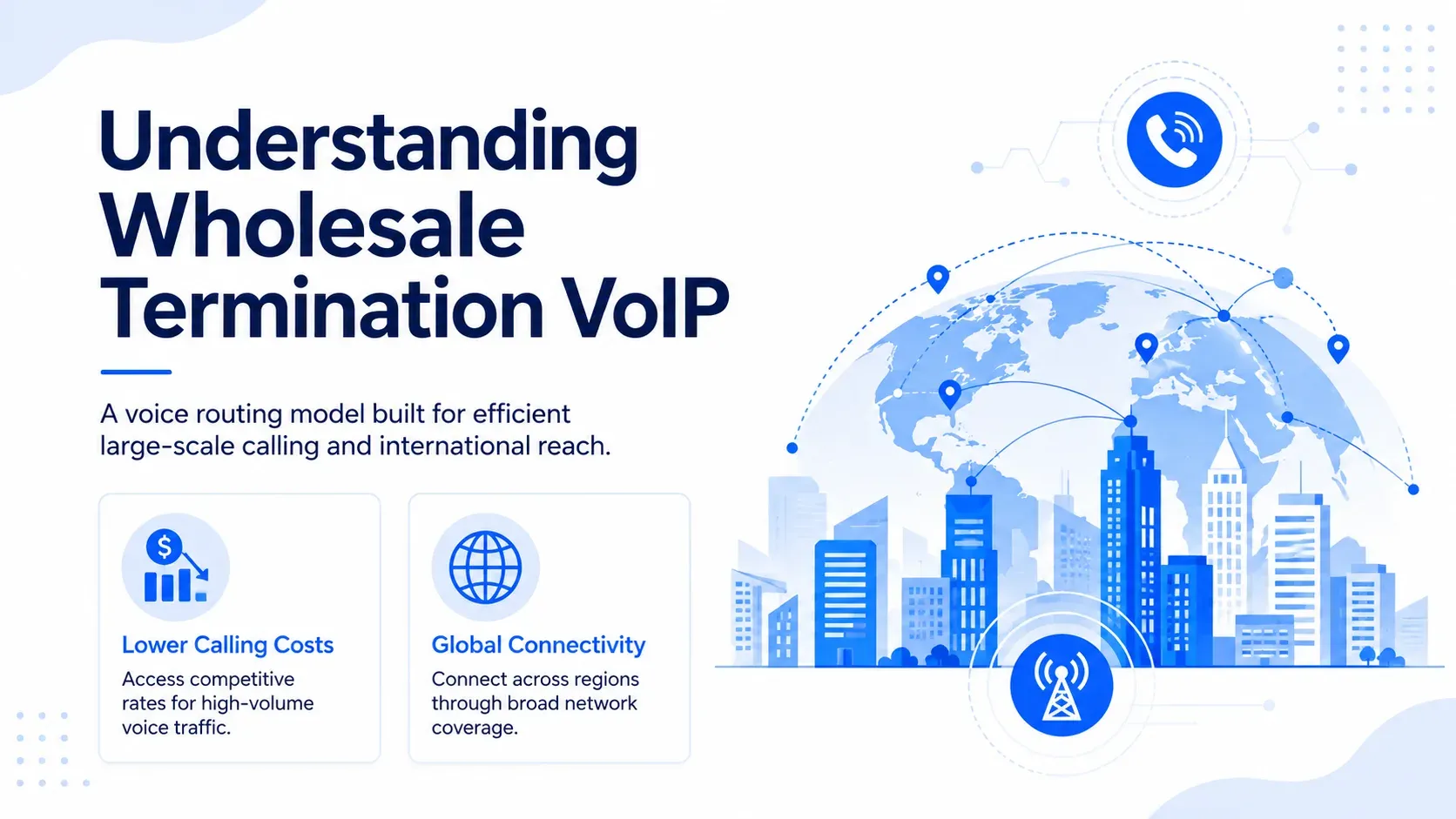
Unlike retail voice services built for individual users, this market runs at carrier scale. Monthly volumes range from hundreds of thousands to hundreds of millions of minutes.
At this volume, even tiny per-minute gaps create a big cost hit. These gaps decide whether a voice service business runs at healthy margins or faces ongoing money pressure from telecom overhead.
How Wholesale Termination VoIP Routes Calls
Further reading: Wholesale VoIP Termination Carriers
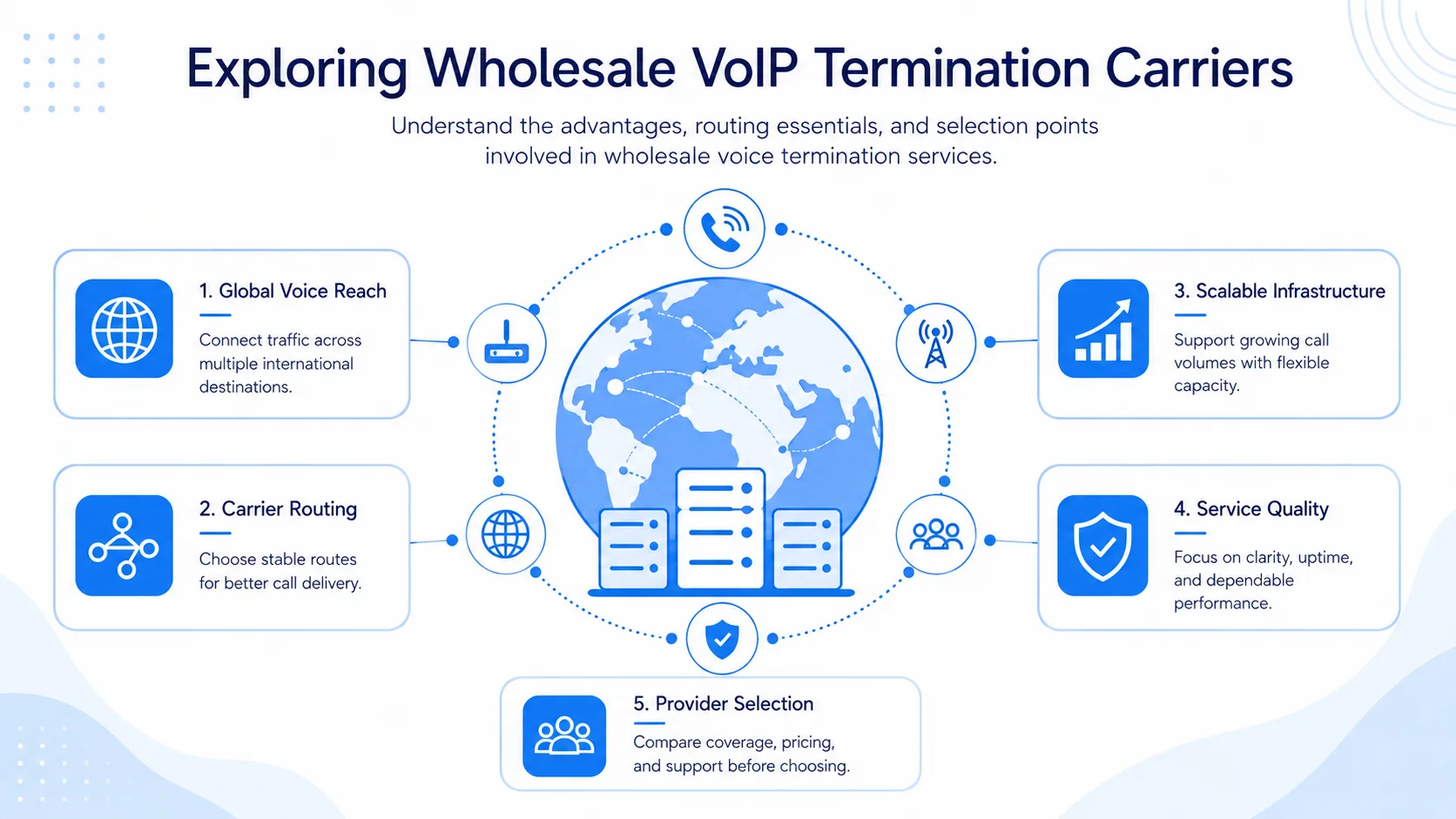
Each call sent through a wholesale termination voip platform follows a set tech path from start to finish. When a call starts on your network, a routing engine runs several steps in real time:
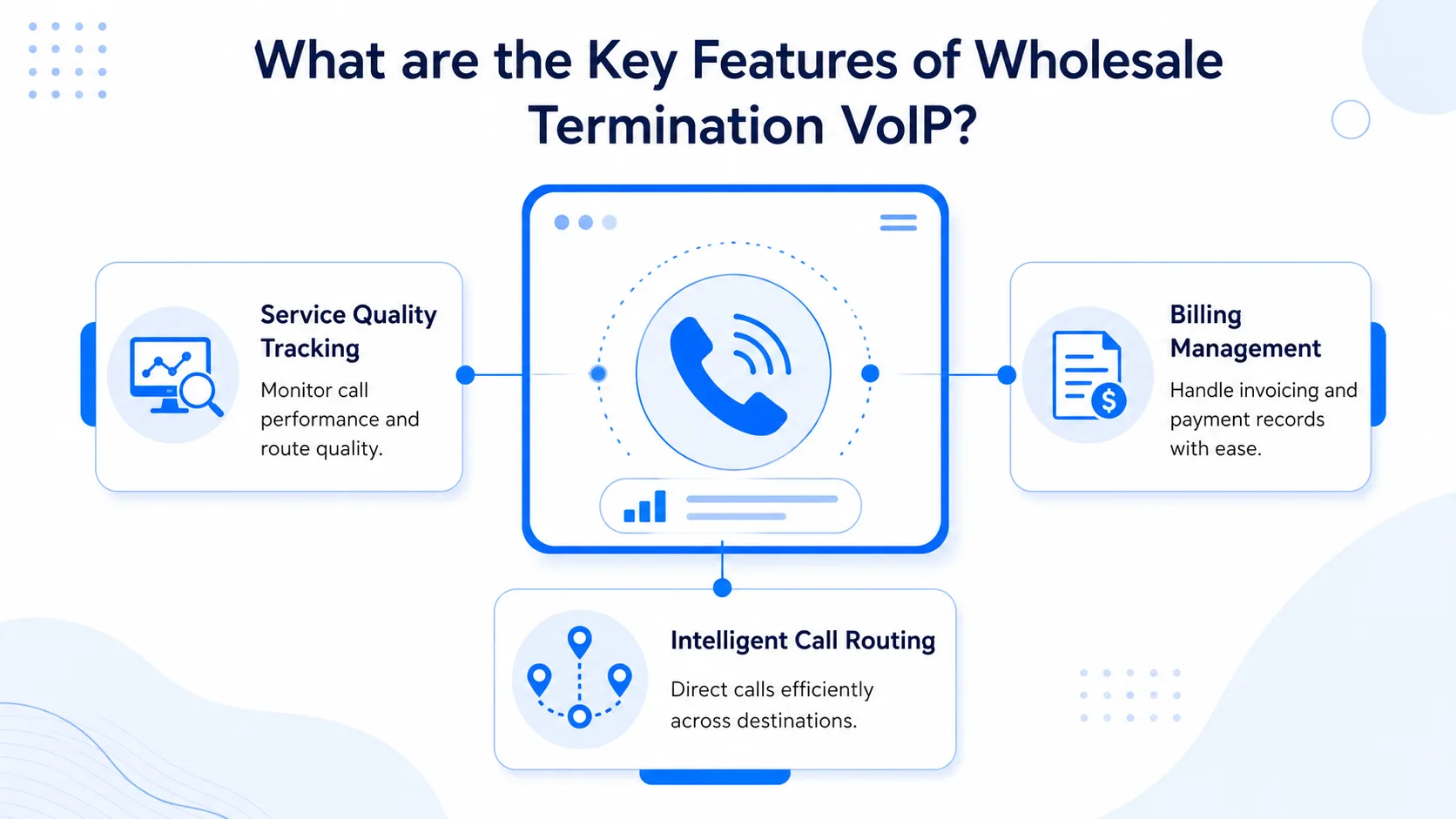
- Checks the destination number
- Looks up open carrier routes
- Applies quality filters
- Picks the best path, all within milliseconds
The call is then passed across SIP links to the next carrier in the chain. It crosses as few network hops as possible before reaching the local exchange that delivers it to the end recipient.
The speed and accuracy of this process directly sets the quality your customers get on every call placed through your platform.
Least-Cost Routing Optimization
The engine behind every wholesale termination voip operation is the least-cost routing algorithm. It picks among rival carrier paths for each destination.
LCR engines keep live rate tables from all linked upstream carriers. They rank open routes by cost after dropping those that fail set quality bars for:
- Answer seizure ratio (ASR)
- Average call duration (ACD)
- Post-dial delay (PDD)
The result is auto pick of the lowest-cost route that still passes, for every call, with no operator step needed.
Most platforms allow separate LCR setups for different customer tiers. Premium traffic gets stricter quality floors, while high-volume, quality-tolerant uses such as auto dialers or bulk alert campaigns can use more cost-aggressive routing.
SIP Trunking and Session Border Controllers
SIP trunks form the tech base that links operators to their wholesale carriers, carrying signaling and media traffic using Session Initiation Protocol over IP networks.
Session border controllers placed at network edges give security, protocol matching, and quality checks across all active trunks. They protect infrastructure from bad traffic while keeping performance in view across every carrier link.
The SIP design behind modern wholesale termination voip systems lets you add new carrier ties and more capacity fast. No physical infrastructure changes are needed. It backs the growth needs of expanding voice businesses without big upfront spending.
Commercial Benefits of Wholesale Termination VoIP
The money case for wholesale termination voip is strong for operators at every scale.
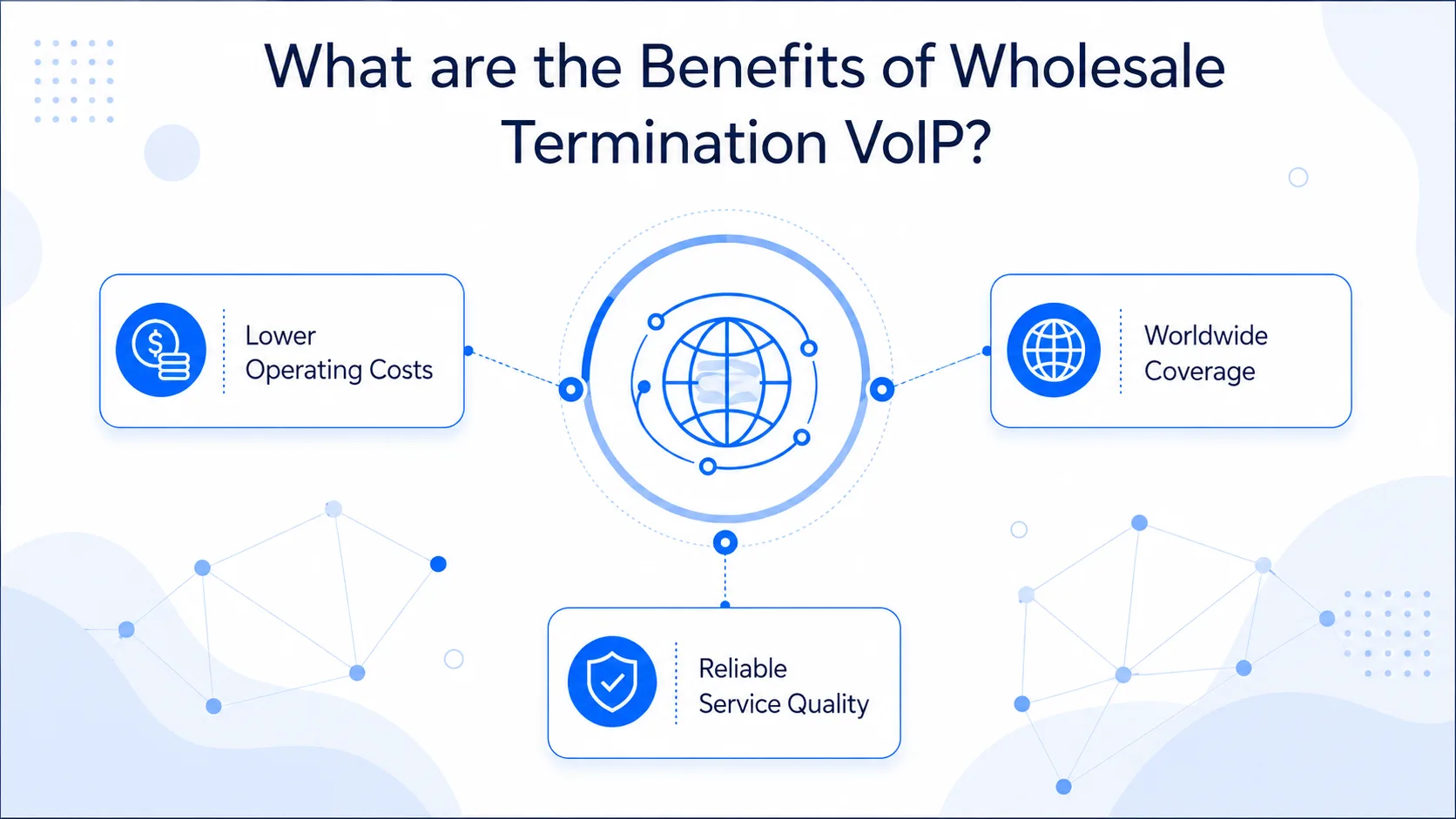
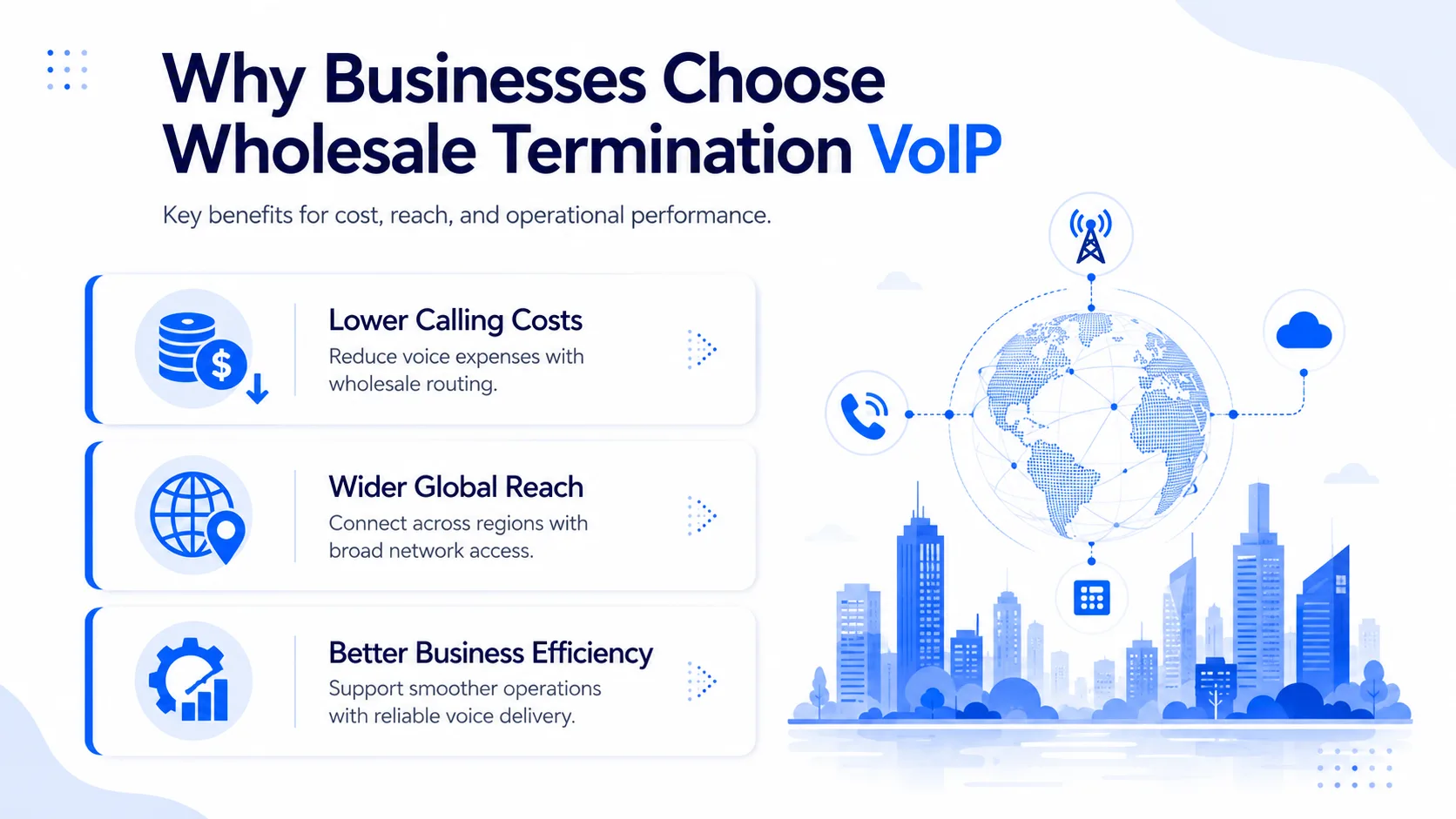
Per-minute rates in the wholesale market run 60 to 80 percent below retail phone pricing. This lets resellers build offers that win customers while still keeping healthy margins.
The pay-as-you-go nature of per-minute pricing cuts the big upfront spend and fixed-cost overhead of old circuit-switched infrastructure. This ties comms costs directly to actual use.
For companies handling large internal call volumes or contact center work, tapping wholesale termination pricing can bring real yearly savings. These savings justify the tech work of running SIP trunking infrastructure on your own.
The ability to scale up fast sets wholesale termination voip apart from legacy phone options. Capacity can be added in minutes by adding SIP channels with existing carrier partners. There are no buying delays, physical setup, or long wait times.
This flexibility lets operators respond right away to traffic growth, seasonal demand spikes, or fast business growth without the big upfront costs that fixed-capacity infrastructure needs.
Businesses that have moved their outbound voice traffic to wholesale termination platforms always report lower costs. They also report better operational speed that supports faster responses to market chances.
Selecting a Wholesale Termination VoIP Provider
Further reading: Wholesale VoIP platform
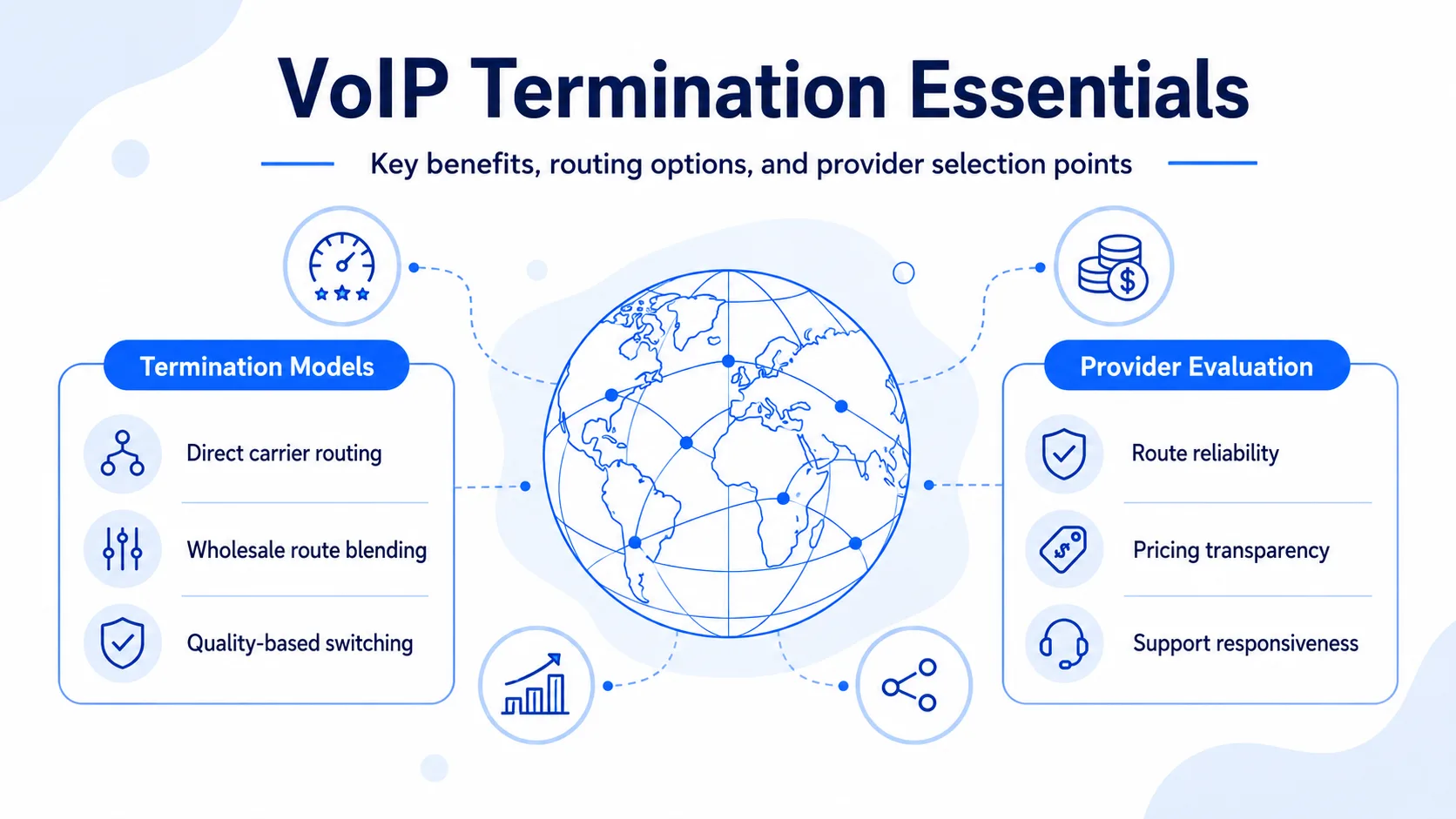
Picking the right wholesale termination voip partner takes a close look at network coverage, clear pricing, quality guarantees, fast support, and strong fraud protection.
Start by finding your top destination markets by traffic volume. Then ask for rate decks from several candidate providers to compare directly on priority routes.
Providers who offer clear, full rate decks cover fixed-line, mobile, and special service numbers separately. These beat unclear setups that hide the true cost of service.
Quality data including ASR and ACD numbers for major routes should be ready before you commit to any provider.
Quality SLAs and Performance Monitoring
Solid wholesale termination voip providers commit to measurable quality standards through service level agreements. These cover answer seizure ratio, average call duration, and post-dial delay on major routes.
Real-time dashboards with route-level numbers let operators spot trouble before problems show up for customers.
Look not just at the numbers named in SLAs but at the enforcement steps and payback terms that apply when performance falls short of contracted levels.
These details show whether quality promises are truly binding, or just sales talk with no real cost for falling short.
Multi-Provider Routing for Resilience
Building strength into termination infrastructure means keeping active ties with at least two providers per destination group. Multi-provider routing builds auto failover that reroutes traffic within seconds when primary routes hit trouble. This keeps service running with no manual step needed.
It also drives pricing competition that improves your rate deals over time. This gives you real leverage in talks, instead of being locked into a single supplier's pricing calls.
Review your carrier performance every quarter and shift traffic to always reward the providers giving the best mix of quality and cost.
Fraud Prevention in Wholesale Voice Termination
Further reading: ITU Telecom Standards
Call fraud is one of the most serious money risks in voice termination work. IRSF schemes use your SIP infrastructure to route calls to premium-rate numbers. They can rack up tens of thousands in unauthorized charges within hours.
Trusted wholesale termination voip providers run AI-powered real-time fraud detection with auto traffic shutoff that spots and stops odd patterns within seconds.
Add per-account spending limits and blocking by region for destinations your traffic should never reach. Add speed alerts that trigger a quick look when odd call patterns show up in your CDRs.
Good defense starts with knowing the usual attack pattern.
International Revenue Share Fraud is rarely a single suspicious call.
It is usually a burst of hundreds or thousands of short calls to a narrow set of premium-rate destinations. This burst often starts within minutes of a stolen SIP credential.
The attacker is racing against your detection window. Every minute of unwatched routing earns them shared revenue from the destination carrier before suspension hits.
The counter-move is to shrink that detection window hard. Use real-time per-second cost counters tied to per-account budgets. Trigger auto suspension when projected hourly spend goes past the account's usual top range.
Add a hard cap on calls per minute to country prefixes flagged as high-IRSF-risk by industry watch groups like CFCA.
Operators who track their time to suspension in seconds rather than minutes routinely cut yearly fraud losses by 90 percent or more.
The second layer is destination intel. Not every pricey country is a fraud risk, and not every cheap country is safe.
The real risk profile follows where revenue-sharing deals exist between local terminating carriers and premium-rate aggregators.
A small set of country-and-prefix combos always tops the global IRSF loss reports each year. Those combos should be blocked by default for every new customer account. Exceptions should only be granted after a clear business need is checked.
Layer this with origin-based controls. Most real business customers have a set list of source IPs or SIP usernames.
Any sign-in try from an unfamiliar place should trigger extra checks or a short spending freeze until reviewed by hand.
The mix of destination blocklists and origin allowlists cuts the biggest attack surface before any AI model even has to weigh in.
Finally, treat fraud defense as a shared job with your carriers and your customers.
Trusted upstream providers publish abuse contact addresses, fraud-related route-suspension SLAs, and incident timelines. You can lean on these when trouble unfolds in real time. Confirm these promises before signing, not during a crisis.
Downstream, give your customers a clear way to turn on extra protections:
- Optional spending caps
- Two-factor login checks on portal logins
- Signed alert messages on every credential change
- Self-service destination blocking
Customers who understand the risk and have visible controls tend to run more safely.
The small share who skip these protections become an easily bounded risk group. You can price this group differently, or ask for more collateral. Spread-out defense always beats a single choke point.
Compliance and Regulatory Requirements
Working in this voice termination market means following telecom rules in each country where your traffic ends up.
These include:
- Interconnection access rules
- Lawful intercept duties
- Numbering plan rules
- Tax rules that differ a lot across countries
Working only with providers who hold proper licenses protects your business from the legal and reputation risks of routing traffic through carriers that break the rules.
Include clear compliance promises in your provider agreements. Check the standing of key partners now and then as license rules change across your key markets.
Conclusion
Building a reliable wholesale voice termination operation means combining careful provider checks with ongoing performance tracking, multi-provider backup, tight fraud controls, and regular price checks against rivals. Firms that approach this step by step, picking providers based on measurable quality numbers, keeping routing strength, and actively managing risk, always get better long-term results than those who treat termination as a plain commodity buy.
The investment in strict operational discipline pays off in lower costs, happier customers, and the strength to absorb market shocks without service loss.