Introduction
A wholesale voice termination provider is the carrier-tier partner that routes your outbound voice traffic from your SIP infrastructure to phone numbers across every network worldwide. Picking the right one is one of the most important infrastructure choices in any voice-dependent operation: it decides call quality, the per-minute costs that define your margins, and how well your platform holds up during carrier incidents or fraud events.
What a Wholesale Voice Termination Provider Does
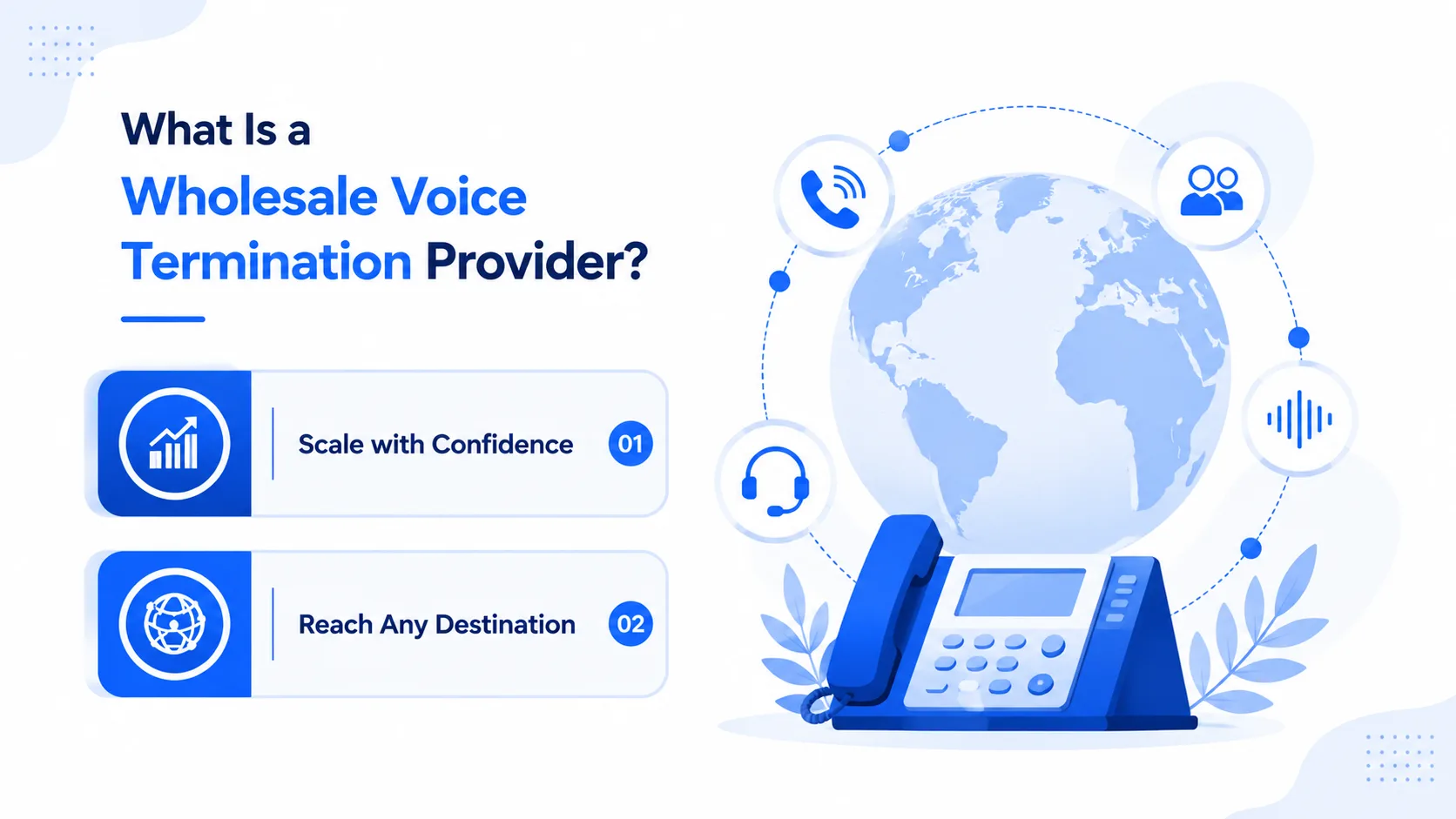
A wholesale voice termination provider keeps up the global SIP interconnection infrastructure, direct carrier deals, and least-cost routing tech. Together these deliver bulk voice traffic from your network to any phone number on the public switched telephone network.
Working at carrier scale, this type of carrier handles millions of minutes monthly. It holds two-way deals with local phone operators in dozens or hundreds of countries and applies real-time quality-filtered routing to every call.
This infrastructure is what turns a SIP session starting on your platform into a completed phone connection anywhere in the world. It does this reliably, fast, and at per-minute costs individual businesses couldn't get on their own.
Core Capabilities of a Wholesale Voice Termination Provider
Further reading: Wholesale Termination VoIP
Several features set a genuine wholesale voice termination provider apart from a reseller packaging upstream capacity.
- Direct carrier interconnections
- Owned switching infrastructure
- Real-time quality monitoring
- Active fraud protection
Direct interconnects with local phone operators in destination countries cut network hops and reduce latency. They give clearly better answer seizure ratio and call quality than routes that pass through several middle carriers.
Owned Class 4 softswitch and session border controller infrastructure gives the operator control over routing choices, quality checks, and security. Resellers relying on third-party platforms can't match this control.
Least-Cost Routing and Quality Filtering
Every professional wholesale voice termination provider runs a least-cost routing engine that keeps improving route choice across all connected upstream carriers for every destination.
LCR systems rank available routes by cost after filtering out those that fail set quality thresholds for ASR, ACD, and PDD. This makes sure the lowest-cost route picked for each call also meets minimum quality standards.
This automatic optimization across hundreds of destinations at once is the core value of the wholesale approach. It replaces the manual work of managing individual carrier ties for every destination in your traffic mix.
Global Coverage and Direct Interconnects
When checking any wholesale voice termination provider, coverage depth matters as much as breadth.
A provider claiming 200 destinations may rely on resold routes for most of them. One offering 150 destinations may hold direct carrier interconnections in every market instead.
Ask any prospective provider to state exactly which of your priority destinations are served by owned direct interconnects and which rely on bought transit.
This gap explains most of the quality difference buyers see between providers. It's the single most useful question you can ask during a review.
How to Evaluate a Wholesale Voice Termination Provider
A thorough check of any wholesale voice termination provider covers five areas.
- Network quality on priority routes
- Pricing transparency and competitiveness
- Platform operational capabilities
- Support responsiveness
- Fraud prevention infrastructure
Collect 90-day rolling quality stats — ASR, ACD, PDD — for your top ten destinations from every candidate provider. Compare them alongside rate deck pricing.
Ask about the provider's owned versus resold network infrastructure and how backup is set up at their switching centers.
Test support speed directly during your review, rather than trusting SLA documents alone. How fast a provider responds during pre-sales talk hints at how they'll act during real incidents.
Quality SLAs and Performance Guarantees
A credible wholesale voice termination provider backs network quality claims with enforceable service level agreements. These SLAs cover measurable metrics and spell out clear fixes when performance falls short.
Check what quality thresholds are guaranteed, which routes fall under SLA terms, and what compensation applies for underperformance.
SLAs from a reputable carrier partner are real documents with enforcement built in. They aren't marketing language meant to imply quality without actual accountability.
Pricing Structure and Rate Transparency
Clear pricing is a reliable sign of quality when checking any provider. Professional carriers give full rate decks that clearly split fixed-line, mobile, and special service number rates for every destination, with clear billing increment terms.
Some providers show unclear or incomplete rate decks, bundle mobile and fixed rates at blended prices, or delay sharing detailed pricing during your review. These are risky practices.
Those practices create billing surprises later.
Clear rates from the start hint at the culture you'll deal with throughout the provider relationship.
Building Resilience with Multiple Providers
Further reading: Wholesale voice solutions
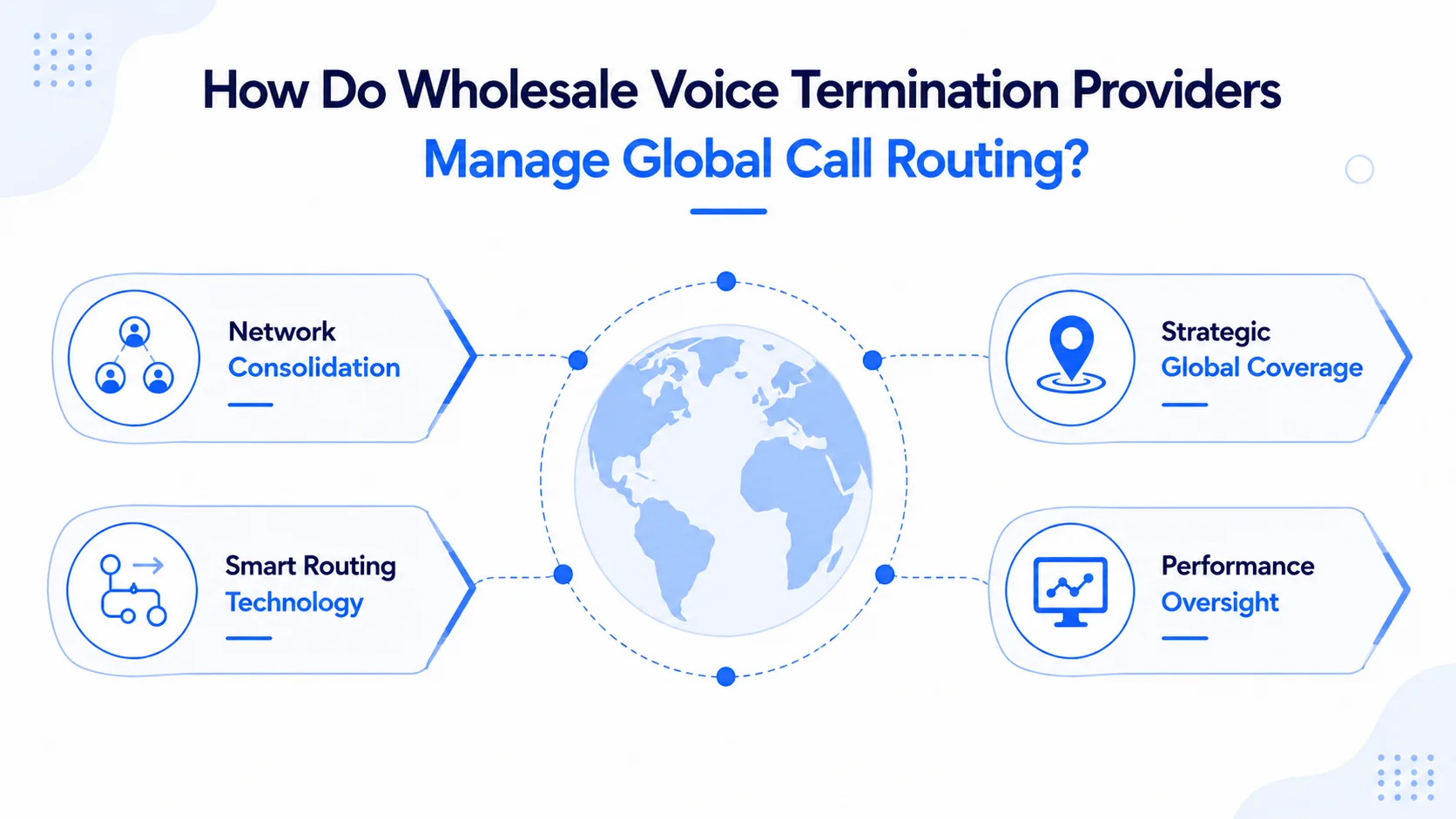
Routing infrastructure that depends on a single wholesale voice termination provider carries a concentration risk that multi-carrier setups remove.
Keeping active ties with at least two providers per major destination group builds automatic failover when main routes degrade. This protects uptime with no manual work needed.
It also keeps pricing pressure on, which brings better rate deals over time. A wholesale voice termination provider facing real competition for your traffic reacts to performance comparisons in ways a captive single-supplier deal never would.
Review provider quality every quarter and shift traffic allocation based on measured performance, not just habit.
Fraud Prevention with Your Provider
IRSF and SIP fraud targeting termination infrastructure can cause large financial losses within hours. This makes fraud prevention a key factor when picking a wholesale voice termination provider.
Ask every candidate about their real-time fraud detection methods, usual detection-to-suspension time when attacks happen, and liability terms for fraud losses.
Add your own per-account spending limits, geographic call blocks, and real-time CDR speed alerts on top of provider-level controls.
Platform-level and operator-level controls together cut exposure down to a level where fraud is manageable, not a threat to your whole operation.
Choosing a wholesale voice termination provider starts with route records. Ask prospective carriers for an interconnect map showing which Tier 1 partners carry traffic to your key destinations.
Providers relying on a single upstream carrier for major routes create single points of failure. Backup routing — where traffic automatically fails over to a secondary carrier if ASR drops below a set point — is a must for business-critical use.
Several quality metrics matter here, including Answer Seizure Ratio (ASR), Post-Dial Delay (PDD), Mean Opinion Score (MOS), and Network Effectiveness Ratio (NER). Track all of them with any wholesale voice termination provider.
ASR measures the share of calls that connect. PDD is the delay between dialling and ringing — anything above 4 seconds frustrates callers.
MOS scores codec quality on a 1–5 scale, with 4.0 or above counting as toll-quality voice. Review these metrics weekly and hold carriers to SLA minimums in the contract.
Contract terms matter as much as technical skill. Review termination agreements for traffic clawback clauses, which let carriers later reclassify and reprice traffic types.
Make sure your agreement clearly defines allowed traffic types, blocks one-sided rate changes without notice, and includes credits for SLA breaches.
A well-written carrier agreement is your main protection when quality drops or disputes come up.
Escalation steps at your wholesale voice termination provider decide how fast problems get fixed when they happen.
Before signing a contract, ask how incidents are classed, what response time applies to each severity level, and who your named escalation contacts are.
A provider with 24/7 network operations centre coverage and named technical account managers who know your traffic profile fixes issues faster. This beats relying on a generic ticket system.
Test the support process yourself by sending a non-urgent technical question before routing live traffic.
Incident post-mortems with your wholesale voice termination provider build resilience over time.
After any major outage or quality drop, ask for a written root cause report. It should explain what failed, why, and what changes will stop it happening again.
Providers who give detailed post-mortems show real engineering care and accountability.
Those who wave off incidents with vague answers aren't learning from failures. The same problems will come back.
Make post-mortem quality a factor in your yearly provider review.
Conclusion
The right wholesale voice termination provider is a strategic infrastructure partner, not a simple commodity buy. Putting in real work on upfront checks, multi-provider backup, and ongoing performance management pays off in call quality, cost, and resilience that a passive approach can't match. Treat provider selection as a business decision with long-term effects, and manage those relationships with the same care you give every other strategic investment.