Introduction
Most wholesale VoIP providers look identical from a rate card. The differences that actually matter — the ones that determine whether your calls connect reliably at 2am on a Tuesday or whether a billing dispute takes five minutes or five weeks to resolve — don't show up until you're already a customer.
Generic buyer's guides tend to stop at a checklist: check the SLA, check the rates, check the reviews. That checklist misses the specific, observable traits that separate a genuinely exceptional wholesale VoIP provider from one that's merely adequate on paper.
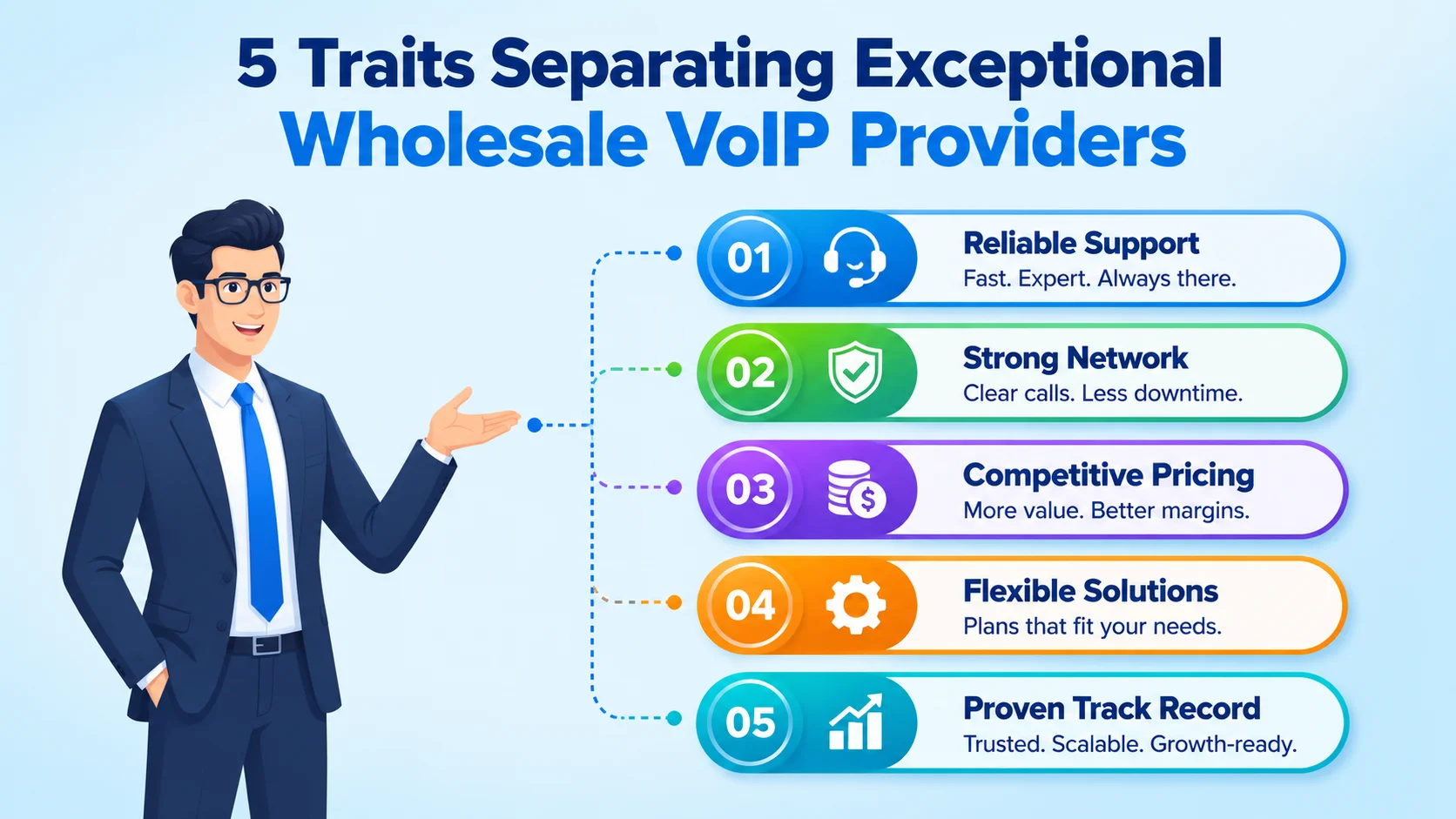
This guide breaks down five of those traits in detail — not vendor names, but the concrete capabilities and behaviors you can actually verify before signing, so you know what "exceptional" looks like rather than just trusting a marketing page that says so.
Trait One: They Own the Network, Not Just the Brand
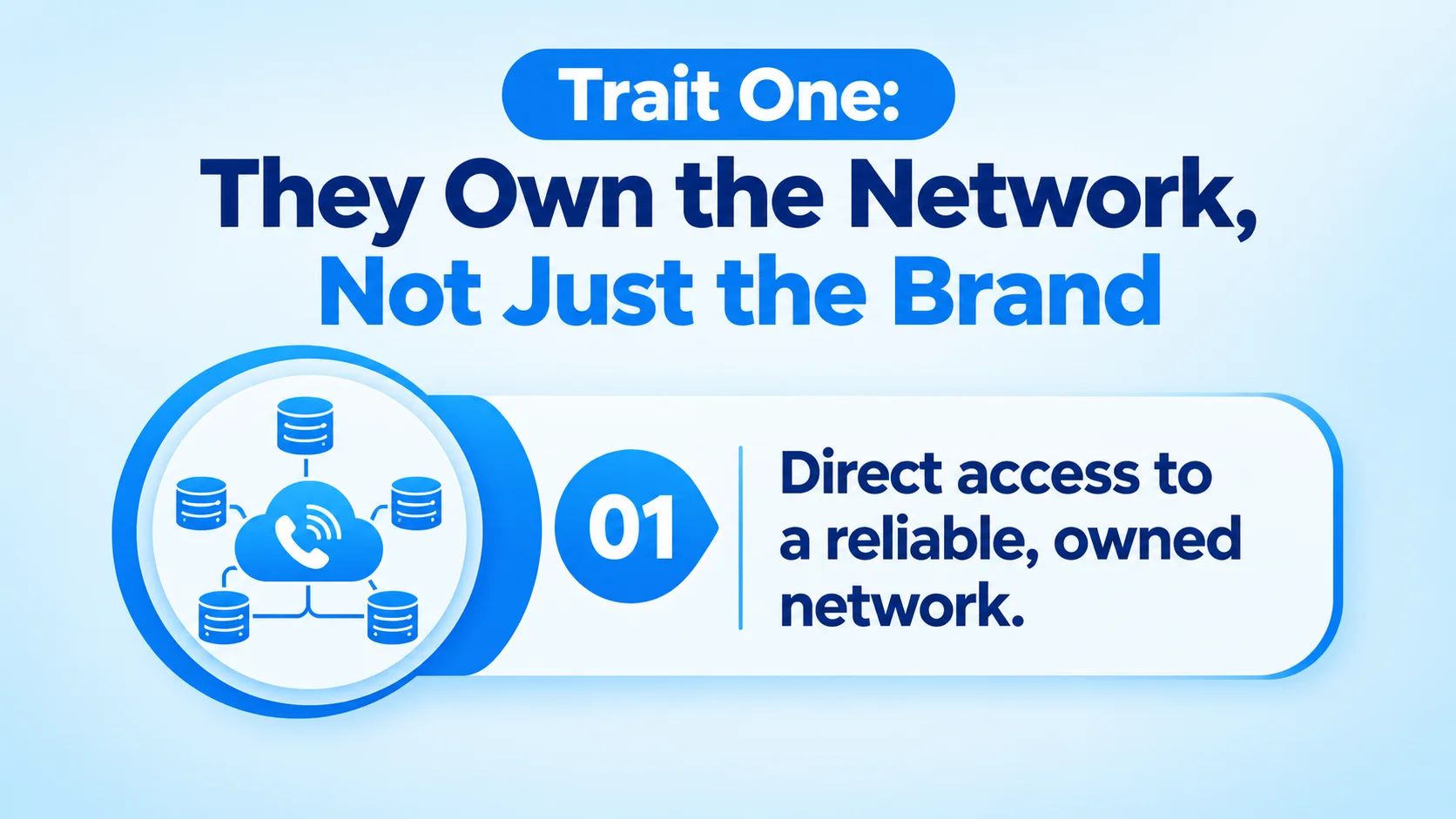
Plenty of wholesale VoIP providers present a polished front end while routing every call through someone else's infrastructure underneath. Exceptional providers are distinguished by how much of the actual network path they control directly — multiple geographically distributed points of presence, direct peering relationships with tier-1 carriers, and automatic multi-path failover that reroutes traffic within seconds of a path degrading, not minutes.
This is verifiable, not just a claim to take on faith. Ask specifically how many points of presence a provider operates and where, whether failover between them is automatic or requires manual intervention, and how they'd demonstrate a failover event actually working — a provider confident in their architecture will walk through a real example rather than deflecting to a general uptime percentage.
Further reading: wholesale voice carrier route quality
Trait Two: Quality Data Is Visible Before You Ask For It
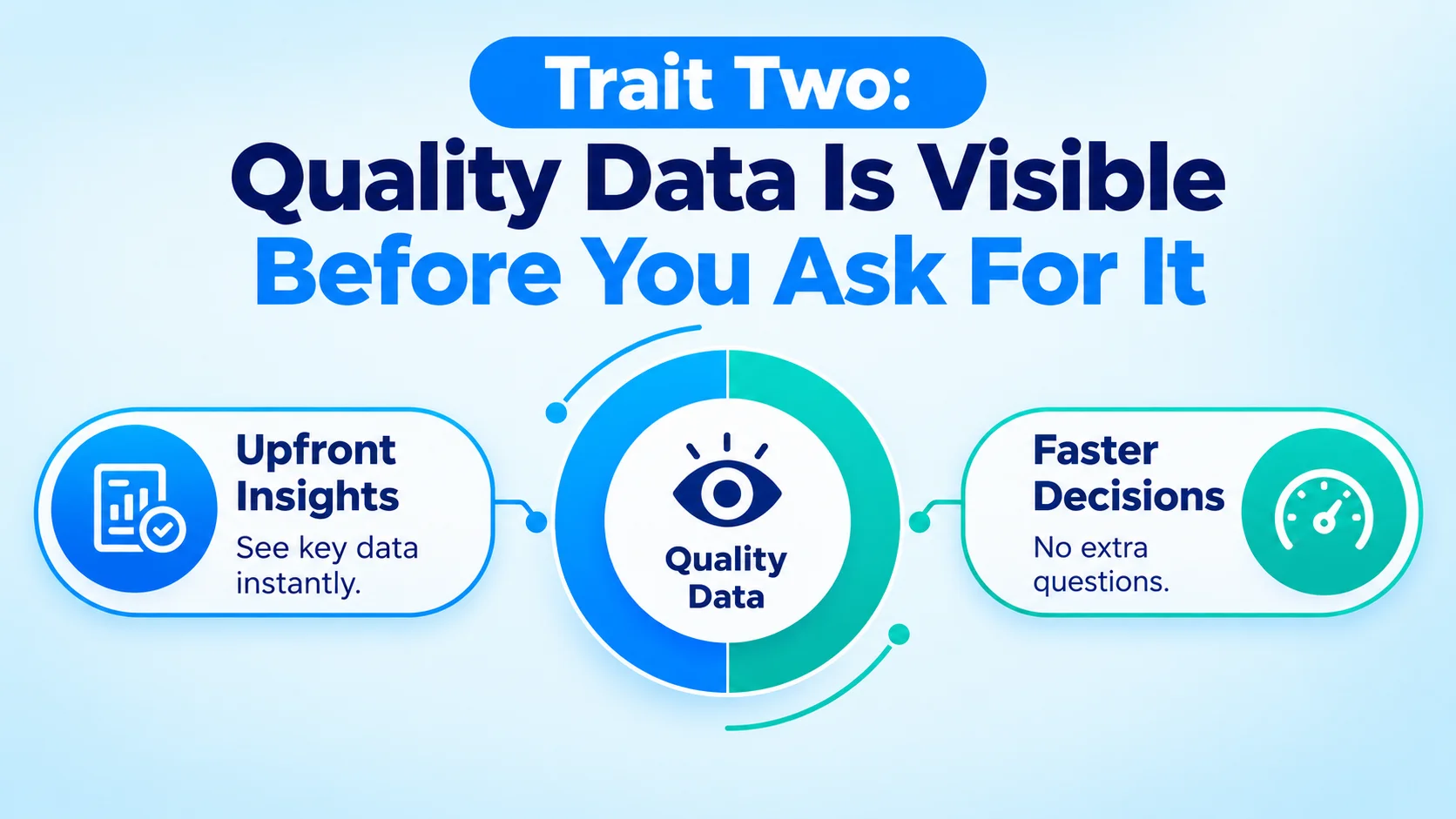
An average provider tells you their network is reliable. An exceptional one shows you, unprompted, with a live dashboard exposing ASR, ACD, and post-dial delay per route and per destination — the same data their own network operations team watches internally.
The distinction that separates real transparency from marketing transparency is granularity and timing. A monthly PDF summary is marketing. A dashboard you can query for any destination, any time window, updated near real time, is operational transparency — and it's the difference between catching a degrading route within the hour versus discovering it a billing cycle later when your own customers start complaining.
- Per-destination ASR and ACD — not just an account-wide average, which hides problems in specific countries or carriers behind a healthy overall number
- Real-time or near-real-time updates — a dashboard that lags a day behind actual traffic isn't useful for catching a live degradation event
- Historical trend access — the ability to see whether a route's quality is stable, improving, or slowly degrading over weeks, not just its current snapshot
Trait Three: Compliance Moves Ahead of Regulation, Not Behind It
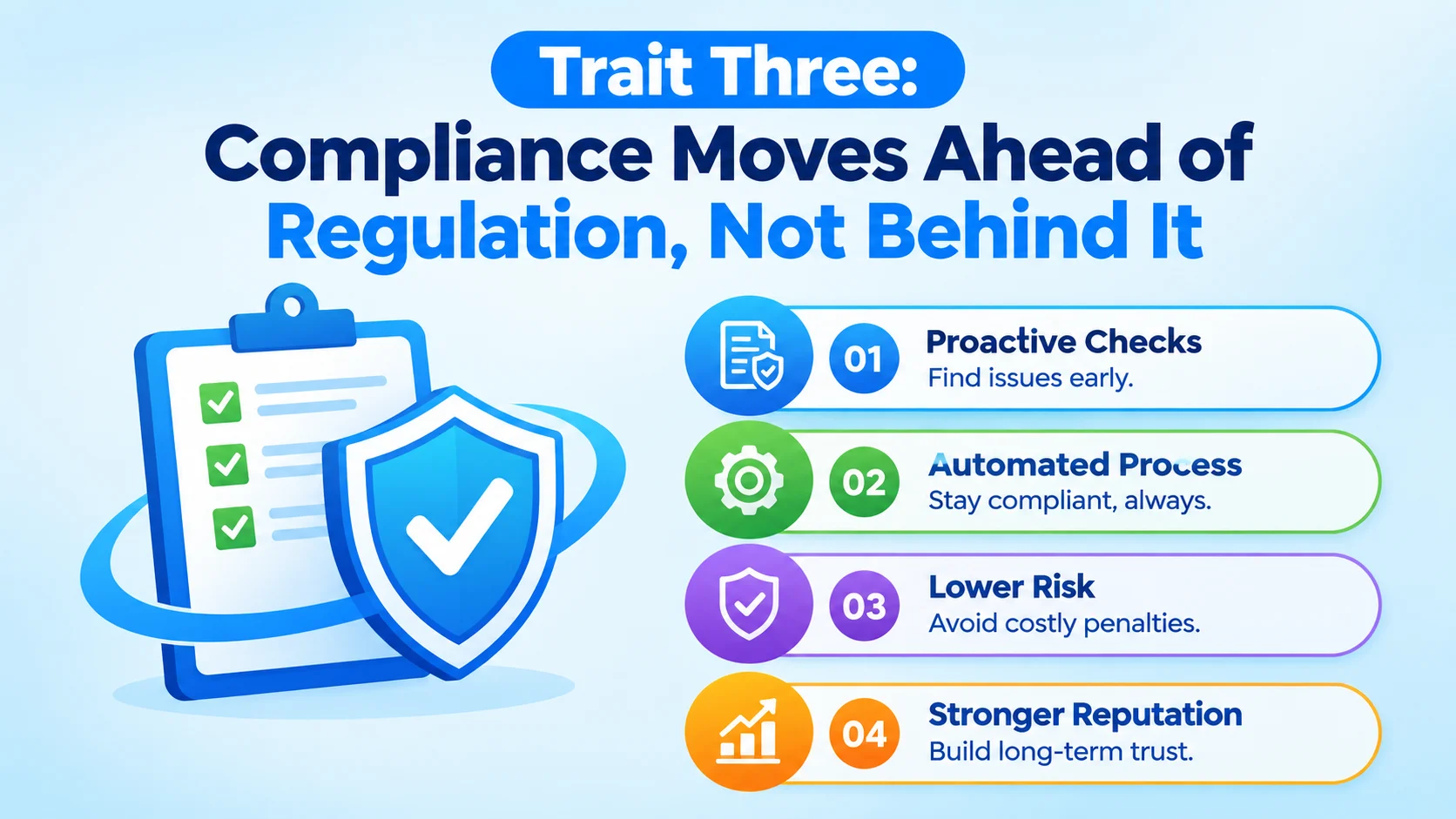
STIR/SHAKEN, Robocall Mitigation Database recertification, evolving Know-Your-Upstream-Provider requirements — the regulatory floor for wholesale voice keeps rising, and providers respond to that in two very different ways. Reactive providers scramble to meet each new requirement after enforcement deadlines start biting. Exceptional providers treat compliance as ongoing infrastructure work, holding their own signing certificates, maintaining current registrations proactively, and communicating changes to customers before those changes cause a problem — not after a customer's traffic starts getting flagged.
A practical test: ask a provider what changed in their compliance posture over the last 12 months without being told to change it by a deadline. A provider with a real answer — a certificate renewal cycle, an internal audit process, a proactive registration update — is operating differently than one who can only describe what they did in response to an enforcement action.
Further reading: FCC: Robocall Mitigation Database
Trait Four: Billing You Can Audit Without Opening a Ticket
Billing transparency is one of the most reliable, least glamorous signals of an exceptional wholesale VoIP provider. Average providers issue an invoice and expect you to trust it. Exceptional ones give you self-service access to the call detail records and the rate deck version that produced that invoice, so any discrepancy can be checked and resolved without a multi-day support cycle.
This matters more as volume grows. At low call volume, billing errors are small enough to absorb without noticing. At scale, even a small systematic discrepancy compounds into real money, and a provider that makes verification easy — API access to CDRs, a versioned rate deck history, itemized invoices matching that history — saves far more than the difference between two competitive per-minute rates ever would.
Further reading: how to read a wholesale rate deck
Trait Five: They Scale With You Instead of Making You Renegotiate
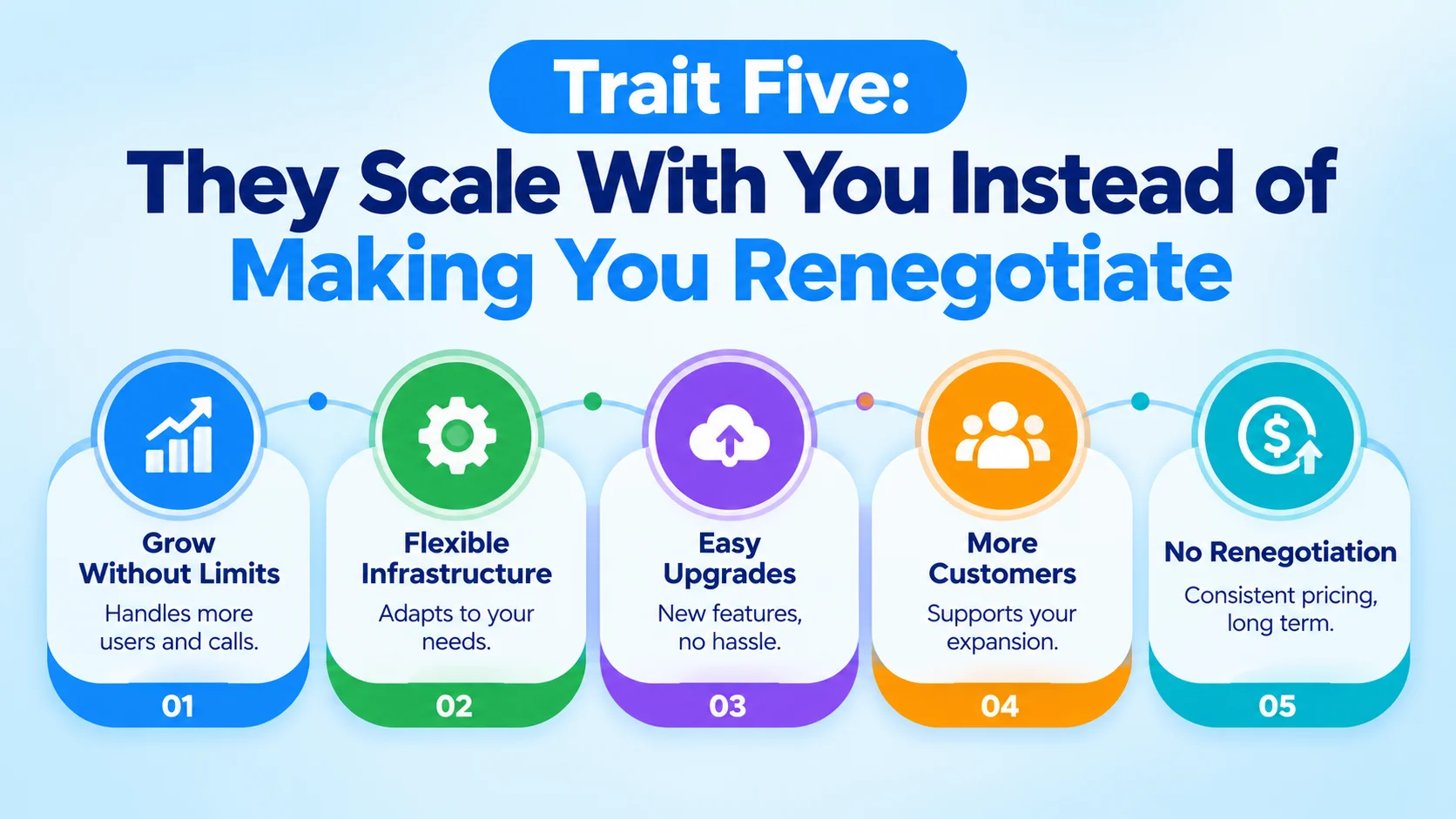
A subtler but important trait: how a provider handles growth. Average providers treat capacity increases as a sales conversation — a new quote, a new contract amendment, a lead time measured in days. Exceptional providers expose capacity as something you provision yourself, through an API or self-service portal, with new channels or DIDs available in minutes rather than requiring a human in the loop for routine growth.
This becomes critical for any business with variable or seasonal traffic — a marketing campaign, a contact center staffing up for a launch, an AI voice platform handling a sudden spike. A provider whose only scaling mechanism is a sales call will always lag behind actual demand; one with API-driven provisioning lets capacity follow demand in near real time.
Conclusion
Exceptional wholesale VoIP providers aren't identifiable from a rate card or a features page — they're identifiable from how much of their infrastructure, quality data, compliance posture, and billing they're willing to show you before you've even signed. Network ownership, live quality transparency, proactive compliance, auditable billing, and frictionless scaling aren't marketing bullet points; they're specific, verifiable behaviors you can test for directly.
Evaluate any provider against these five traits rather than their marketing copy, and the gap between exceptional and merely adequate becomes obvious well before a contract is on the table.