Introduction
A wholesale voice provider sells bulk voice capacity — outbound termination, inbound DID origination, SIP trunking — to other businesses at carrier-tier per-minute rates. For carriers, ITSPs, contact centres, MNOs, and enterprises with high call volumes, the wholesale voice provider underneath your service matters a great deal. It shapes margin, call quality, fraud exposure, and how confidently you can scale. This guide walks through what a wholesale voice provider actually does and how to evaluate one against a structured checklist. It also covers the security and compliance posture that separates carrier-grade operators from thin resellers. And it looks at the market trends that will shape the choice over the next 24 months.
What a Wholesale Voice Provider Actually Is
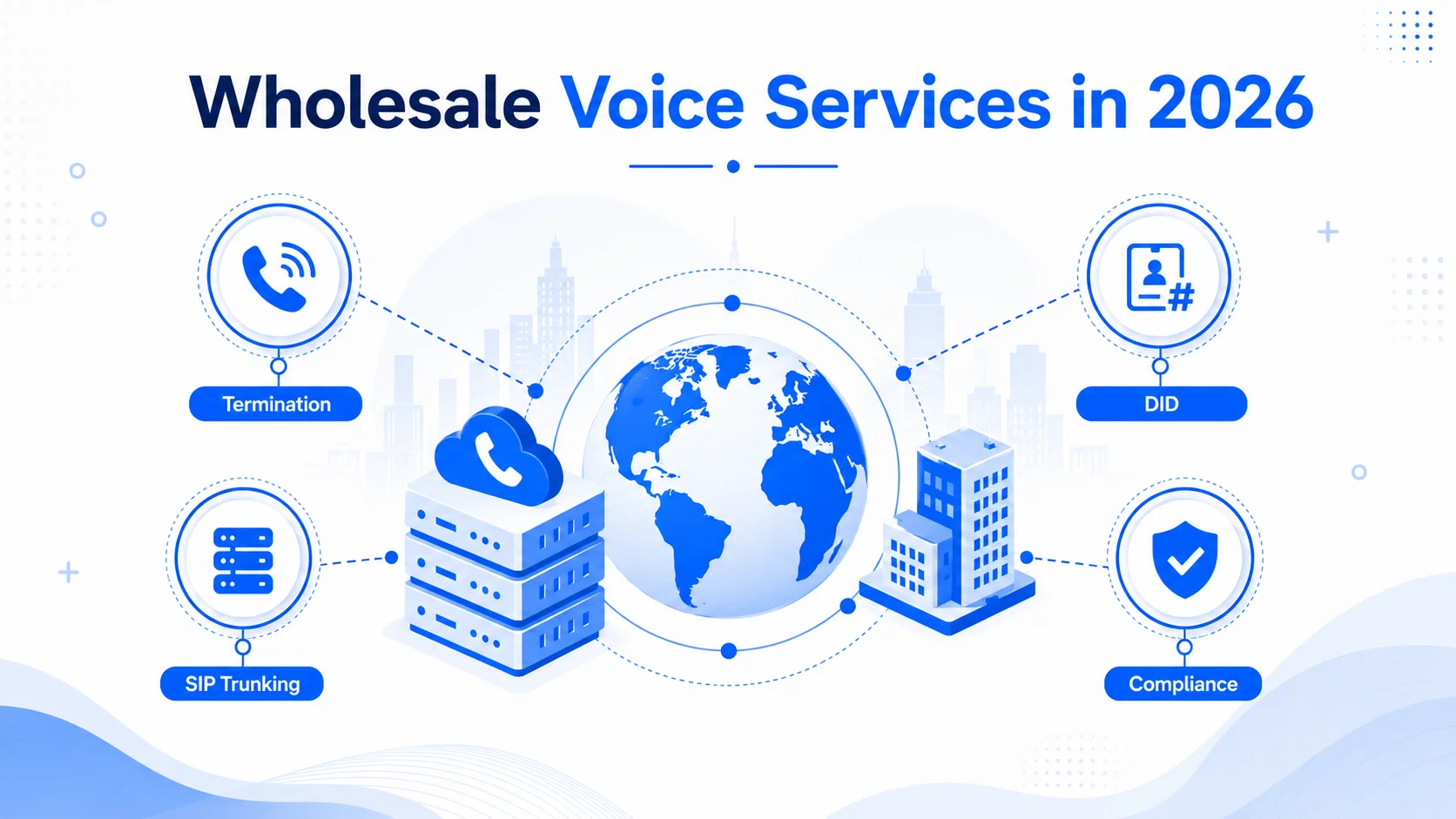
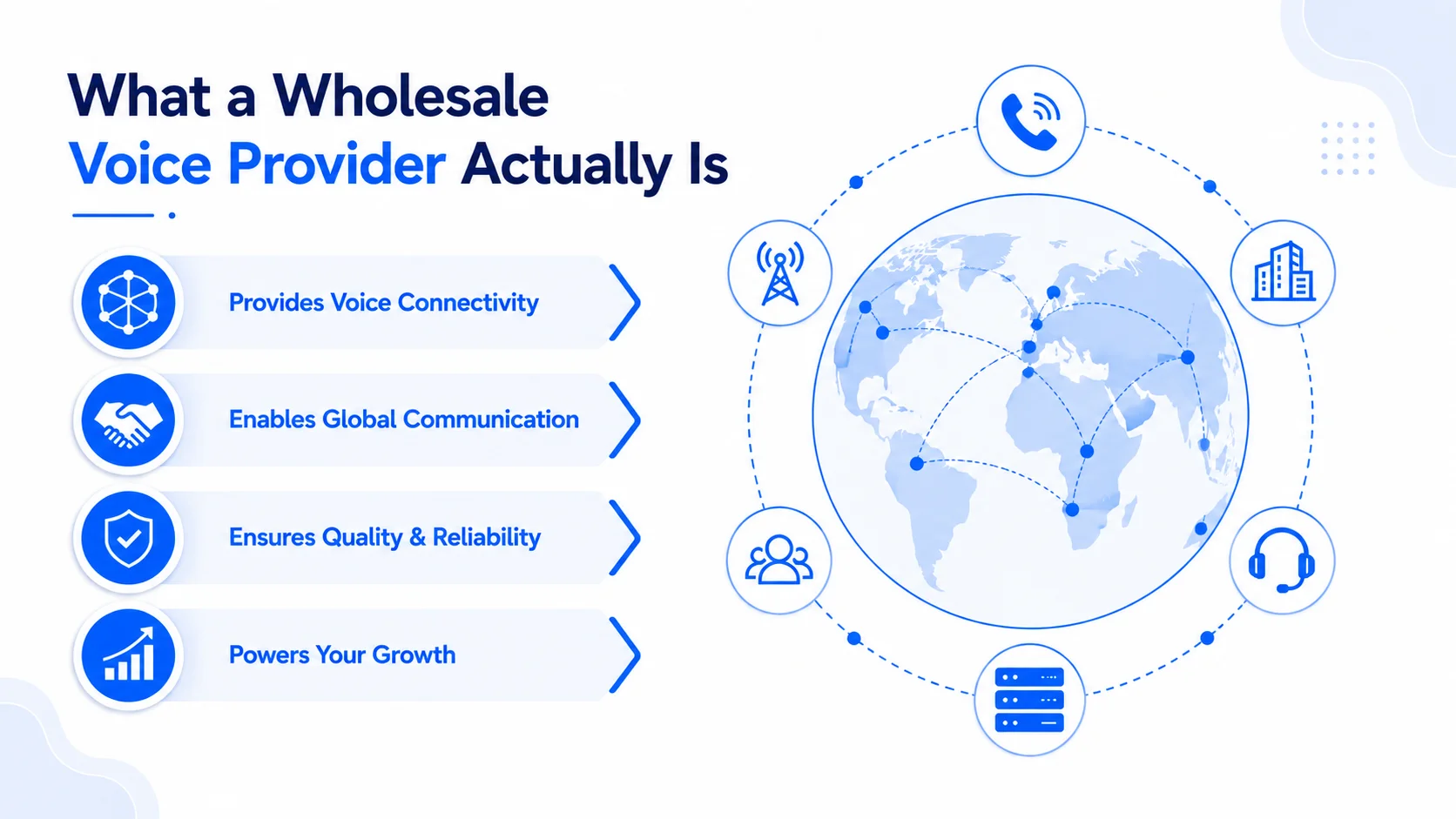
A wholesale voice provider operates at the carrier layer of the voice stack. It sells large volumes of voice call minutes and related telecommunications services to other businesses rather than to retail end users. Customers are carriers, ITSPs, MNOs, contact centres, UCaaS platforms, and enterprises with high call volumes. The wholesale voice provider holds the licences, owns the softswitches, signs the upstream carrier interconnects, and runs the 24/7 NOC. The customer brings the SIP trunk and the traffic.
This is structurally different from a retail VoIP provider. Retail wraps minutes inside per-seat plans with handsets, voicemail, and consumer support. A wholesale voice provider strips that wrapper away and sells raw transport at carrier-tier wholesale VoIP rates. For any operator shipping more than a few thousand minutes per month, working with a wholesale voice provider directly is structurally cheaper and more flexible. Buying retail and providing the application layer themselves costs more at that volume.
How a Wholesale Voice Provider Operates
Further reading: Wholesale pricing & rate deck
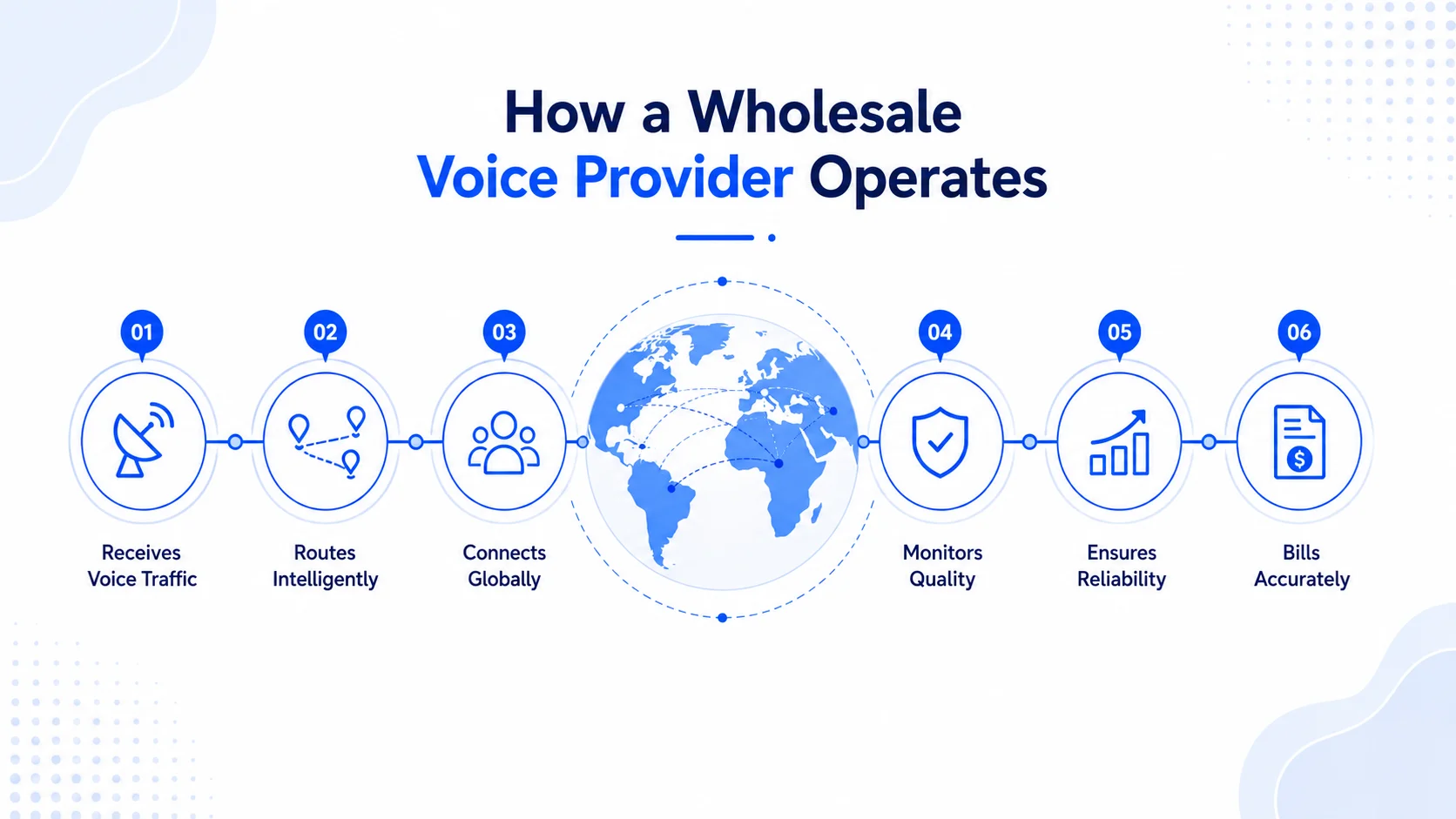
A wholesale voice provider builds a global network by establishing direct interconnects with numerous telecom carriers and operators worldwide. When a call enters the network, the provider's LCR engine consults the rate deck across upstream carriers and applies quality floors — minimum ASR, maximum PDD. It then picks the cheapest qualifying path, dispatches the call, and generates a real-time CDR. For US-bound traffic, STIR/SHAKEN attestation is signed inline. The entire pipeline runs inside a millisecond per call.
Termination is the outbound half — delivering calls from the customer's softswitch to the destination network. Origination is the inbound half — hosting DID numbers and delivering incoming PSTN calls to the customer's SIP endpoint. A serious wholesale voice provider runs both on the same platform, with unified billing, CDR streaming, and quality monitoring. Splitting the two across vendors is operationally painful and almost always costs more on a total basis.
Key Benefits of Partnering with a Wholesale Voice Provider
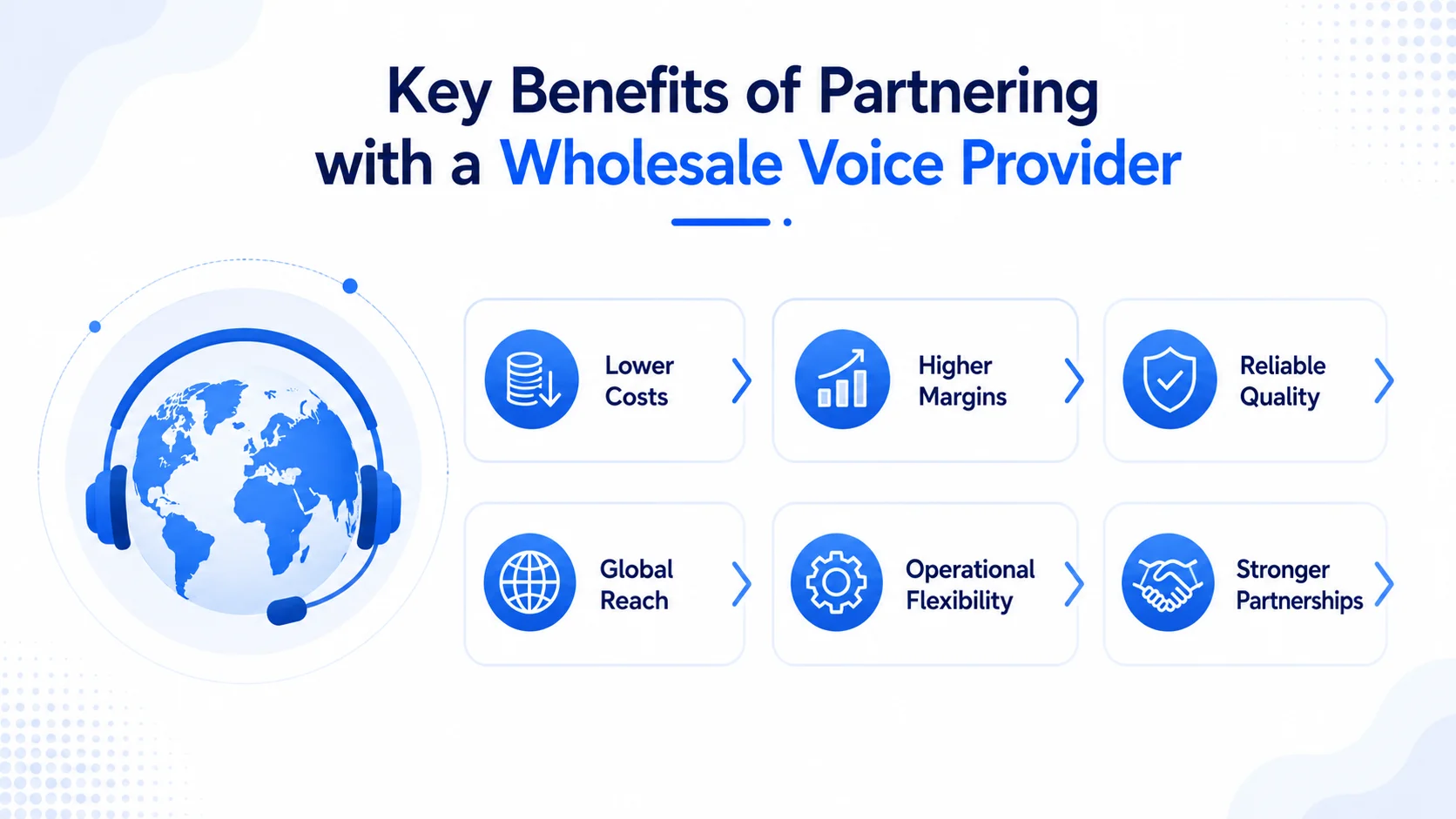
- Cost — per-minute rates 50 to 80 percent below retail VoIP through bulk-purchase economics and direct carrier interconnects
- Scalability — SIP channels added in minutes via the customer portal, no hardware procurement and no carrier lead time
- Quality — carrier-grade infrastructure with contractual ASR, PDD, and uptime SLAs that retail providers do not offer
- Global reach — A-Z international termination through one SIP endpoint instead of bilateral relationships per country
- STIR/SHAKEN attestation — handled by the wholesale voice provider inline, improving answer rates on US-bound traffic
- Programmable APIs — CDR streaming, DID provisioning, and rate-deck queries via REST for automation
Who Uses a Wholesale Voice Provider
Further reading: Wholesale voice solutions
- Telecommunications carriers — extending network reach globally without building out their own infrastructure in every market
- VoIP service providers and ITSPs — outsourcing the carrier layer and concentrating on the retail product
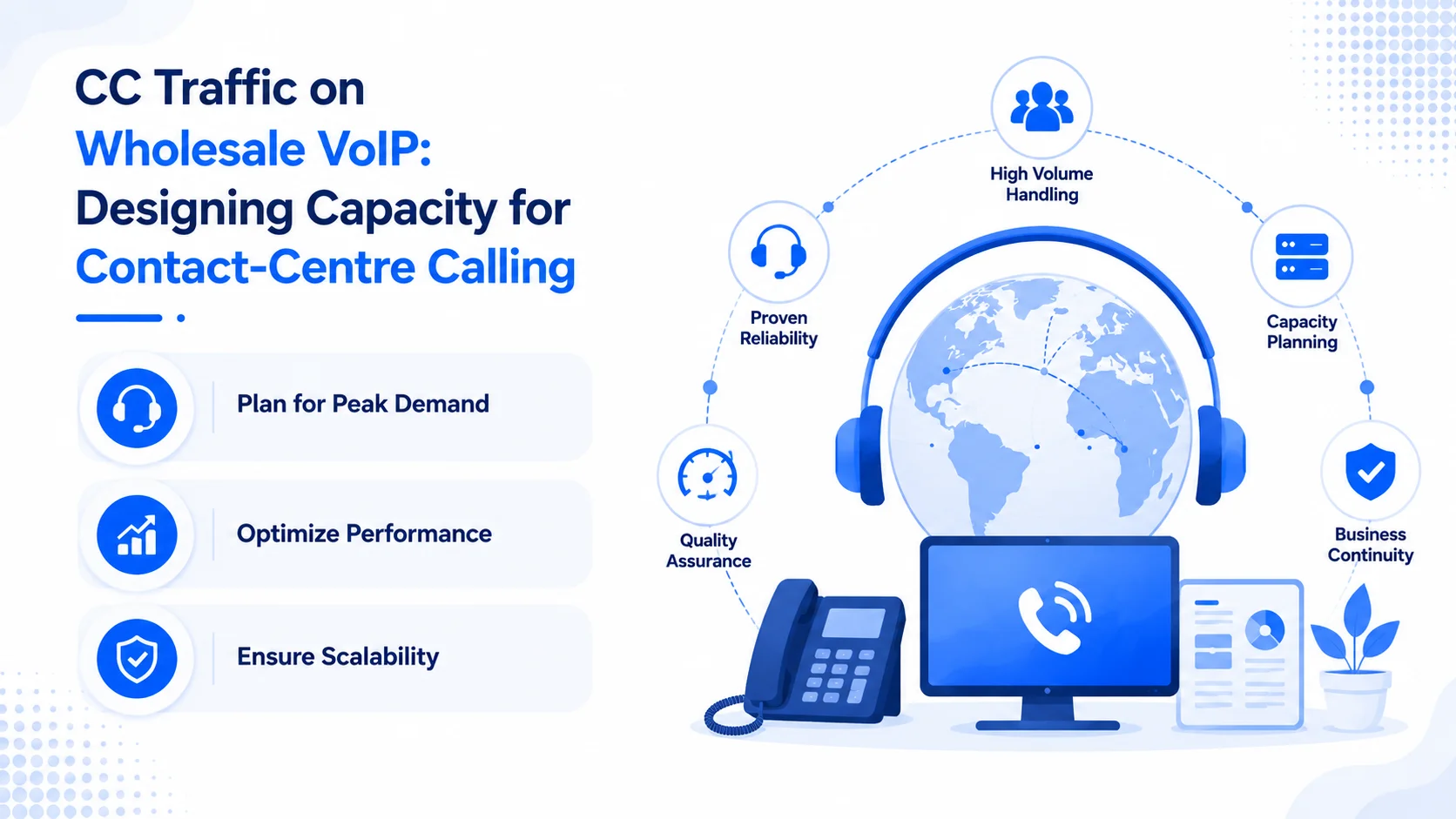
- Contact centres and call centres — high outbound volume with strict ASR requirements, where wholesale rates make the unit economics work
- Mobile network operators — offloading international traffic and managing roaming arrangements cost-effectively
- Large enterprises — consolidating telecom spend across multiple offices and countries under one wholesale voice provider relationship
Core Services a Wholesale Voice Provider Offers
- Voice termination — A-Z international outbound delivery to 200+ countries via direct Tier 1 interconnects
- Voice origination — hosting DIDs in 100+ countries and delivering inbound PSTN calls to the customer's SIP trunk
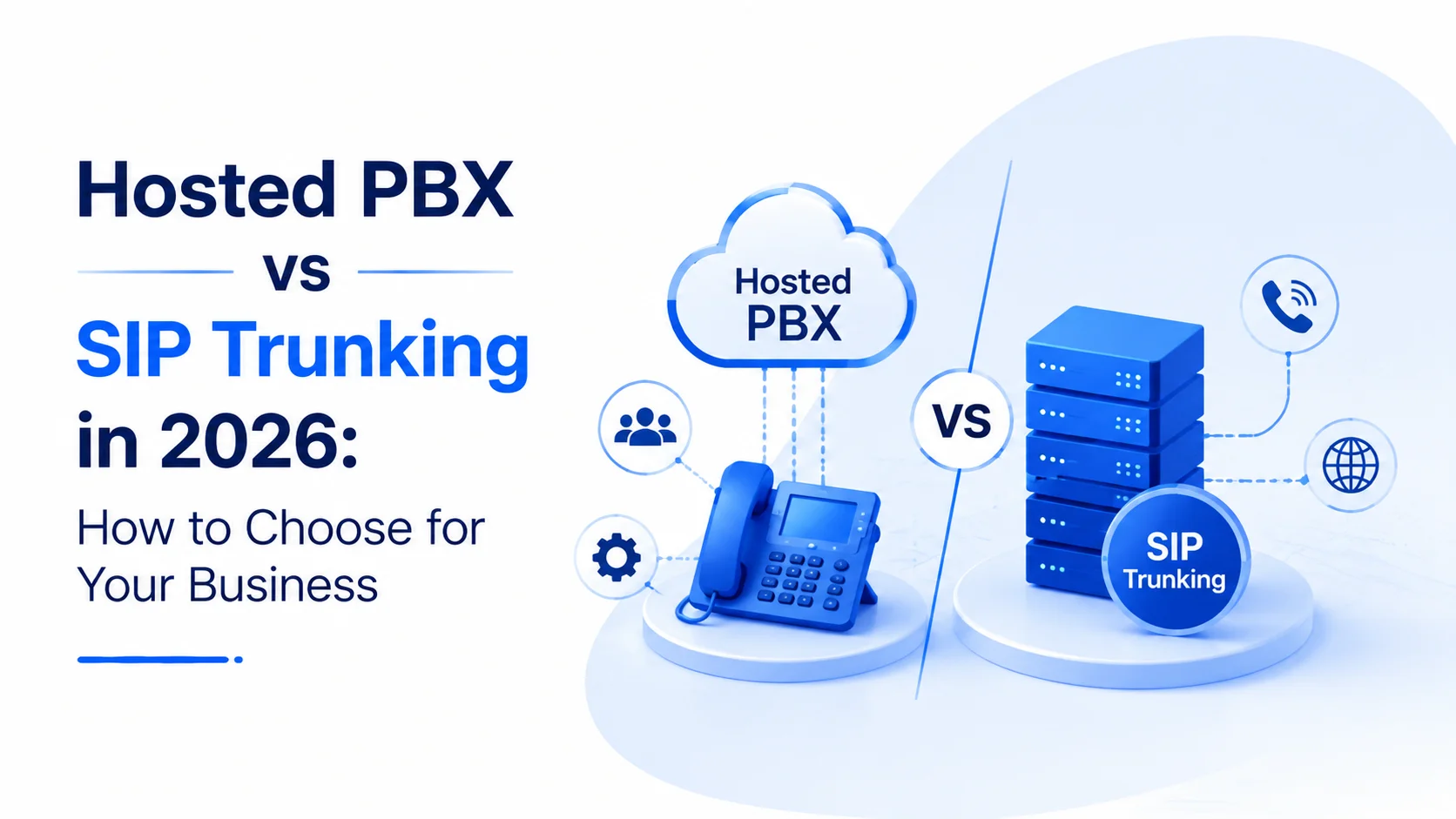
- SIP trunking — direct PBX-to-carrier connectivity that replaces legacy PRI lines
- Toll-free numbers — 800/888/877/866/855/844/833 hosting with inbound IVR and call recording
- Number porting — clean transfer of existing DIDs from incumbent carriers
- Programmable APIs — CDR streaming, real-time call control, DID provisioning, rate-deck queries via REST
- A2P SMS — bundled wholesale messaging on the same carrier relationships and billing engine
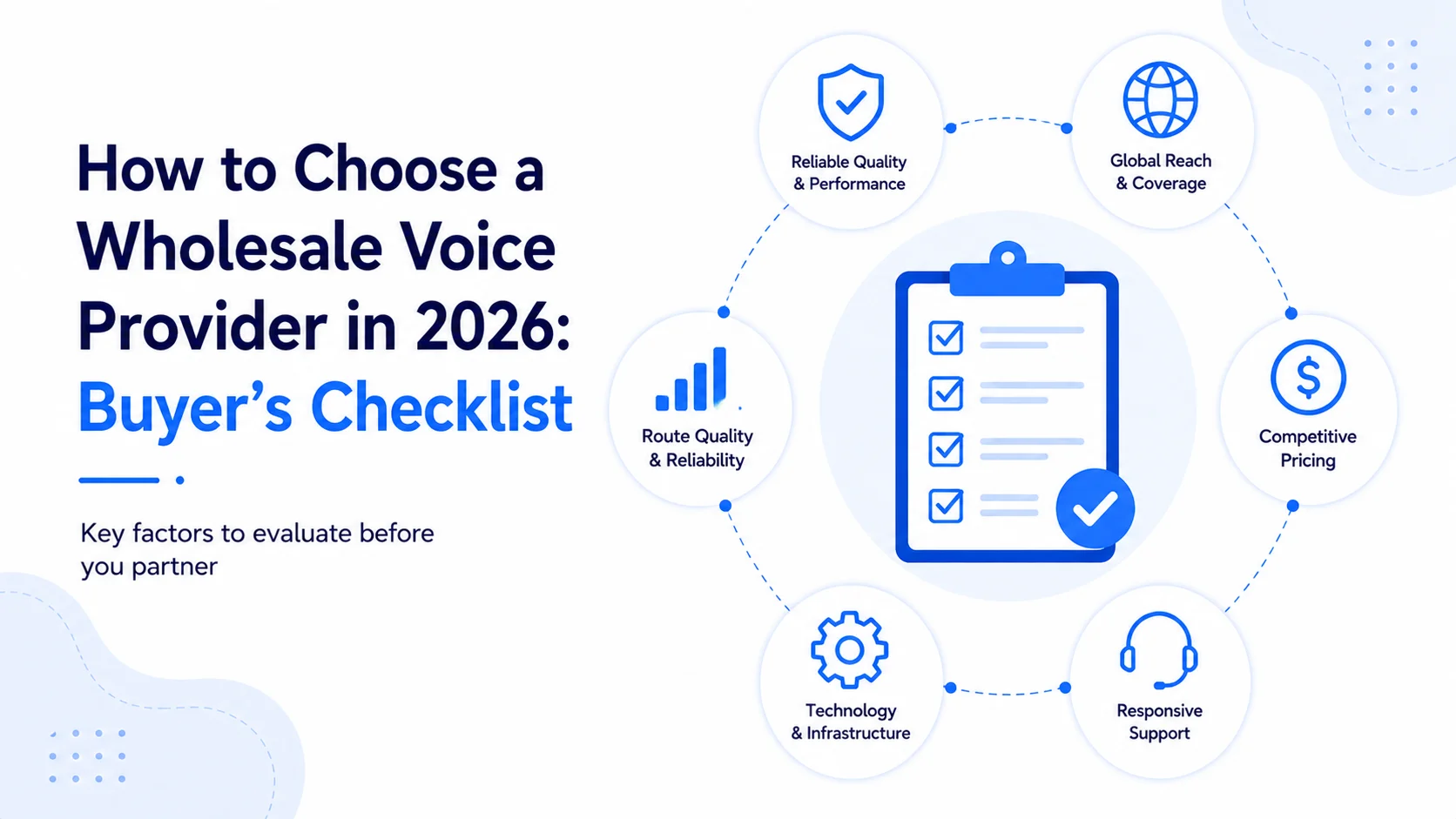
Buyer's Checklist for Choosing a Wholesale Voice Provider
- 01Owned routes vs reseller — does the wholesale voice provider hold direct Tier 1 interconnects in your top destinations, or are they reselling someone else's minutes? Owned routes deliver tighter ASR and lower PDD.
- 02Rate-deck transparency — per-destination wholesale VoIP rates published with billing increments, currency, and effective dates visible on every row
- 03STIR/SHAKEN attestation — inline A-level signing on US-bound traffic, with attestation level surfaced in CDRs
- 04SLA terms — minimum 99.9% uptime, ASR floors per destination, maximum PDD commitments, and financial credits for breaches
- 05Fraud controls — real-time IRSF detection with hard spend caps, destination whitelists, and blocked-prefix lists refreshed continuously
- 06Programmable APIs — CDR streaming, DID provisioning, and rate-deck queries via REST for automation
- 07Onboarding speed — KYC under 48 hours, SIP trunk provisioning the same day, production traffic within a week
- 0824/7 NOC — 15-minute critical-incident SLA with named escalation contacts, not an email queue
Market Trends Shaping the Wholesale Voice Provider Choice
Three structural shifts are reshaping the wholesale voice provider market in 2026. STIR/SHAKEN attestation has moved from regulatory checkbox to commercial requirement — wholesale voice providers without inline attestation are quietly costing customers answer rates on US destinations. CPaaS-style programmable APIs have become baseline. A wholesale voice provider shipping only a web UI in 2026 is asking customers to do operational work that should be automated end-to-end via REST.
Third, voice and A2P SMS bundling has consolidated under single wholesale voice provider relationships. Platforms shipping verification codes, transactional notifications, and marketing campaigns increasingly want voice and messaging on one carrier, one billing engine, and one dashboard. The wholesale voice providers that ship both as first-class products are winning the platform business that powers most of the growth in the category.
Security and Compliance
Security inside any wholesale voice provider runs across several layers: TLS for SIP signalling, SRTP for media encryption, and IP whitelisting for trunk authentication. It also includes DDoS scrubbing and real-time IRSF anomaly detection on streaming CDRs. STIR/SHAKEN attestation prevents caller-ID spoofing on outbound traffic. SBC-level topology hiding stops upstream carriers from seeing customer-side IP addresses. None of these are optional in 2026 — they are the carrier-grade baseline.
Compliance posture extends to GDPR for European call data, HIPAA for US healthcare communications, CALEA for lawful intercept in the US, and country-specific licensing per market. A credible wholesale voice provider centralises this work so customers inherit compliance rather than rebuild it. Twiching tracks every per-market obligation and reflects it in onboarding and contracts.
Twiching as a Wholesale Voice Provider
Twiching is purpose-built for ITSPs, carriers, contact centres, MNOs, and enterprises evaluating a wholesale voice provider. The platform combines direct Tier 1 interconnects across 200+ countries, full STIR/SHAKEN attestation on US-bound traffic, and real-time CDRs via API. It also adds IRSF anomaly detection with hard spend caps, A2P SMS bundling alongside voice, and a 24/7 NOC with a 15-minute critical-incident SLA.
Onboarding completes in under 48 hours, and per-destination wholesale VoIP rates publish with billing increments and effective dates visible on every row. Partners on the white-label reseller programme launch their own branded wholesale voice provider business on the same carrier-grade infrastructure Twiching uses internally.
A wholesale voice provider's geographic footprint determines what markets it can serve competitively. Providers with PoPs in North America, Europe, and Asia-Pacific can carry international traffic with low latency to all major business hubs. Providers limited to single-region infrastructure create long-distance haul for international calls, which degrades audio quality and increases cost. Review the provider's network map and confirm PoP locations are in carrier-neutral data centres with diverse fibre connectivity.
Evaluating a wholesale voice provider's SLA commitments requires looking at both the metrics and the credit mechanisms. SLAs with 99.9% uptime commitments sound strong but allow for 8.7 hours of downtime per year. The SLA credit mechanism matters as much as the target. Credits that apply automatically to your next invoice are far more valuable than credits that require a support ticket within 48 hours of an incident. Review the force majeure clause carefully. Overly broad force majeure exceptions can allow carriers to avoid SLA credits for significant outages attributed to 'circumstances beyond their control.'
Conclusion
Choosing a wholesale voice provider is an infrastructure decision dressed up as a procurement decision. Owned Tier 1 routes, transparent rate decks with billing increments on every row, inline STIR/SHAKEN attestation, contractual SLAs with measurable financial credits, real-time IRSF fraud controls, programmable APIs, and a 24/7 NOC with named escalation contacts are the carrier-grade non-negotiables. Layered on top, voice-and-SMS bundling, white-label reseller programmes, and per-market compliance posture separate the strongest wholesale voice providers from thin resellers. Twiching is built around exactly that bar, so carriers, ITSPs, contact centres, MNOs, and enterprises launch on a carrier-grade wholesale voice provider from day one — without operating the underlying carrier themselves.