Introduction
Wholesale VoIP services power the backbone of modern business telephony. Carriers, resellers, and managed service providers rely on them to route millions of minutes daily across global networks.
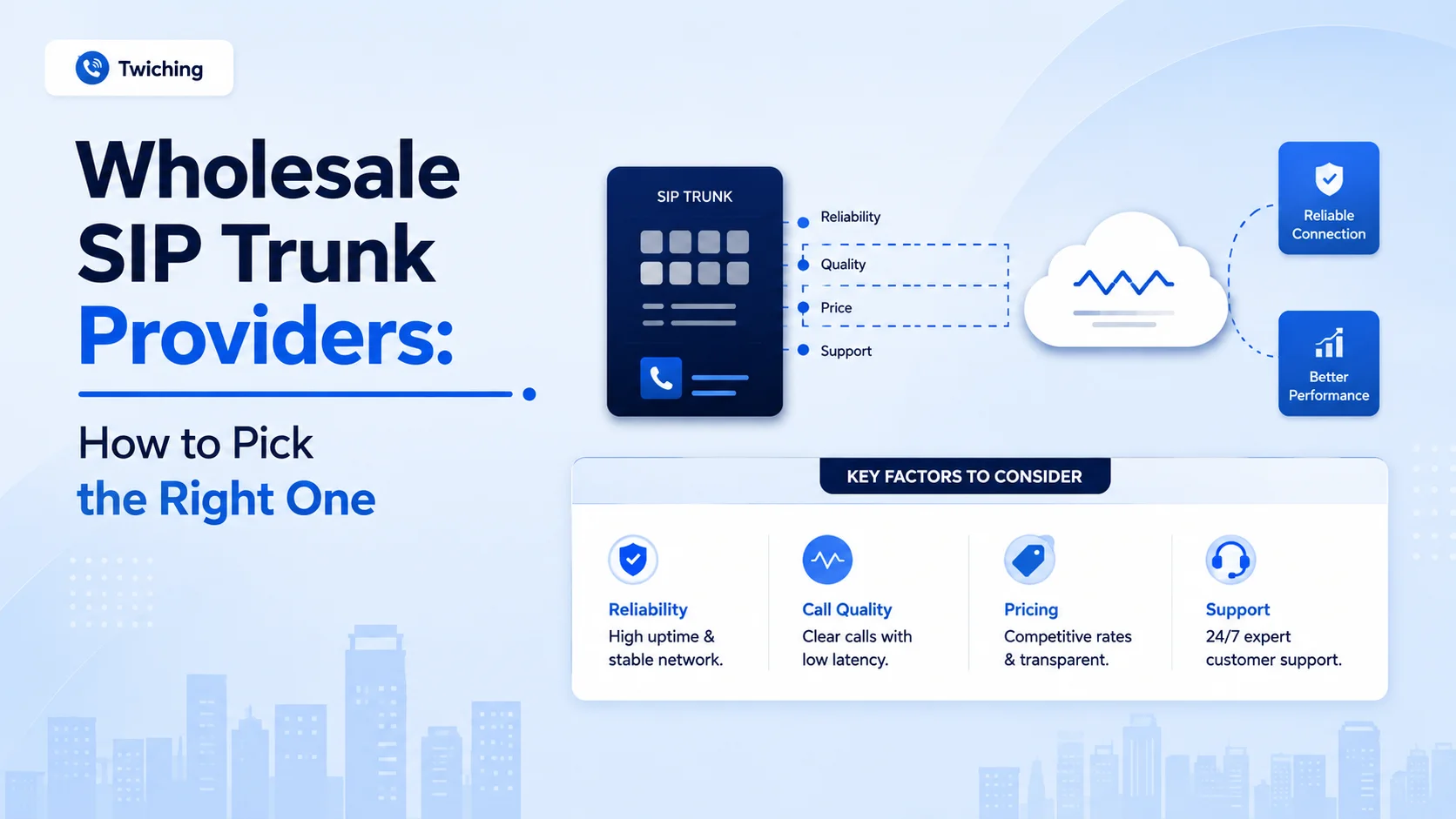
Yet picking the right wholesale VoIP service remains difficult because the market is crowded with providers that look similar on the surface but differ sharply in route quality, pricing transparency, and technical reliability. This guide moves past generic provider lists.
It breaks down the specific factors that separate a dependable wholesale VoIP service from one that drains margins and frustrates end users. Whether you operate a VoIP reseller program, manage enterprise SIP trunking, or run a high-volume contact center, you will learn exactly what to evaluate — from termination rates and codec support to AI-powered routing and compliance — before signing any contract.
Why Route Quality Matters More Than Price Per Minute
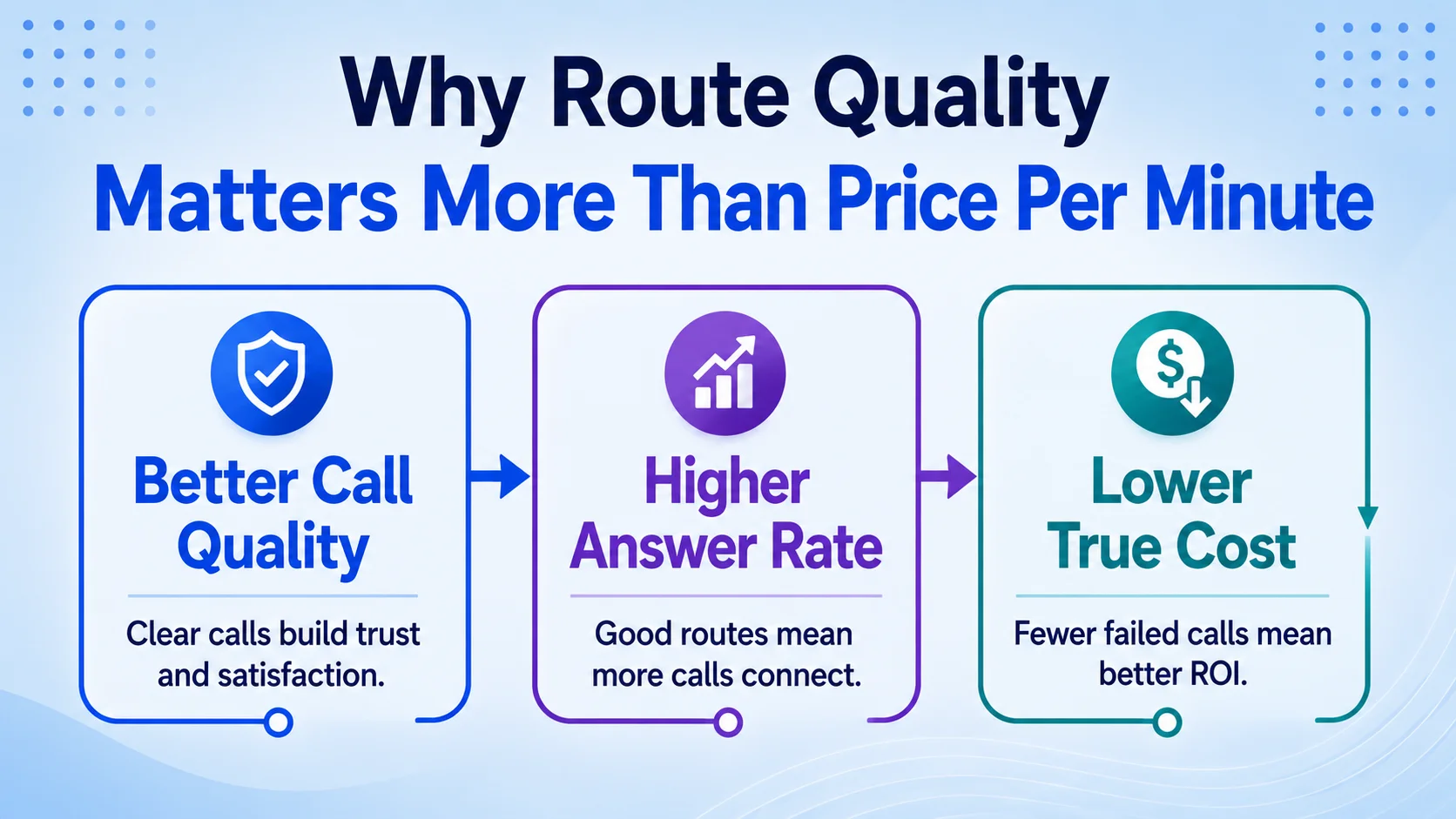
When evaluating a wholesale VoIP service, many buyers fixate on the lowest termination rate. That approach often backfires. A provider advertising $0.001 per minute on a US route means nothing if the answer-seizure ratio (ASR) sits below 40% or the average call duration (ACD) drops because of poor audio quality.
Route quality depends on whether the provider uses direct interconnects with tier-1 carriers or pushes calls through multiple intermediary switches. Direct routes deliver higher ASR, lower post-dial delay, and consistent caller-ID passthrough (CLI). Grey routes — often cheaper — strip CLI information, introduce latency, and risk regulatory violations in markets that enforce strict CLI rules.
A practical test: request a trial period and measure ASR, ACD, and post-dial delay across your highest-traffic destinations. Any provider confident in their network will offer this without hesitation.
ASR, PDD, and the Tier 1 vs. Tier 2 vs. Gray Route Difference
Answer-Seizure Ratio (ASR) is the percentage of call attempts that result in a connection. A wholesale route with 70% ASR means three in ten calls fail to connect — acceptable on some gray routes, disqualifying for business traffic. Enterprise-grade routes hold 92%+ ASR on major destinations.
Post-Dial Delay (PDD) measures the time between sending the SIP INVITE and hearing a ringback; anything over 4 seconds creates noticeable user friction. Mean Opinion Score (MOS) rates voice quality on a 1–5 scale — anything below 3.6 sounds noticeably degraded, and providers worth shortlisting typically hold 4.0 or above on major routes.
These numbers separate three route tiers, and knowing which one you're buying matters more than the headline rate:
- Tier 1 routes use direct interconnection agreements with the originating or terminating carrier. Lowest PDD, highest ASR, STIR/SHAKEN attestation level A, highest price per minute.
- Tier 2 routes pass through one intermediate reseller. Slightly higher PDD, marginally lower ASR, still compliant for most business use cases.
- Gray routes bypass standard PSTN interconnection — often through SIM-box operations. Extremely low cost, extremely unreliable, and illegal in many jurisdictions. They also strip caller ID, breaking STIR/SHAKEN compliance.
Contact centers and enterprise voice platforms should insist on Tier 1 or verified Tier 2 routes. The cost difference is typically $0.001–$0.003 per minute — negligible against the cost of a degraded customer experience or a compliance violation.
Wholesale VoIP Pricing Models Explained
Pricing in wholesale VoIP follows several structures, and understanding them prevents surprises on your invoice.
Further reading: wholesale VoIP rates
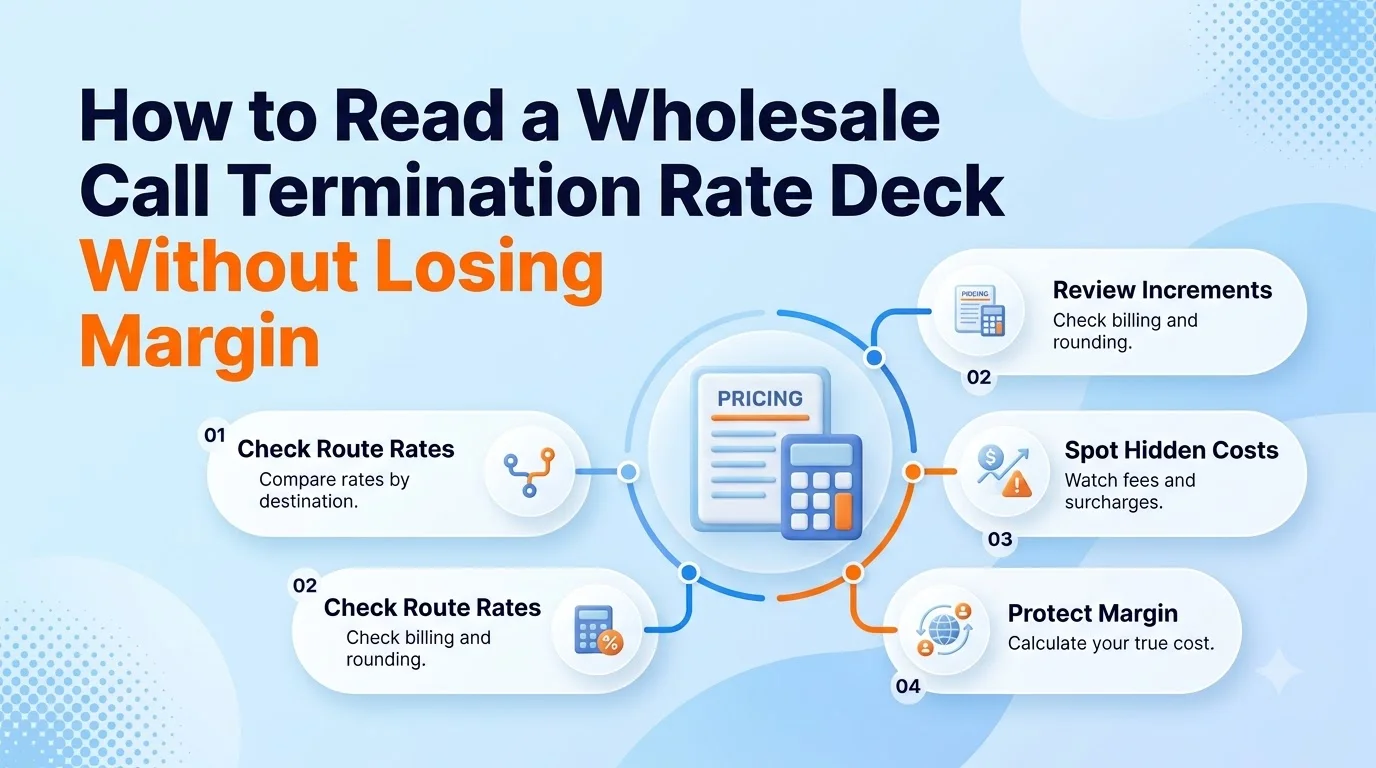
Per-minute billing remains the most common model for VoIP termination services. Rates vary by destination — US domestic termination typically ranges from $0.001 to $0.004 per minute, Western European routes from $0.005 to $0.025, and certain African or island destinations can exceed $0.30. Billing increments also matter: a provider billing in 6/6 increments (rounding up to the nearest six seconds) costs noticeably more on short calls than one using 1/1 billing.
Channel-based pricing bundles unlimited calling on a fixed number of concurrent channels, usually between $15 and $60 per channel monthly. This works well for businesses with predictable, high-volume traffic.
Tiered volume commitments offer discounted rates once you hit monthly minute thresholds, rewarding growth but penalizing underuse.
- Per-minute — best for variable call volumes, typically $0.001–$0.30 per minute depending on destination
- Channel-based — best for predictable high-volume traffic, typically $15–$60 per channel monthly
- Tiered volume — best for growing resellers, with discounts once you cross set monthly thresholds
Ask every provider for a complete rate deck covering your top 20 destinations. Compare not just the rates but the billing increments, minimum call charges, and any setup or port fees buried in the fine print.
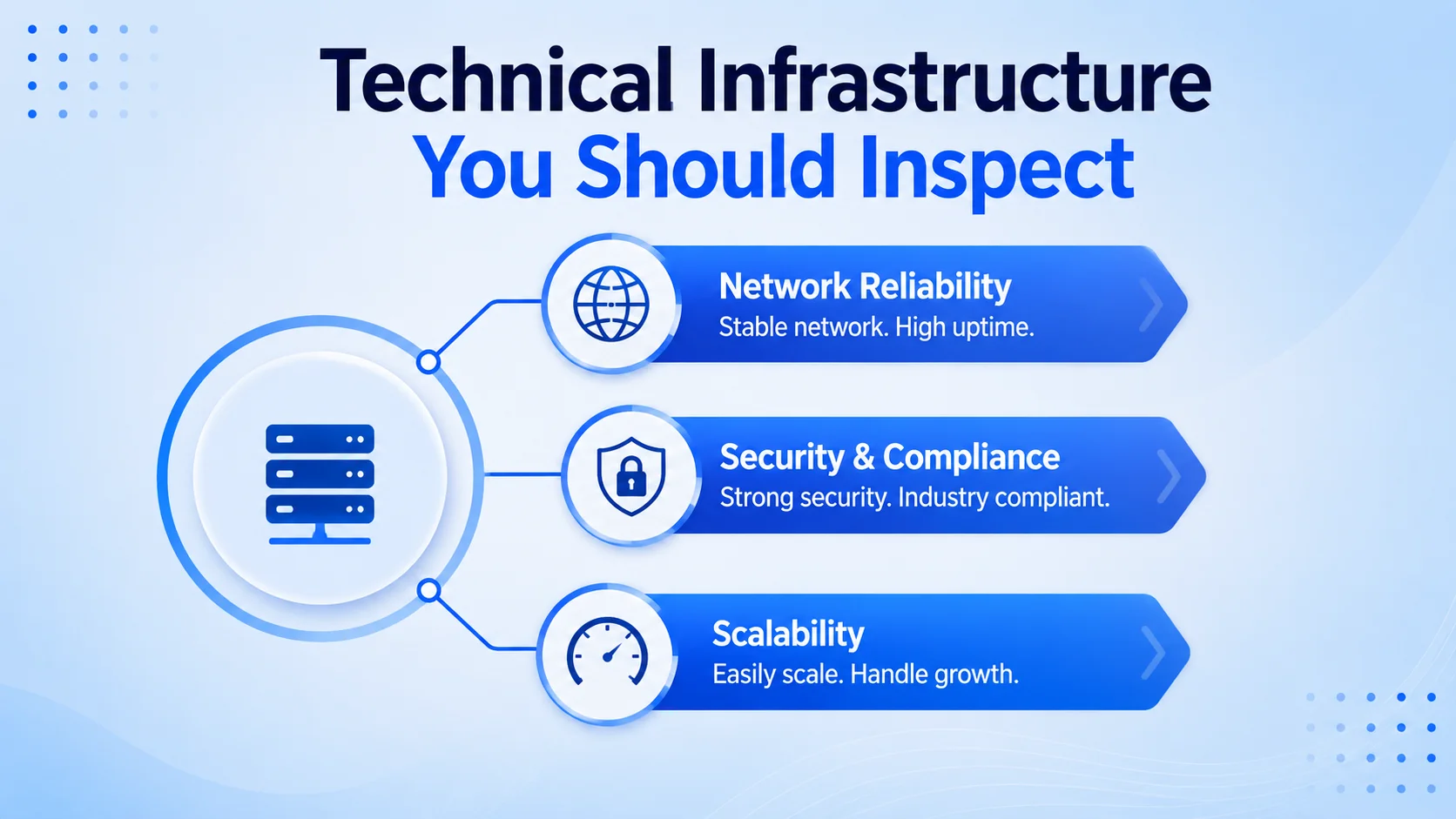
Technical Infrastructure You Should Inspect
SIP Trunking Redundancy and Uptime Guarantees
A wholesale VoIP service lives or dies on uptime. Look for providers operating geo-redundant data centers with automatic failover. The industry standard for enterprise-grade service is 99.999% uptime — roughly five minutes of downtime per year — backed by a service level agreement (SLA) that includes financial credits for any breach.
Ask where their points of presence (PoPs) are located. A provider with PoPs across North America, Europe, and Asia-Pacific delivers lower latency for international traffic than one operating from a single data center.
Codec Support and Call Quality Optimization
Codec selection directly affects bandwidth usage and audio clarity. G.711 delivers toll-quality audio but consumes 87 Kbps per call. G.729 compresses audio to 8 Kbps, saving bandwidth at the cost of some fidelity. Opus, increasingly supported by modern wholesale SIP trunking platforms, adapts dynamically to network conditions.
Your provider should support transcoding between codecs and offer quality-of-service (QoS) tools such as jitter buffers, echo cancellation, and packet loss concealment. Without these, call quality degrades during peak traffic periods.
Evaluating White-Label and Reseller Capabilities
For companies running a VoIP reseller program, the wholesale provider's white-label support determines how professional your service looks to end customers. Key elements to evaluate:
- Branded customer portals — where clients manage settings, view call records, and access invoices under your company name
- Custom rate card management — allowing you to set retail margins on top of wholesale VoIP rates
- API access — for integrating provisioning, billing, and call data into your existing business systems
- Marketing and sales resources — such as co-brandable collateral and demo environments
Reseller margins in white-label wholesale VoIP typically range from 50% to 70%, significantly higher than the 15% to 25% commissions in traditional agent models. The catch: your margin depends entirely on the spread between wholesale rates and retail pricing, so choosing a provider with competitive base rates directly impacts profitability.
Security and Regulatory Compliance Checklist
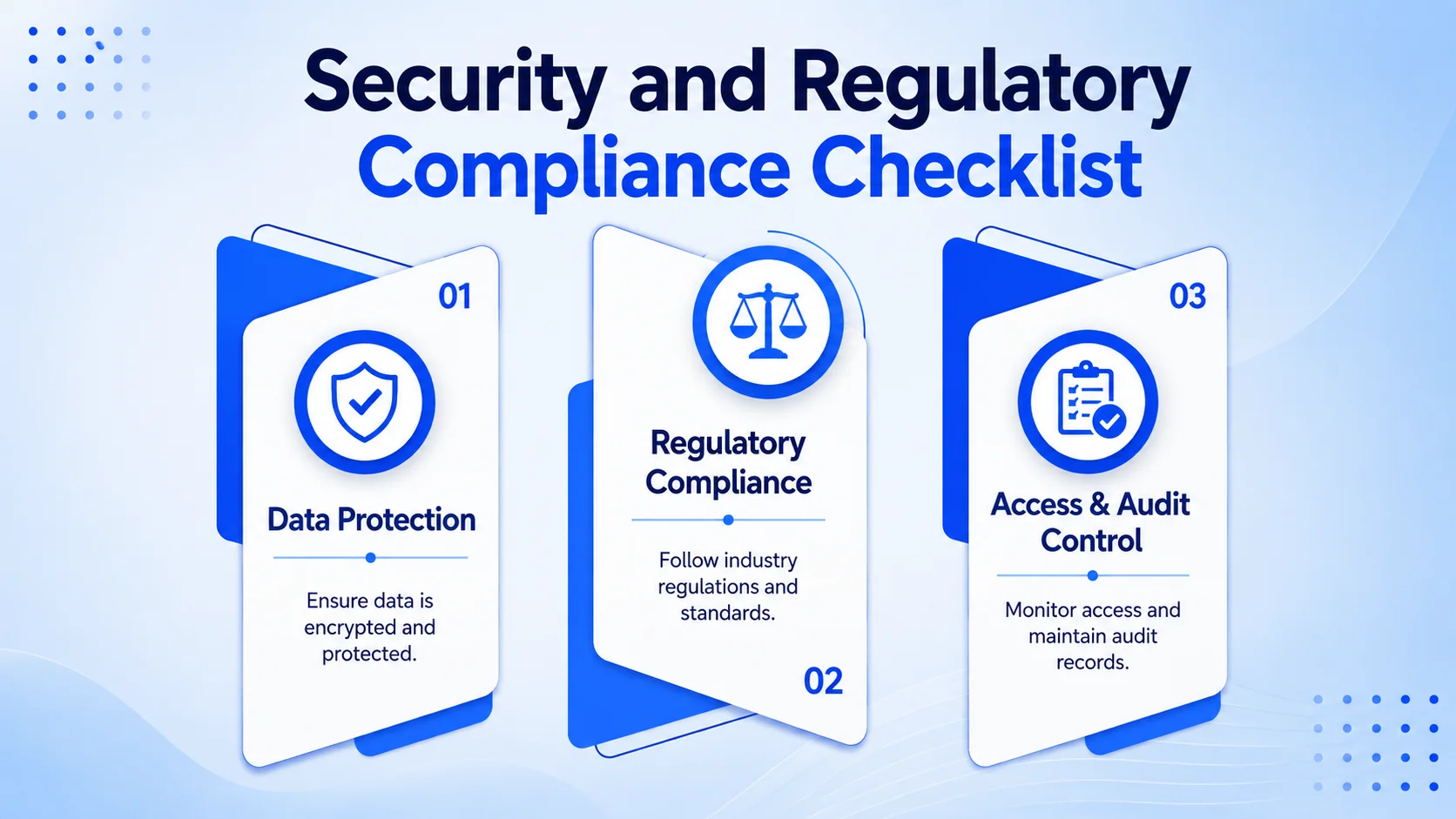
Wholesale VoIP traffic carries sensitive voice data across public networks, making security non-negotiable. Verify that your provider implements:
- TLS and SRTP encryption — for signaling and media streams
- Access control lists (ACLs) — restricting trunk access to authorized IP addresses
- Fraud detection systems — monitoring for unusual call patterns, toll fraud, and traffic pumping
- DDoS mitigation — at the network edge to prevent service disruption
Further reading: FCC: Call Authentication (STIR/SHAKEN)
Regulatory compliance adds another layer. In the United States, wholesale VoIP providers must support E911 services, STIR/SHAKEN caller-ID authentication, and CALEA lawful intercept requirements. Healthcare organizations need HIPAA-compliant call handling. European operations require GDPR-aligned data processing. Request documentation of compliance certifications rather than accepting marketing claims at face value.
How AI Is Reshaping Wholesale VoIP
Artificial intelligence has moved from a buzzword to a practical tool embedded in wholesale VoIP platforms. Nearly 58% of VoIP providers now integrate AI-driven analytics, and the capabilities extend well beyond basic call transcription.
Intelligent call routing uses real-time network telemetry to select the optimal path for each call based on current latency, ASR, and cost — replacing static least-cost routing tables. Predictive analytics identify traffic spikes before they cause congestion, enabling automatic capacity scaling. Fraud detection models flag anomalous patterns — such as sudden surges in premium-rate calls — within seconds rather than after the damage appears on your invoice.
For resellers, AI-powered sentiment analysis and automated call summaries create value that justifies premium pricing to end customers, widening the margin between your wholesale cost and retail price.
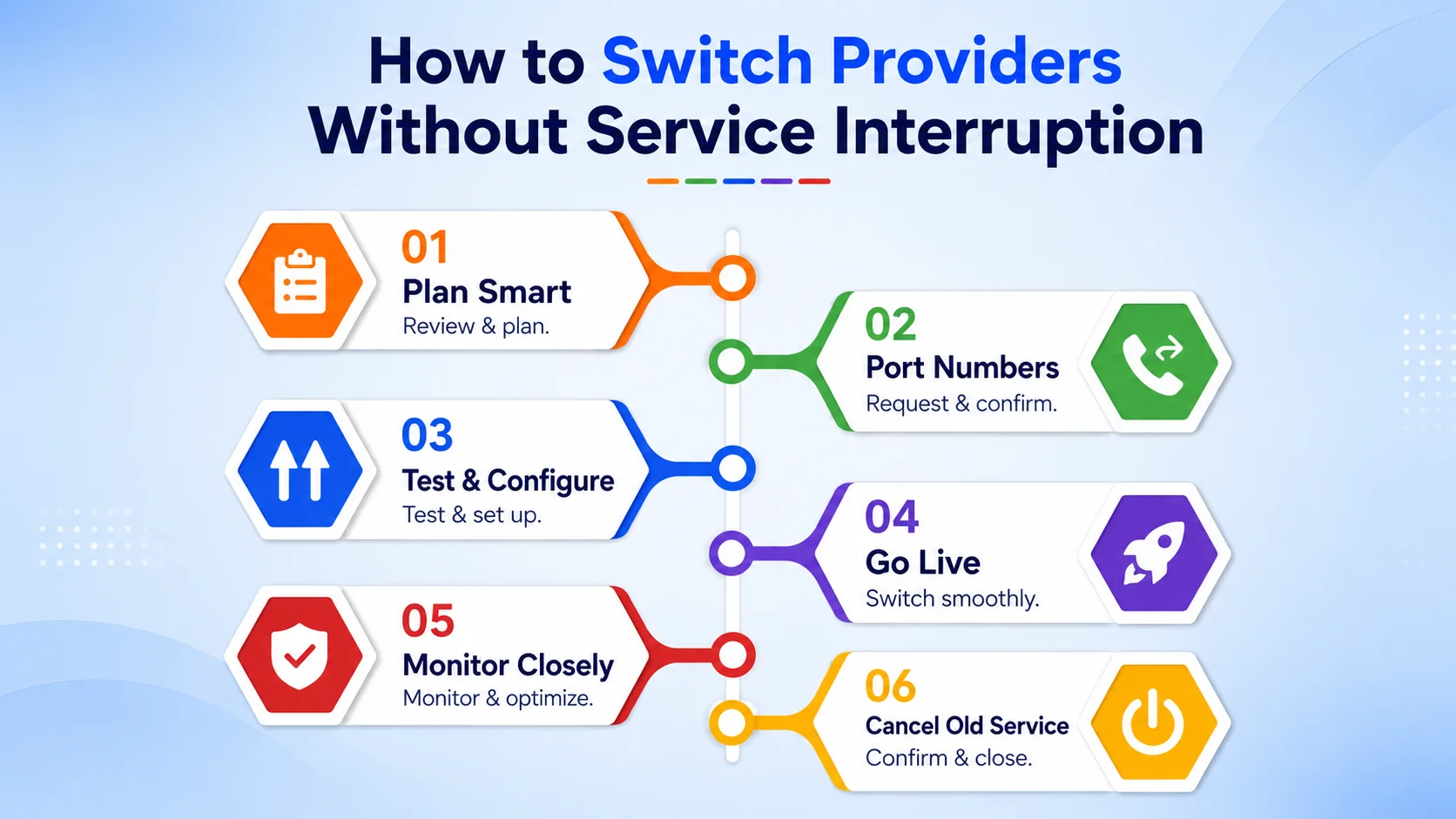
How to Switch Providers Without Service Interruption
Further reading: wholesale VoIP solutions
Migrating to a new wholesale VoIP service does not require downtime when planned properly. Start by provisioning SIP trunks with the new provider in parallel with your existing service. Route a small percentage of traffic — 10% to 15% — to the new trunks and monitor ASR, ACD, and audio quality for at least two weeks.
Once metrics confirm the new provider meets or exceeds your current performance, gradually shift traffic in increments. Keep old trunks active as a failover path until migration is fully validated. Port your DIDs (direct inward dialing numbers) last, since porting timelines vary by carrier and region — typically two to four weeks in the US.
Document your routing rules, codec preferences, and failover logic before the switch. A clean configuration baseline prevents misrouted calls and registration failures that plague rushed migrations.
Conclusion
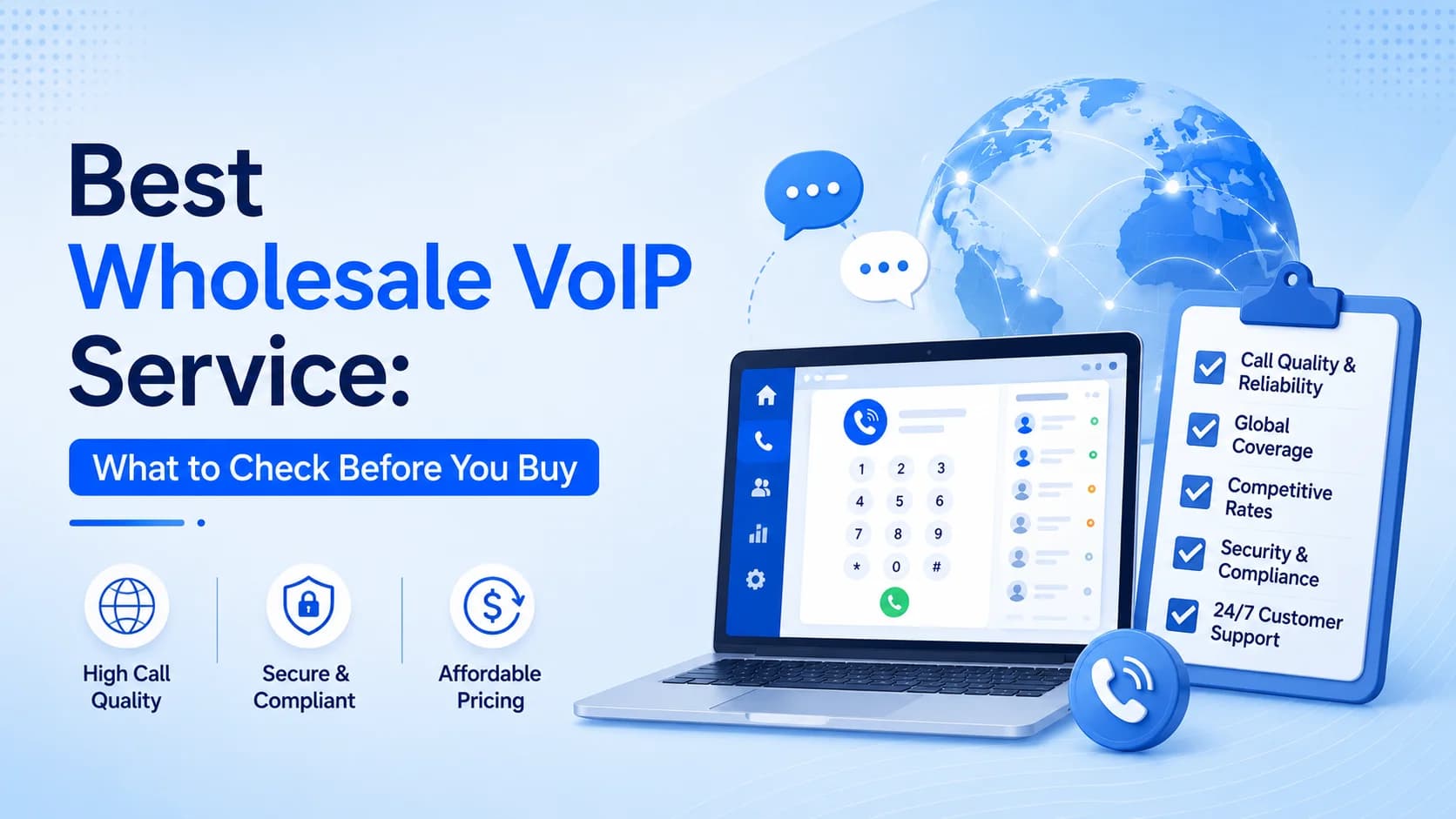
Choosing the best wholesale VoIP service requires looking beyond marketing claims and into the technical and financial details that determine real-world performance. Prioritize route quality metrics over rock-bottom rates, demand transparent pricing without hidden fees, verify infrastructure redundancy and security compliance, and test before you commit.
Providers that welcome scrutiny — offering trial periods, sharing ASR data openly, and providing detailed rate decks — are the ones worth partnering with. As AI-driven routing and analytics become standard, the gap between premium and mediocre wholesale VoIP services will only widen.